Sep 13, 2026 · 23 min
A 50-kilometer run turns Stoic hardship into practice
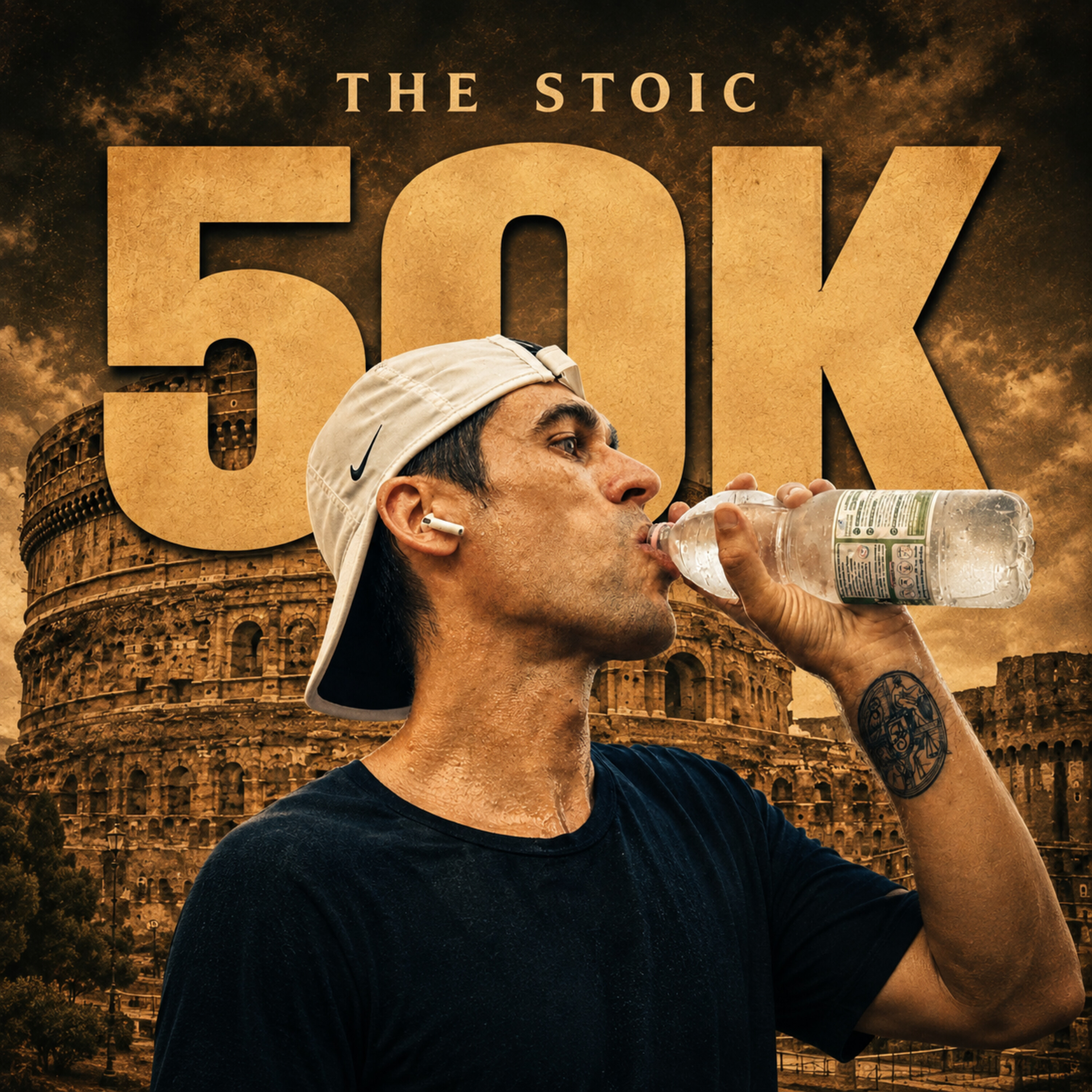
Running 50 Kilometers Through Rome To Understand Stoicism
The episode tests whether deliberately chosen discomfort can build the courage, discipline, gratitude, and perseverance Stoicism demands.
- 1A 50-kilometer route through Rome makes voluntary hardship a physical exercise in Stoic character.
- 2Seneca’s cold-water practice frames discomfort as something to seek deliberately, not merely endure when unavoidable.
- 3Marcus Aurelius offers a model of self-command through temper, desire, early rising, kindness, and diligent work.
Don't miss
At the Trevi Fountain, Ryan connects Seneca’s cold-water practice to the satisfaction of completing a deliberately difficult run.
The brief
Ryan Holiday uses a 50-kilometer run through Rome to explore how courage, discipline, justice, and wisdom can move from philosophical ideals into daily practice.
The run becomes an example of an annual personal masogi: a deliberately difficult undertaking meant to strengthen character, self-control, gratitude, and perseverance.
At the Trevi Fountain, Seneca’s practice of entering the cold Virgo Aqueduct gives voluntary discomfort an ancient Stoic precedent—and makes the finished challenge feel rewarding.
Marcus Aurelius supplies a second model: controlling temper and desire, rising early, acting kindly, and working diligently despite the pull of easier habits.
The episode’s final exchange undercuts the grandeur with a practical detail: the run took six and a half hours, far longer than expected.