Aug 24, 2026 · 2h 25m
Animal noses turn scent into maps, memories, and warnings
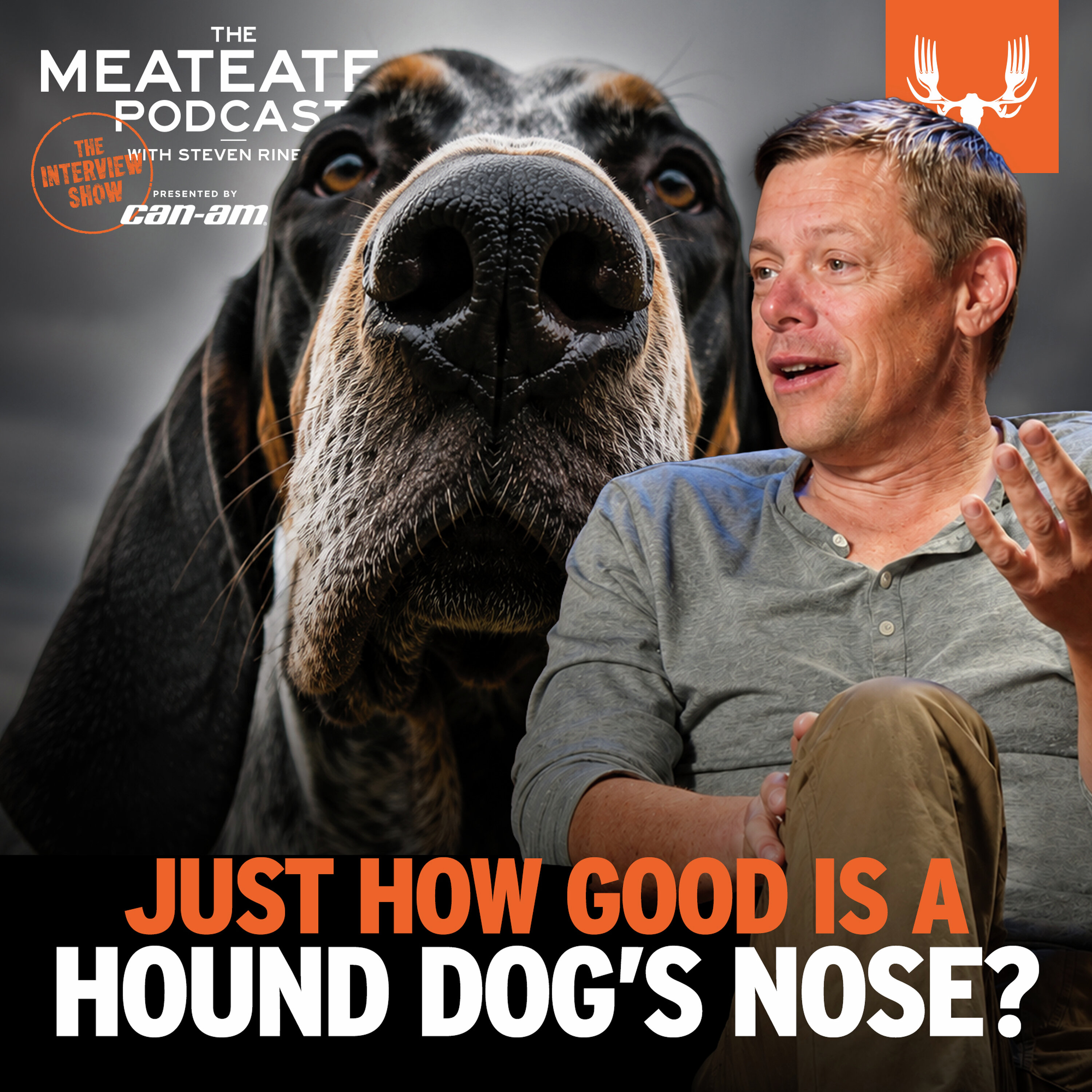
Ep. 921: Scent, Smell, and Science: Olfaction in Humans, Deer, and Dogs
The conversation shows how smell shapes animal navigation, communication, hunting strategy, and the limits of human attempts to hide from detection.
- 1Dogs read scent trails as changing records of direction, age, injury, weather, and individual identity.
- 2Deer can separate complex odors and learn that artificial scents, clothing, or masking strategies predict danger.
- 3Gray squirrels use smell, memory, nut quality, and spacing to manage caches with striking economic precision.
Don't miss
Jacobs explains how gray squirrels remember caches, assess nut quality, and place valuable food farther apart.
The brief
Dr. Lucia Jacobs explains why smell is more than detection: animals use odor to orient through space, identify individuals, and read changes over time.
Dogs outperform humans at locating scent because anatomy, training, personality, and experience shape distinct strategies for finding and following odor.
For hunters, masking human scent is no guaranteed solution. Deer can separate complex odors, learn associations, and treat artificial smells as warnings.
Weather and terrain rewrite a scent trail: humidity can preserve airborne odor, while textured surfaces hold heavier molecules for later detection.
The standout turn comes with gray squirrels, which remember caches, sort nuts by species and weight, and space valuable food farther apart.
Jacobs frames odor as a record of space and time, linking blood trails, scent marks, counter-marking, and animal memory.
Books & mentions
Some links are affiliate links — PodLume may earn a commission if you buy.
