Sep 14, 2026 · 2h 4m
Archaeology cannot settle who killed the mammoths
Ep. 931: Eating Rotten Mammoths
The episode shows why evidence for hunting, scavenging, migration, and extinction remains more ambiguous than familiar Ice Age stories suggest.
- 1Clovis points reveal varied technologies and uses, not a simple signature of one early American hunting culture.
- 2Experiments show hunting and scavenging can leave the same traces, weakening confident claims about human-caused megafaunal extinction.
- 3Genetic and archaeological evidence places people in North America before Clovis, while leaving routes, timing, and ancestry unsettled.
Don't miss
The guests dismantle the remembered Blackwater Draw story of a projectile point lodged in a mammoth’s eye, treating it as likely apocryphal.
The brief
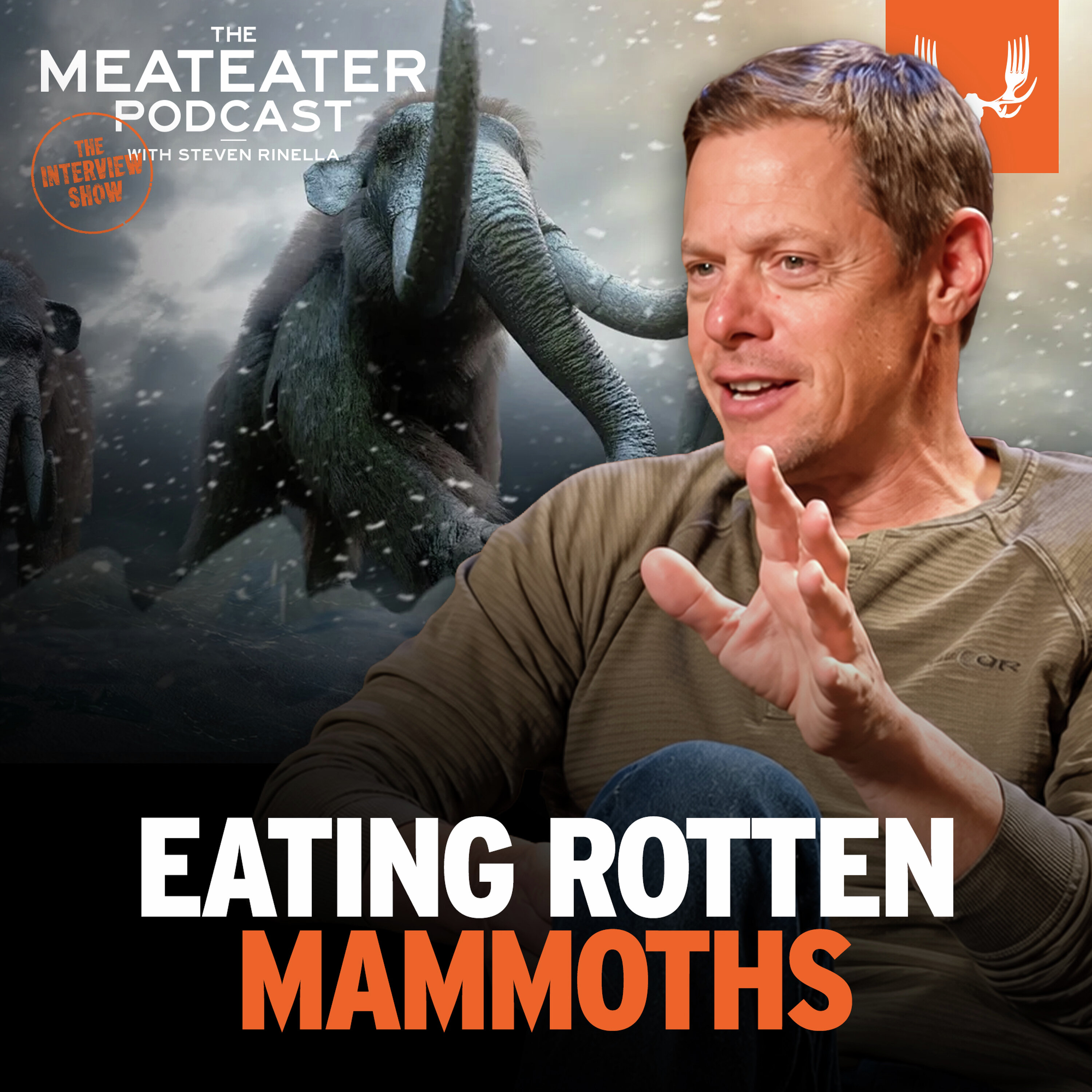
Steven Rinella joins archaeologists Metin Eren and David Meltzer to examine Clovis points, the first Americans, and the evidence linking people to Ice Age megafauna.
Clovis points were not a single-purpose tool: their fluting, size, and shape varied, while experiments suggest different forms handled impact and tasks differently.
The overkill debate turns on a frustrating problem: experiments show that marks, broken tools, and damaged bones can result from hunting, scavenging, misses, vegetation, or later disturbance.
With only about fifteen secure Clovis sites tied to mammoths or mastodons, the record cannot establish how often people killed these animals—or whether they found carcasses opportunistically.
The episode’s sharpest caution arrives with the Blackwater Draw skull story, whose supposed projectile point in a mammoth’s eye may be embellished memory rather than evidence.
Eren and Meltzer argue for disciplined uncertainty: one unequivocal kill can prove a hunt, but it cannot turn every ambiguous Ice Age site into one.
Books & mentions
Some links are affiliate links — PodLume may earn a commission if you buy.
