Oct 15, 2026 · 1h 5m
Listen from 22:17
Listen at 22:17
Buffett’s deals reshape a value investor’s playbook
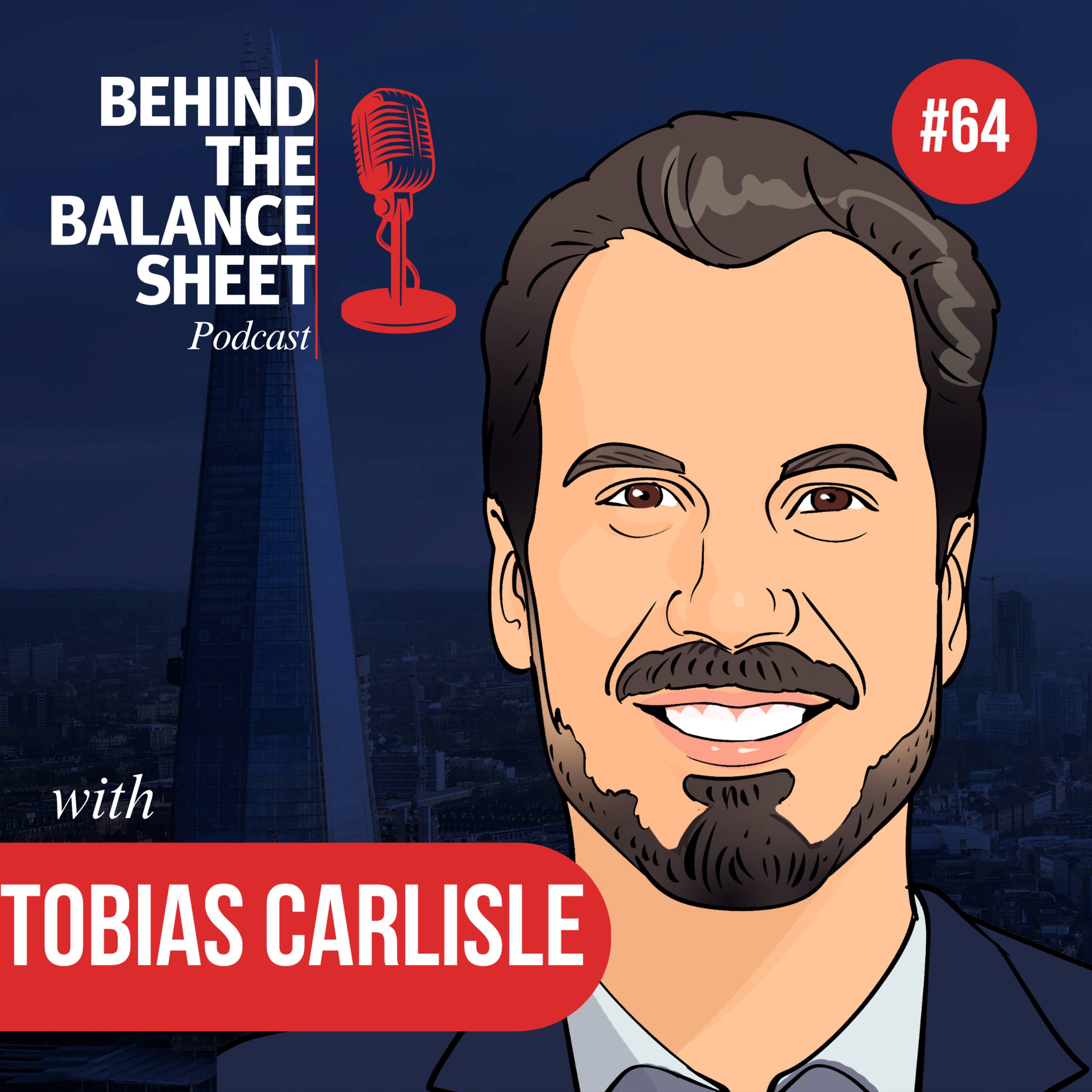
#64 - The Value Disciple: Tobias Carlisle on Buffett's 3 best deals and why value will come back into favour
The conversation tests whether disciplined valuation can coexist with owning higher-quality businesses after years of value investing falling out of favour.
- 1Carlisle explains why diversification and position sizing help investors survive value traps and uncertain outcomes.
- 2Buffett’s Gen Re, BNSF, Japanese trading-house, Apple, and Alphabet decisions reveal different routes to value creation.
- 3Carlisle’s evolution toward quality reflects a central constraint: even excellent businesses can become poor investments when bought too expensively.
Don't miss
Carlisle explains how Buffett came to view Apple as a consumer franchise despite his historical reluctance toward technology companies.
The brief
Tobias Carlisle traces his move from extreme deep-value investing toward higher-quality businesses bought at sensible prices, after a long period when value strategies struggled.
Carlisle argues that value traps are difficult to identify in advance, making diversification, position sizing, liquidity, and trading costs central to practical portfolio construction.
The discussion examines Buffett’s deals in General Re, BNSF, Japanese trading houses, Apple, and Alphabet as distinct examples of capital allocation, strategic fit, and valuation.
Carlisle’s changing view of quality reflects years of podcast conversations, research, and market experience—but he insists that the price paid remains decisive.
The episode closes on small-cap value, AI enthusiasm, and the possibility that market excitement is outrunning investors’ understanding of risk and limitations.
What was said on this episode
25 statements · 13 positive · 7 negative · 5 neutral
Value investing may recover after prolonged underperformance.
“the pendulum has perhaps swung too far in one direction and in the stock market it tends to swing back the other direction”
Listen at 10:50
Booking.com appears undervalued if its historical business model persists.
“if you look at the financials of booking.com on a historical basis and you assume that it continues to function the same way into the future, then you're getting a big discount right now on that valuation”
Listen at 13:40
Investors cannot reliably identify value traps beforehand.
“I don't think you can prospectively identify value traps.”
Listen at 14:11
Overpaying for unrealized growth creates quality traps.
“We also don't talk about quality traps. Like the quality trap is a real thing too, where people just overpay for growth that doesn't ever manifest.”
Listen at 14:14
Investors should avoid risks that could cause ruin.
“you need to avoid the risk of ruin”
Listen at 17:51
A poor business bought cheaply need not be an investment mistake.
“there's a bad business at the right price is not a mistake”
Listen at 26:51
Semiconductor stocks have repeatedly traded as deep value investments.
“the semis, semis have been deep value stocks. Many, many times.”
Listen at 28:07
Semiconductor stocks remain cyclical and may soon remind investors of that.
“I think everybody's forgotten that they're cyclical. They run up like they're going to come back. They'll be reminded pretty soon.”
Listen at 28:15
About 30 portfolio positions may provide an appropriate level of diversification.
“The outcome of all of that is that the intuition of the older value investors is probably right, that 30 is about the right number.”
Listen at 30:55
Tobias uses 100 holdings in his small- and micro-cap ETF because they are more volatile.
“I have 100 in my small and micro ETF deep because those businesses are much smaller. They're much more volatile.”
Listen at 31:10
Berkshire’s Gen Re acquisition protected it during the stock-market crash.
“It was a defensive acquisition that protected them from the stock market crash that happened.”
Listen at 35:29
BNSF gave Berkshire lower risk and control of regulated-return capital expenditure.
“he had much less risk. And then he had access to this, he controlled this enormous CapEx, regulated return on CapEx sort of empire that, you know, made the deal kind of strategically brilliant”
Listen at 38:52
Berkshire earned $600 million annually from Japanese trading-house dividend-financing spreads.
“he was earning $600 million a year on the spread between the dividends and the cost to finance it”
Listen at 42:48
Google is probably best positioned among companies for AI.
“Google probably is the best positioned company in this whole AI kind of...”
Listen at 46:15
Google can integrate AI across its products more easily than competitors.
“it seems like Google probably is well-positioned because they can integrate it across their product suite more easily than anybody else”
Listen at 46:51
Berkshire’s Alphabet investment departs substantially from its traditional strategy.
“I think it's a big departure from what Berkshire has traditionally done.”
Listen at 47:11
Tobias will buy higher-quality companies when their prices meet his requirements.
“I think that I will buy better quality companies if I can get my price in them.”
Listen at 49:13
Value and quality investing may outperform after the current market cycle ends.
“we're at the end of another long market capitalization growth value period and we've got some good times coming for value and quality.”
Listen at 53:50
Small-value stocks may outperform large-growth stocks over the next decade or two.
“I do think that it is a good time for small value. I would much rather be a small value guy over the next 10 or 20 years than a large growth guy.”
Listen at 1:00:52
AI could create substantial consumer surplus.
“Could be an enormous consumer surplus. Could be great for consumers.”
Listen at 1:01:50
AI will enable non-experts to code, write software, and systematize businesses.
“they're going to allow lay people to code and to write software to get you know business systematized”
Listen at 1:02:25
AI may enable tiny teams to operate gigantic enterprises.
“there'll be guys out there who'll create business systems to run gigantic enterprises with only a handful of people in them”
Listen at 1:02:41
AI-related market valuations are probably toward the expensive end.
“I think we're probably at the more expensive end of the market.”
Listen at 1:03:00
AI infrastructure companies are currently earning above sustainable levels.
“I think the picks and shovels guys are having a... They're over-earning at the moment, let's say.”
Listen at 1:03:02
AI-related growth will be more cyclical than it currently appears.
“I think the growth looks secular and it's going to be a little bit more cyclical than it appears.”
Listen at 1:03:15
Statements are attributed to the speaker as said on the episode and reflect their view at the time, not PodLume's. They are not advice.
Books & mentions
Some links are affiliate links — PodLume may earn a commission if you buy.
Soldier of Fortune
Carlisle’s book develops the Buffett and Sun Tzu ideas that shape the conversation.
The Acquirer’s Multiple
It presents Carlisle’s earlier low-enterprise-value approach to systematic value investing.

Security Analysis
The classic framework helps explain the valuation discipline underlying the episode’s debate.