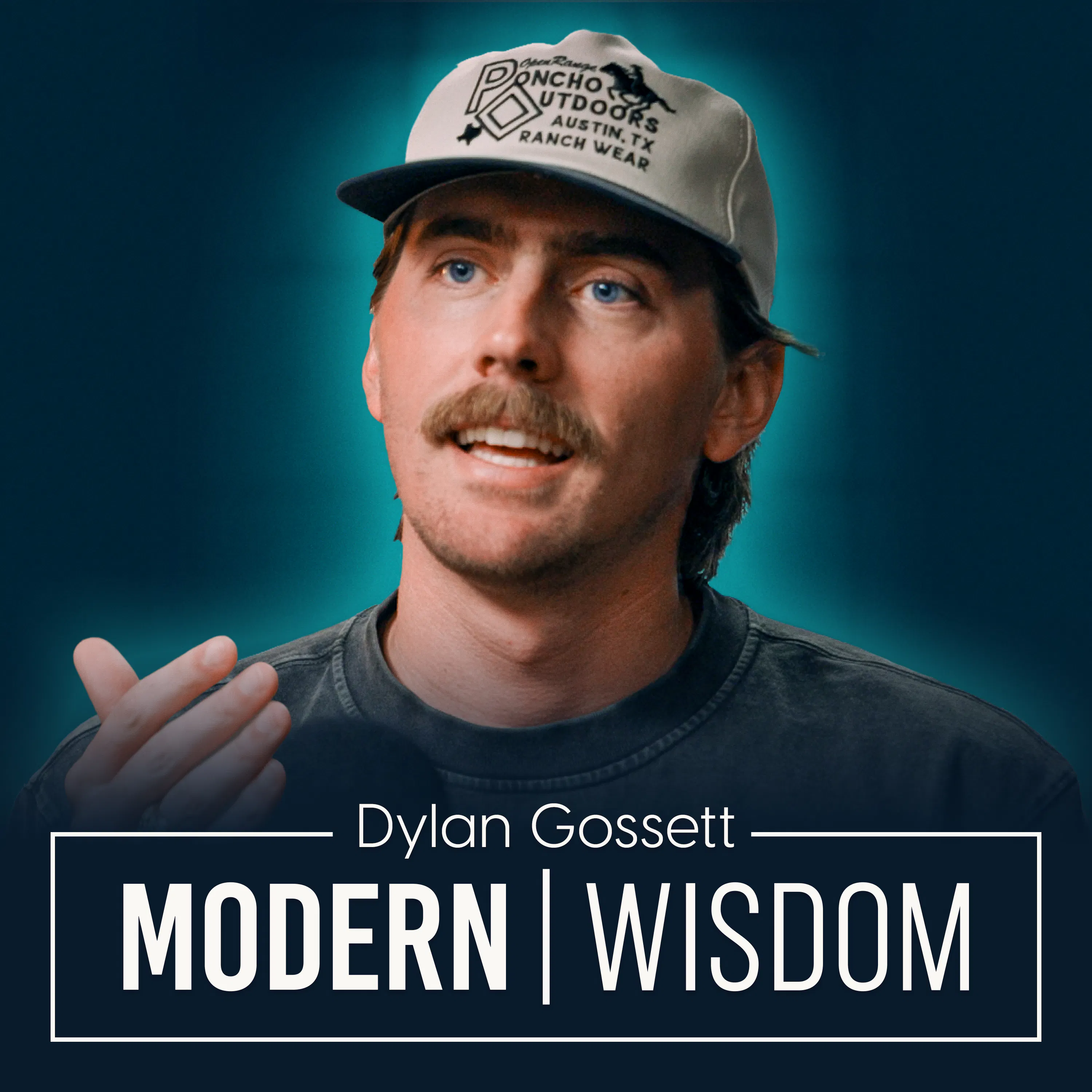
Sep 26, 2026 · 1h 29m
Dylan Gossett resists the algorithm’s version of creativity
How To Make Your Creativity Beat The Algorithm (Live Performance) - Dylan Gossett - #1155
The episode examines whether artists can turn viral attention into durable careers without letting metrics, formulas, or AI replace authorship.
- 1Viral promotion can amplify a song, but lasting success still depends on the music connecting beyond the campaign.
- 2Dylan Gossett treats friction, imperfection, and personal ownership as safeguards against formulaic or AI-shaped creativity.
- 3Instant audience feedback can reward repetition, making artistic independence harder precisely when visibility and commercial pressure increase.
Don't miss
Dylan Gossett performs “Clothesline” live before discussing whether releasing a full album can preserve surprise against a singles-driven strategy.
The brief
Dylan Gossett traces “Coal” from a quickly written song to a viral breakthrough, while explaining how a conventional job and life outside social media helped him absorb sudden attention.
The conversation separates promotion from staying power: niche accounts can seed a song, but marketing cannot manufacture a lasting connection or erase the financial risks of touring.
Gossett describes building songs from melodies, gibberish, and evocative phrases, defending solitary authorship against collaborative formulas and the pressure to reproduce whatever audiences reward.
AI becomes a test of creative ownership: assistance may organize or refine work, but the harder question is where help ends and authorship begins.
The episode’s central warning is audience capture, as instant reactions push artists toward familiar versions of themselves and away from the friction that gives music life.
What was said on this episode
25 statements · 9 positive · 13 negative · 1 mixed · 2 neutral
Music artists often function more like business managers than artists.
“I feel there's times where I feel a lot more... like a business manager than an artist, for sure.”
Listen at 9:49
“Cole” succeeds primarily because of its songwriting.
“I think the strength of the song is in the writing.”
Listen at 16:10
Audiences can generally detect inauthentic artistic presentation.
“People are smarter than they ever are. Like, dude, you're not going to fake it.”
Listen at 18:45
Country music’s current dominance will eventually reverse with rap’s resurgence.
“I think at some point country will be back down and rap will be back up.”
Listen at 21:15
Social-media seeding does not guarantee a hit song.
“Now, I'll say now more than ever, that doesn't mean that you're going to have a hit song.”
Listen at 24:17
Social-media promotion can increase exposure without creating genuine audience traction.
“It might put more ears on it, but if the song is not that great and if it kind of sounds like something else, it still won't really catch.”
Listen at 24:21
Consumers currently have reduced discretionary spending power.
“People don't have as much money as they want anymore.”
Listen at 26:33
A stadium concert outing for Dylan and his wife can cost four figures.
“that's going to be a four-figure day.”
Listen at 26:50
Sustaining a breakout music career is harder than achieving a major moment.
“The hardest part is maintaining it.”
Listen at 28:40
Success can make the original sources of creative inspiration harder to access.
“as you become successful, your ability to do the things that made you successful become harder to access.”
Listen at 30:19
Dylan is now open to collaborating on songwriting.
“I'm very open to collaboration”
Listen at 35:57
ChatGPT could quickly complete Chris’s essay from his existing draft.
“I knew that if I did that I would get the essay out today.”
Listen at 44:49
Doomscrolling during touring leaves Dylan feeling cognitively diminished.
“I feel like there's days that go by when I'm on tour, I'm on autopilot. I'm not doing anything beneficial. I get tired. I'm just on my phone. I'm doom scrolling. And like, I'm like, I'm getting dumber by the day.”
Listen at 46:03
AI assistance becomes unacceptable to Dylan in artistic or sentimental contexts.
“the line crosses for me is when it's like artistic or sentimental”
Listen at 49:19
Art’s value depends on human imperfection and emotional expression.
“the whole point of art is that it's not perfect and it feels like something only humans can do”
Listen at 49:25
Imperfections can enhance the vitality and quality of recorded music.
“the imperfections almost make it perfect sometimes”
Listen at 54:13
Accessible recording technology lets Dylan’s laptop-produced song outperform most heavily funded collaborations.
“I can write a song like Cole that I believe in and I can record it on my laptop. I put it out, and it does better than 99% of all the money-pushed multi-songwriter songs.”
Listen at 56:54
Successful music strategies will eventually be replicated and commercialized.
“It's only a matter of time.”
Listen at 57:35
Artists must rely on personal moral judgment to set boundaries for AI use.
“the only place that you have this, that you can make this decision is my own kind of moral gauge for what I want on the other side of it.”
Listen at 58:56
Dylan rejects maximizing hidden AI assistance in songwriting.
“I don't have, I don't think I have that thing in me where I'm like, how much can I squeeze out of this with AI to help me write this song without people thinking that it's AI?”
Listen at 59:44
Artists should expand their sound rather than remain trapped in a familiar style.
“you have to try to expand your sound”
Listen at 1:15:25
Creators who repeatedly conform to audience demands eventually resent their audiences.
“Every single person eventually has ended up resenting the audience”
Listen at 1:17:59
Instant social-media feedback can significantly affect artists.
“with the phones yeah i used to I don't know.”
Listen at 1:20:33
Releasing an album without advance singles can preserve fan excitement and surprise.
“wouldn't it be great just to give fans just 12 new songs that everyone can be excited for?”
Listen at 1:24:31
Releasing an album without singles may be less algorithmically effective.
“Algorithmically might not be the most effective way to do it, but it's sick.”
Listen at 1:24:59
Statements are attributed to the speaker as said on the episode and reflect their view at the time, not PodLume's. They are not advice.
Books & mentions
Some links are affiliate links — PodLume may earn a commission if you buy.
