Sep 17, 2026 · 46 min
Listen from 0:44
Listen at 0:44
Fed independence meets war-driven economic anxiety
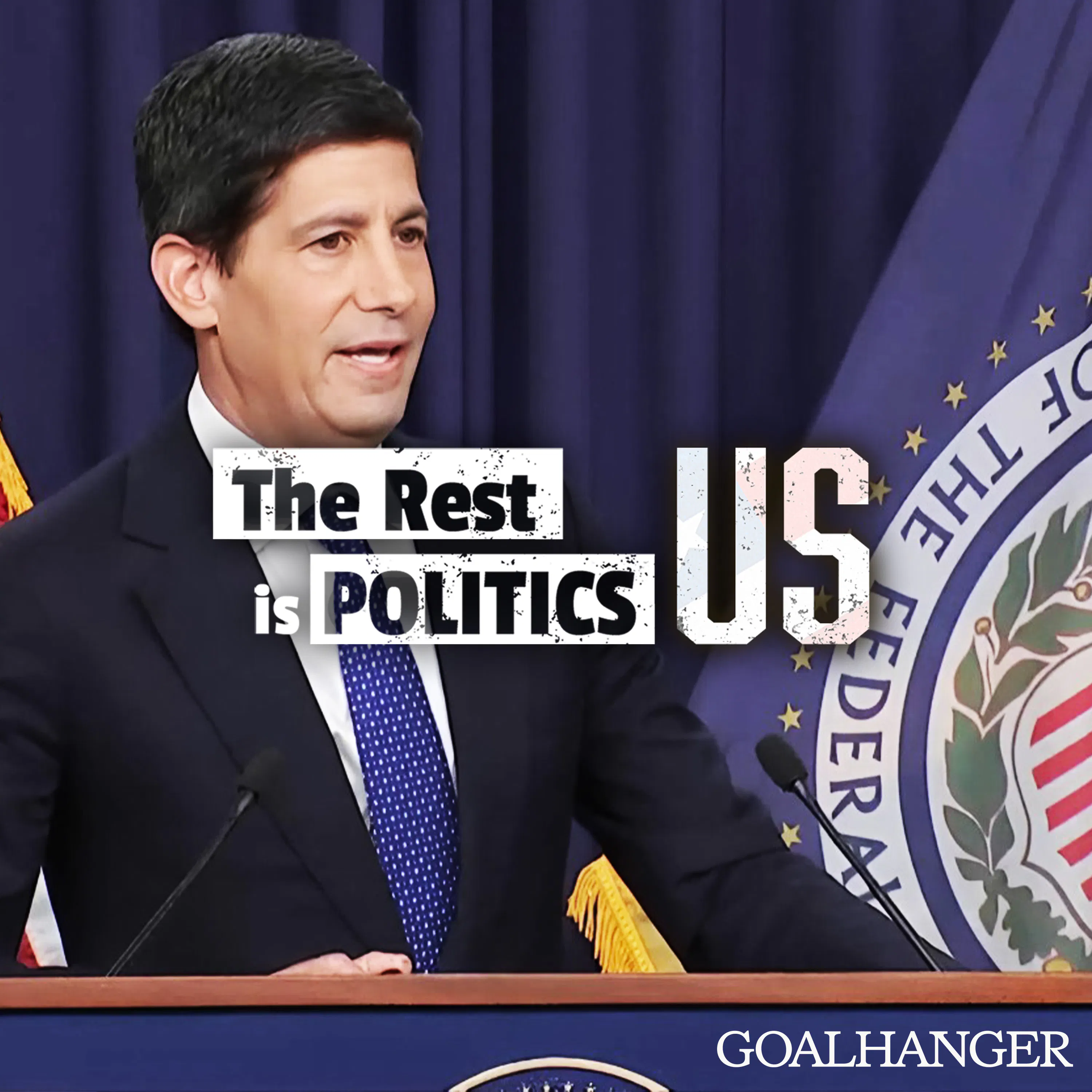
222. The Man Who Just Stood Between Trump and Economic Chaos
The episode connects central-bank credibility, affordability politics, and Middle East escalation to the stability of prices, markets, and U.S. alliances.
- 1An independent Federal Reserve may steady markets, but rising bond yields show how quickly confidence can fray.
- 2Democrats face an affordability crisis without a simple, specific economic pitch on prices, taxes, housing, and growth.
- 3Pressure on Iran could disrupt oil and shipping while weakening confidence in the U.S. security umbrella.
Don't miss
The hosts warn that pressure on Iran could produce prolonged conflict and weaken confidence in the U.S. security umbrella rather than deliver a quick political collapse.
The brief
Katty Kay and Anthony Scaramucci begin with the Federal Reserve’s independence, arguing that a rate decision can strengthen credibility while bond-market anxiety exposes deeper economic unease.
Their affordability debate turns on communication as much as policy: Democrats need concrete positions on prices, taxes, housing, growth, and trade that survive a hyper-partisan media environment.
The conversation then moves to Yemen, where conflict involving Iran and the Houthis threatens shipping, oil supplies, Saudi interests, and food prices beyond the battlefield.
The sharpest warning is strategic: sustained pressure may not topple Iran, but could prolong war, erode faith in U.S. protection, and encourage more countries to seek nuclear weapons.
Historical foreign-policy choices close the arc, linking today’s unintended consequences to the assumptions behind globalization, past strategic decisions, and the conditions surrounding Trump’s rise.
What was said on this episode
18 statements · 6 positive · 10 negative · 2 mixed
One-percent overnight rates are unsustainable alongside 3.3% core inflation.
“you can't have core 3.3% inflation. and have 1% rates on your overnight yields. Okay, that is not sustainable for a country.”
Listen at 5:23
Higher interest rates generally reduce financial-asset prices.
“interest rates are the physical gravity of financial assets so the higher the rates are usually the assets go down”
Listen at 8:04
High borrowing costs constrain U.S. business growth and capital expenditure.
“when borrowing costs get high, you're constraining the growth of American businesses. You're constraining CapEx spending.”
Listen at 8:12
May CPI reached 4.2% because energy prices increased.
“CPI hit 4.2% in May. That is a direct result of energy prices going up”
Listen at 9:04
Mortgage rates around 7% have made housing more expensive.
“Your mortgage rates are now at about 7%. So the cost of your housing has got a lot more expensive.”
Listen at 11:12
Deficit-reducing reforms would lower interest rates and prices.
“the kinds of reforms that would shrink the American deficit, and that would lead to lower interest rates, which would lead to lower prices.”
Listen at 13:29
The proposed tax policy would refund taxes to people earning up to $100,000.
“We're going to give you all the money back on the taxes so you can go buy the groceries and you can pay your rent.”
Listen at 16:31
Building-industry deregulation could enable more housing and prove popular.
“Deregulating the building industry to allow for more housing, I think, would be a popular proposition.”
Listen at 18:27
Anthony proposes negotiating an end to the Iran war.
“I'm going to negotiate an end to this stupid war”
Listen at 18:38
The Iran war will remain a quagmire through Trump’s term.
“we're going to be in a quagmire till the end of his term”
Listen at 18:42
Kevin Warsh gained substantial market credibility after four months as Fed chair.
“he did the hardest thing that a fed chair can do four months in and so he's got a lot of credibility now with the marketplace”
Listen at 20:48
The Fed will raise rates at least two or three more times within six months.
“the Fed's not going to raise rates one more time, at least two or three more times over the next five or six months”
Listen at 29:46
Iranian oil exports fell 85% while inflation reached 67%.
“Oil exports are down 85%. Inflation is through the roof, 67%.”
Listen at 33:47
Iran’s regime will outlast combined economic and wartime pressure.
“I don't think so. I think these people are going to outlast that.”
Listen at 35:04
Iran is under economic pressure but has unusually high tolerance for it.
“They are being squeezed economically. Their tolerance for being squeezed is remarkably high.”
Listen at 36:05
Economic pressure will produce an Iranian ceasefire but not regime change.
“I think this will put enough pressure on Iran to create a ceasefire and a break of this economic impasse, it's not going to put enough pressure on them to change the regime.”
Listen at 37:25
Reduced U.S. security guarantees will increase nuclear-weapons interest among capable countries.
“if you are a country that has the option of going for a nuclear weapon, you will look at that more seriously today.”
Listen at 38:21
Allowing China into the WTO without constraining it was a catastrophic policy decision.
“This catastrophic decision. was to allow China in and then to not check them as they were growing at it.”
Listen at 43:00
Statements are attributed to the speaker as said on the episode and reflect their view at the time, not PodLume's. They are not advice.
