Aug 9, 2026 · 1h 11m
Listen from 16:33
Listen at 16:33
Michigan primary tests the progressive path to power
Is the Progressive Takeover Real?
The episode examines whether progressive victories reflect durable electoral change or a moment that still leaves major general-election risks unresolved.
- 1Abdul El-Sayed’s Michigan victory challenges conventional definitions of electability and strengthens the case for economic-populist messaging.
- 2Progressive candidates need exceptional communication skills, broader media reach, and sharper issue control to convert primary wins into durable coalitions.
- 3Democrats face a strategic choice between fighting internal ideological battles and redirecting attention toward Republican extremism and economic politics.
Don't miss
Hayes argues that Democrats should distinguish appearing on Hasan Piker’s platform from campaigning alongside him, preserving reach without surrendering responsibility.
The brief
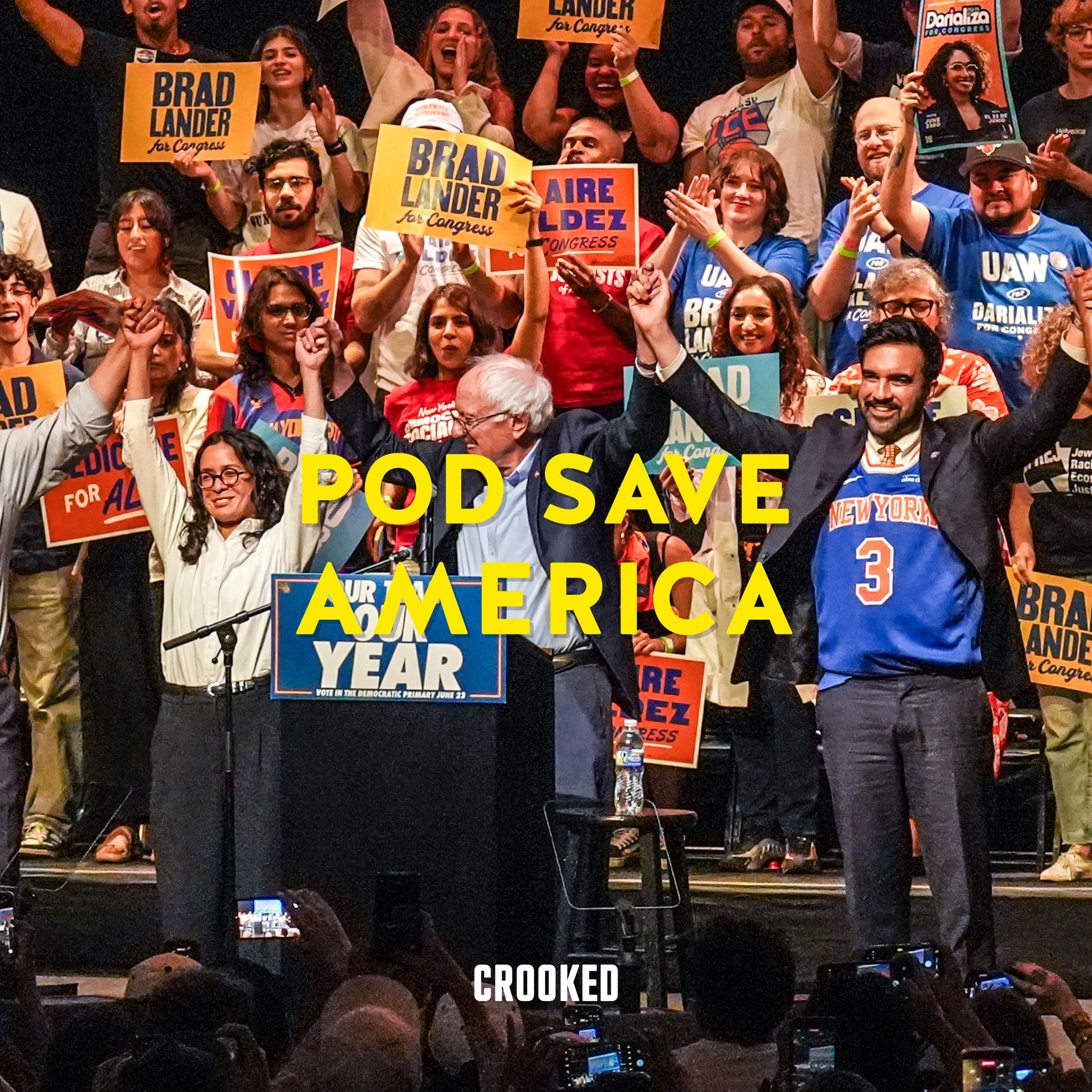
Chris Hayes joins Alex Wagner to assess Abdul El-Sayed’s Michigan primary victory, asking whether progressives are having a moment or building a durable electoral strategy.
The discussion contrasts El-Sayed and Zohran Mamdani with more moderate nominees, arguing that insurgents need unusual communication skills while traditional pathways offer different forms of vetting.
AIPAC spending, dark money, and attacks over party loyalty become a test of whether outside pressure can backfire and give El-Sayed political leverage in the general election.
Hayes separates Hasan Piker’s reach from responsibility for his rhetoric, arguing that candidates must choose carefully which platforms and alliances they use to build coalitions.
The episode widens into a media strategy: Democrats should take more risks, reach voters beyond television, and avoid letting polling precision or isolated gaffes define the landscape.
Its final argument links progressive appeal to a broader model of leadership—strength and dependability paired with emotional openness, care, and protection rather than authoritarianism.
What was said on this episode
28 statements · 10 positive · 13 negative · 5 neutral
Progressive strength has increased substantially among Democratic primary voters.
“there's no universe in which he would've emerged victorious 2, 4, 6 years ago. Something is obviously happening among, and let's be clear here, the Democratic primary electorate”
Listen at 7:42
Progressive economic-populist issues can attract voters beyond committed progressives.
“this is a cluster of issues that are both squarely in the kind of progressive populist wheelhouse and also can win people who aren't just down-the-line progressives”
Listen at 9:30
Michigan’s outcome will strongly influence national debates about progressive electability.
“what happens here is going to have a huge impact on those national debates, particularly the presidential primary, about who and what is electable”
Listen at 9:55
The progressive left has grown stronger inside the Democratic Party over the past decade.
“Yes. Pretty clearly, yes.”
Listen at 11:13
Insurgent candidates need exceptional communication skills to succeed outside traditional political channels.
“If you're not going that route and you are going to have success, you have to be a really dazzling communicator.”
Listen at 12:29
Democratic primary voters are often ideologically left of median voters and Democratic politicians.
“the primary voting Democratic base is to the left of both the median voter and the median Democratic politician in a lot of cases”
Listen at 14:50
Ideological extremism carries an electoral penalty.
“everyone actually understands that there is a penalty for ideological extremism”
Listen at 15:48
Public fights over unpopular left-flank issues failed to move the UK Labour Party toward electoral success.
“we're going to pick a bunch of high-profile fights so everyone's constantly talking about it all the time. And guess what? It didn't work.”
Listen at 20:40
Primary electorates can choose candidates poorly suited to general-election success.
“a primary electorate can select a candidate who is poorly optimized for a general election”
Listen at 22:00
Highly motivated Democratic primaries can select candidates too extreme to win general elections.
“That selects for candidates who are too ideologically extreme to win generals.”
Listen at 23:10
Donald Trump favors authoritarian personal control over the economy rather than free markets.
“Donald Trump is fundamentally authoritarian, illiberal, and believes in a personalist-controlled economy in which he makes all the choices”
Listen at 25:00
AIPAC’s strategy of disguising its policy agenda in primary advertising is politically toxic and self-defeating.
“I think it is both toxic for the discourse and also self-defeating to spend tons of money in the attempt to essentially trick the voters.”
Listen at 28:23
AIPAC should openly argue its Israel policy instead of disguising it through campaign spending.
“You have to make that argument and have the argument on its terms and not attempt to use the catastrophic Citizens United decision to pour a ton of money into races in the hopes of tricking voters”
Listen at 29:42
El-Sayed can benefit by highlighting outside spending against him in the general election.
“I think calling out that is actually very useful”
Listen at 33:08
Candidates should avoid campaigning alongside Hasan Piker in general elections.
“I don't think it makes a ton of sense in a general election, frankly, to campaign with Hasan Piker.”
Listen at 39:57
Hasan Piker likely needs to moderate his public statements to help the progressive movement.
“if Hasan Piker wants to contribute to the success of the movement, like he's probably gonna have to. Watch what he says a lot more.”
Listen at 41:28
Public figures’ communication choices affect their political consequences.
“the way that you communicate really does matter”
Listen at 42:00
Candidates should redirect campaigns toward their preferred issues and away from controversies.
“you gotta pivot to what you want the election to be about”
Listen at 44:19
Ron Johnson openly endorses 9/11 conspiracy theories.
“Ron Johnson, the sitting senator from Wisconsin, is a fully avowed 9/11 truther.”
Listen at 44:32
Democratic candidates and consultants should become less risk-averse about interviews.
“the risk aversion of Democratic political class, consultant class around interviews had to go away”
Listen at 47:29
Candidates should appear across media environments, gain interview experience, and communicate effectively.
“I think you got to be willing to go everywhere. And I think you got to get your reps in and you got to be good at talking.”
Listen at 49:49
Television reaches roughly half of the electorate, leaving half outside TV’s reach.
“about 50% you can reach through TV and 50% are just, like, completely off TV”
Listen at 51:04
Campaigns need a strategy for reaching voters television does not reach.
“you got to have a theory of the case for the other 50%”
Listen at 52:15
Michigan primary polling is especially difficult because voters do not register by party.
“primary polling is always hard, and particularly Michigan where people don't register for a party”
Listen at 58:20
Polling cannot provide the precision demanded in a highly polarized country.
“In a country as polarized as ours, we want a level of specificity that it can't deliver.”
Listen at 59:35
Polling indicates Michigan and Maine elections will be very close.
“My general takeaway of the polling that we've seen is that Michigan's going to be close, very close, that Maine is going to be really close.”
Listen at 1:00:06
Highly involved, educated, and liberal people are increasingly likely to respond to polls.
“the kinds of people who are highly involved and highly educated are the most likely to respond to polls, and those people are also the most liberal”
Listen at 1:01:06
Progressives should cultivate strength, leadership, dependability, and protection as positive masculine traits.
“the aspects of masculinity that I do think have a root in the culture, which is like strength or leadership or dependability or, you know, looking out for people, even protecting people, that like, that you cultivate those in a broader sense”
Listen at 1:06:21
Statements are attributed to the speaker as said on the episode and reflect their view at the time, not PodLume's. They are not advice.
