Oct 14, 2026 · 2h 53m
Listen from 2:31:20
Listen at 2:31:20
Microsoft’s AI hardware event exposes a strategy problem
WW 1005: Nicely Frosted - Why Microsoft's Latest Event Left Us Baffled
The episode connects Microsoft’s unclear AI hardware and Copilot plans to security pressure, weaker PC demand, and a broader shift in software and gaming.
- 1Microsoft’s RTX Spark push promises local AI performance, but pricing, memory limits, branding, and unclear use cases weaken its consumer case.
- 2Copilot’s movement between local models, cloud agents, and personal assistants still lacks a coherent interface or everyday purpose.
- 3Microsoft’s cross-platform Xbox strategy and AI development tools show software, games, and hardware converging around broader ecosystems.
Don't miss
The hosts argue that AI’s biggest gaming impact may be creating assets, music, animation, and dynamic characters rather than simply generating whole games.
The brief
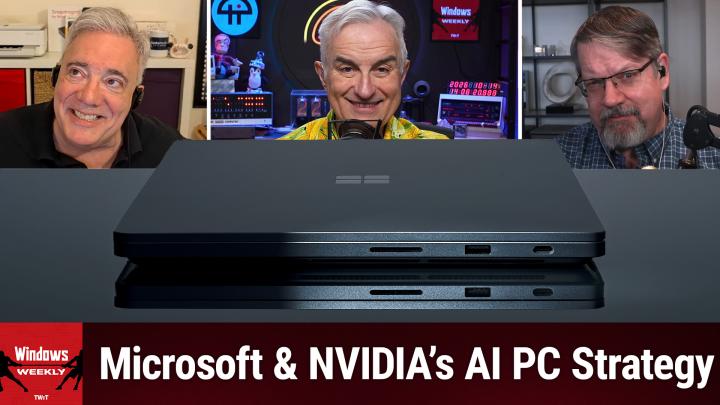
Paul Thurrott and Richard Campbell join Leo to examine Microsoft’s sprawling Windows and AI hardware event, where RTX Spark systems promise serious local performance but leave their consumer purpose unclear.
The central tension is practical: local AI depends on memory, model size, and speed, while Copilot keeps shifting between cloud agents, personal assistants, and features without a stable user interface.
A Patch Tuesday with more than 1,400 security fixes sharpens the stakes, as the hosts weigh better vulnerability discovery against the risks of unpatched software and rapid AI-driven development.
The conversation broadens to weak PC sales, Microsoft 365 storage changes, local smart-home systems, .NET 11, and AI tools that turn prompts into images, apps, and game assets.
The standout argument arrives in gaming: AI may matter less for simple vibe-coded games than for assets, music, animation, and dynamic characters, while Xbox increasingly reaches beyond consoles.