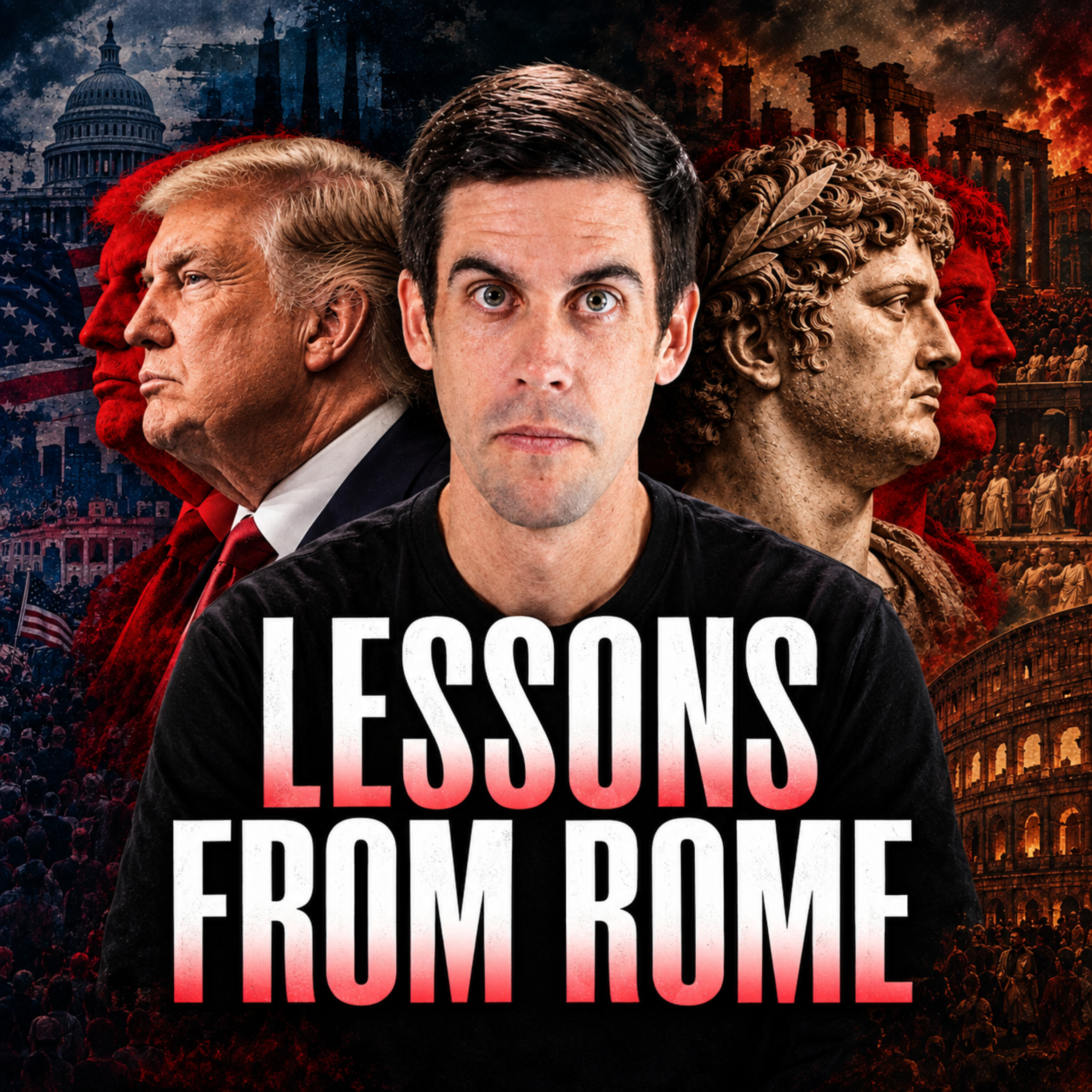
Sep 16, 2026 · 18 min
Stoic thinkers confronted corruption without abandoning public duty
You Don’t Need Your Books | 9 Stoic Lessons From Roman Politics
The episode argues that philosophy matters most when institutions are dysfunctional and private ideals face public pressure.
- 1Marcus Aurelius treated reading as preparation for virtuous conduct, not an escape from public responsibility.
- 2Seneca, Cato, and Marcus Aurelius engaged with corrupt political systems rather than waiting for ideal circumstances.
- 3Stoicism turns philosophical principles into practical behavior under pressure, where withdrawal can be as consequential as action.
Don't miss
The opening contrast between Marcus Aurelius reading and the spectacle of the Colosseum crystallizes the episode’s view of philosophy as disciplined attention.
The brief
Ryan Holiday opens with Marcus Aurelius’s devotion to reading, even amid the spectacle of the Colosseum, framing books as tools for conduct rather than escape.
The episode places Stoicism inside corrupt political worlds, arguing that virtue is tested by dysfunctional institutions instead of protected by ideal conditions.
Seneca, Cato, and Marcus Aurelius emerge as examples of thinkers who entered public life and accepted responsibility within flawed systems.
The central lesson is practical: philosophical ideas matter only when they shape decisions, self-command, and public conduct under pressure.
Books & mentions
Some links are affiliate links — PodLume may earn a commission if you buy.
