Oct 6, 2026 · 30 min
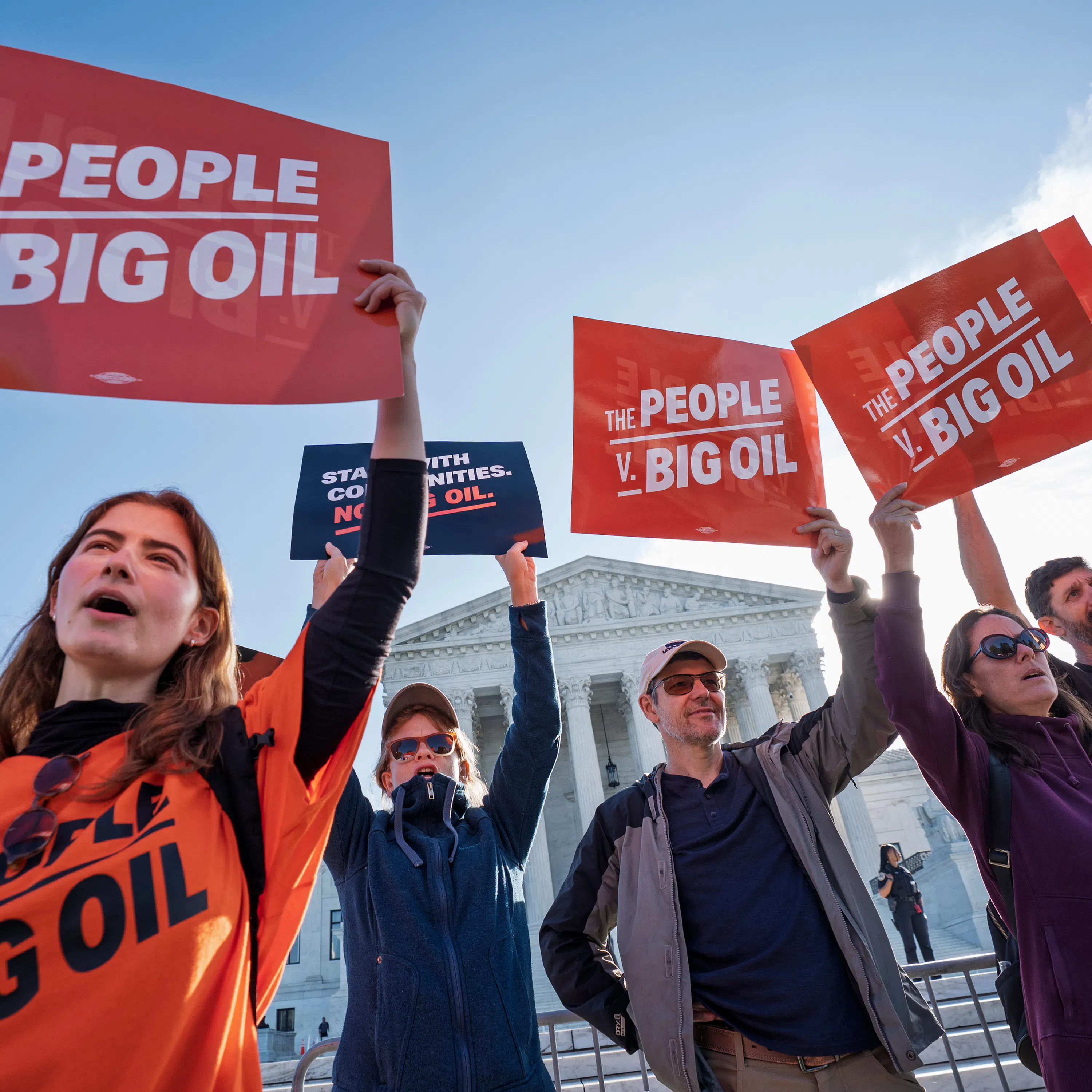
Supreme Court weighs local liability for climate wildfire costs
Supreme Court’s New Term: Wildfires & ‘Zombie Forests’
The case could clarify whether communities may pursue energy companies in court for wildfire damage and the expense of adapting to climate risks.
- 1Suncor v. Boulder tests whether local nuisance claims can address climate-related wildfire damage and infrastructure costs.
- 2Cornell allegations hinge on conflicting accounts, digital evidence, and fraternity communications that critics say prioritized damage control.
- 3Democrats see openings in traditionally Republican states, but most midterm contests remain close and control of Congress uncertain.
Don't miss
The climate-liability fight crystallizes in the question of whether local governments can use nuisance claims to recover wildfire and adaptation costs.
The brief
The Supreme Court’s new term opens with Suncor v. Boulder, a dispute over whether local governments can hold energy companies liable for wildfire damage and climate-adaptation costs.
The case turns on a clash between local accountability and national authority: energy companies argue climate change cannot be litigated through local nuisance claims, while Boulder points to mounting wildfire risks and infrastructure costs.
ABC News examines allegations involving Cornell fraternity members through text messages, secretly recorded calls, and witness accounts, including claims that internal communications focused on containing the fallout.
With four weeks before the midterms, Emily Guskin describes a competitive Senate landscape shaped by President Trump’s unpopularity and economic concerns, even as most races remain within the margin of error.
The episode closes on Tom Cruise’s disappointing opening for Digger, using the result to question the assumption that established stars and expanding franchises guarantee success.