Sep 23, 2026 · 45 min
The Supreme Court’s power grew beyond its original design
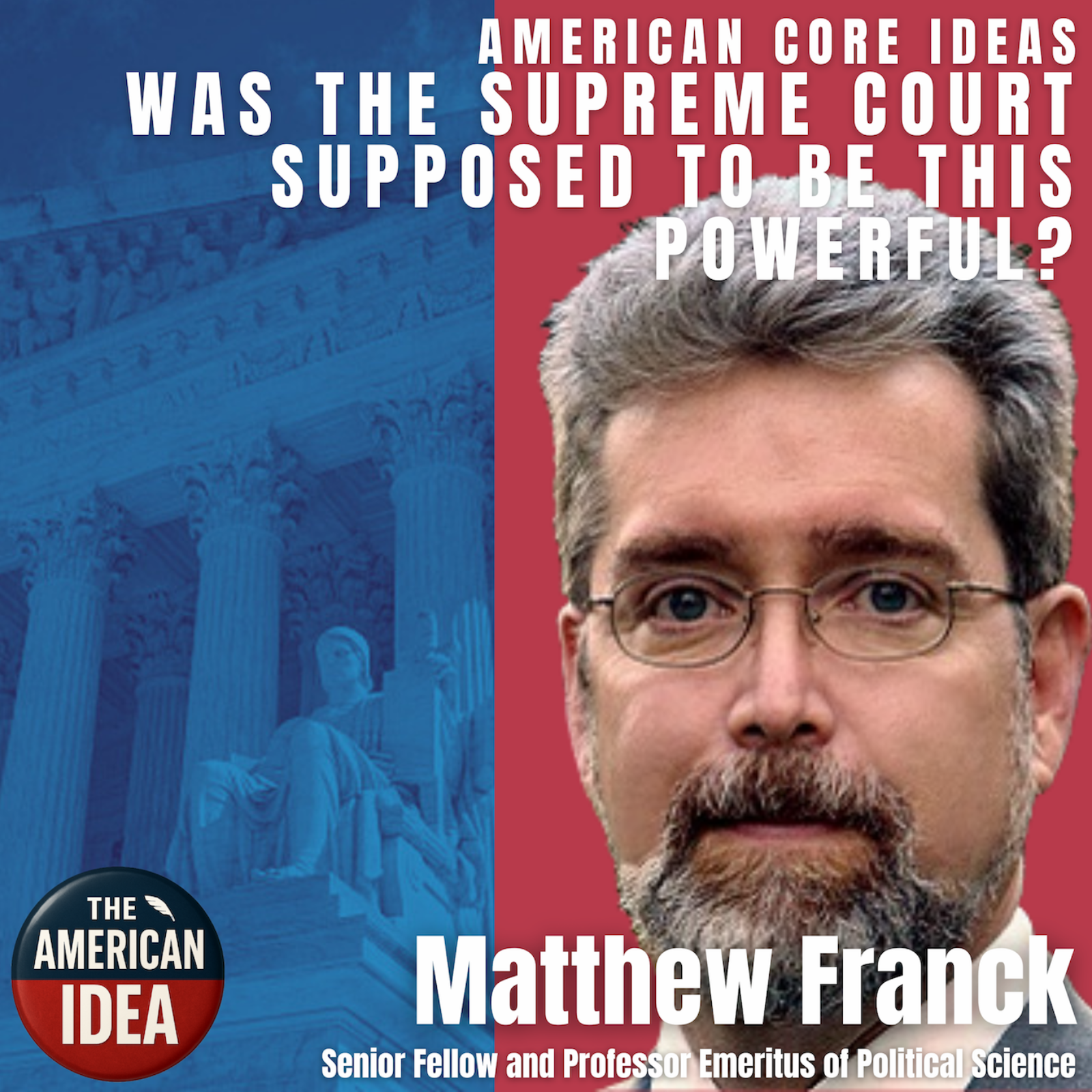
Was the Supreme Court Supposed to Have This Much Power?
The episode traces how judicial review became judicial supremacy, clarifying why constitutional authority remains a political fault line.
- 1Judicial review predated Marbury v. Madison, which did not single-handedly create the doctrine.
- 2Jefferson, Jackson, and Lincoln challenged the idea that the Supreme Court alone could settle constitutional meaning.
- 3Modern confirmation battles reflect a long-running dispute over whether courts or political institutions have the final word.
Don't miss
Lincoln’s response to Dred Scott rejects the claim that one Supreme Court interpretation automatically binds the entire nation.
The brief
Jeff Sikkenga and constitutional scholar Matthew Franck open with Brutus’s warning that the Supreme Court could become unusually powerful and independent, setting up a debate over authority rather than doctrine alone.
Hamilton defended judicial review before Marbury v. Madison, and the case’s actual holding complicates the familiar story that one ruling created the Court’s power to review laws.
The episode follows Jefferson, Andrew Jackson, and Lincoln as they resisted judicial supremacy, especially Lincoln’s refusal to treat Dred Scott as binding the entire nation’s constitutional judgment.
Franklin Roosevelt’s court-packing fight and the Court’s later move into a monumental building show how political conflict and institutional stature reinforced each other.
Modern battles over abortion, nominations, and the Court’s binding authority reveal that both conservatives and liberals alternately embrace or criticize judicial power.
Books & mentions
Some links are affiliate links — PodLume may earn a commission if you buy.
