Aug 24, 2026 · 48 min
Young voters fracture America’s old political map
Millennials Are Taking Over American Politics
Millennials and Gen Z are reshaping both parties while rejecting the ideological labels that once made voter behavior easier to predict.
- 1Millennials remain broadly left-leaning, while Gen Z brings deeper distrust of parties, institutions, and established systems.
- 2Insurgent movements on both sides channel economic frustration and cultural grievance, but their coalitions do not fit neatly into left-right categories.
- 3Online ecosystems amplify national pessimism, helping politically disillusioned young voters form new tribes across traditional party lines.
Don't miss
The conversation introduces Echelon Insight’s political-tribes framework to show why young voters can combine seemingly contradictory views on economics, culture, and institutions.
The brief
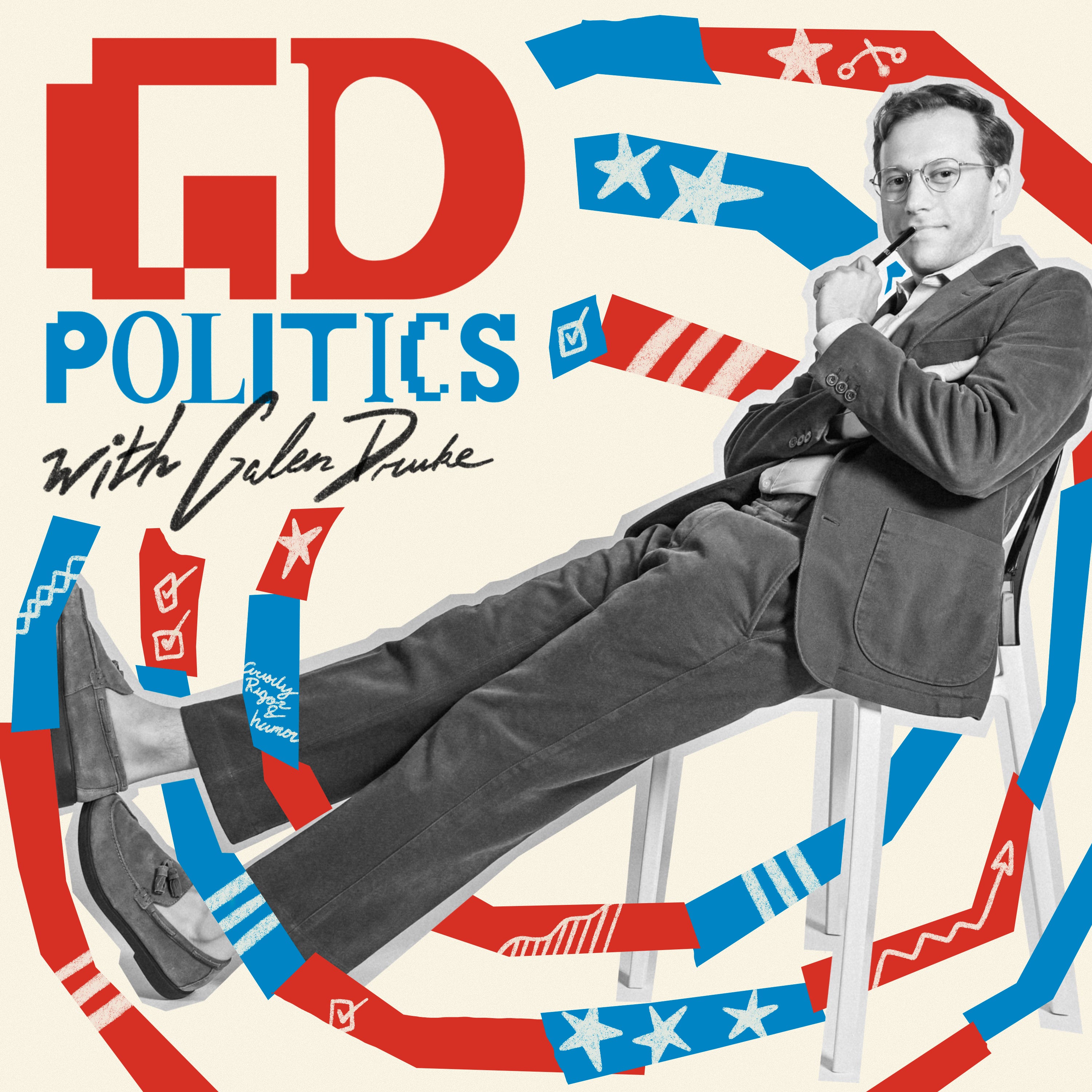
Kristen Soltis Anderson joins Galen Druke to examine how millennials and Gen Z are developing politically, economically, and culturally—and why younger voters are not moving as one bloc.
Millennials have largely stayed left-leaning, while Gen Z shows stronger distrust of parties and institutions shaped by COVID-era disruption and the feeling that no one is coming to help.
Michigan’s Democratic primary offers a case study in competing millennial styles: Abdul El-Sayed’s institutional skepticism and Haley Stevens’s more optimistic relationship with established politics.
The discussion compares progressive energy inside the Democratic Party with the Tea Party’s Republican transformation, then follows socialist appeal among downwardly mobile urban professionals.
Echelon Insight’s political-tribes framework captures voters whose views combine economic, social, and institutional attitudes in ways that conventional liberal-conservative labels miss.
The episode’s central warning is that online algorithms can turn relatively personal economic stability into shared national pessimism, fueling disillusionment on both the young left and right.
What was said on this episode
19 statements · 7 positive · 10 negative · 1 mixed · 1 neutral
Millennials remain substantially more left-leaning than Gen X and boomers
“their baseline is still so much further to the left than Gen X's ever was, than the boomers ever was”
Listen at 4:09
Millennials are increasingly buying homes and moving to suburbs
“Now millennials are buying homes. They're moving to the suburbs.”
Listen at 4:31
Younger voters did not become strongly capitalist after 2024
“younger voters... did not become like rabid capitalists in that time”
Listen at 7:00
Gen Z young men's conservative shift peaked in 2024 and is now easing
“young men in Gen Z had actually been moving more and more conservative, but that kind of peaks in 2024 and begins to like... subside, plateau, taper off just a little bit.”
Listen at 7:28
Gen Z young women have shifted substantially toward progressive politics
“young women. who have shifted very progressive in the last couple of years”
Listen at 8:05
Gen Z is less incrementalist and more willing to pursue sweeping change
“Gen Z doesn't really share some of those sensibilities. They're much less incrementalist. They're much more, let's just burn it all down.”
Listen at 12:03
The distrustful millennial political style appeals more to Gen Z
“only one of which is appealing to Gen Z”
Listen at 16:09
Distrustful progressive politics is gaining over optimistic institutionalism among younger Democrats
“there are these different strains of kind of millennial Democratic thought, one of which is sort of being crushed while the other one is becoming ascendant because it's drawing in new allies from from the young Gen Z Democrats coming behind them.”
Listen at 17:14
The Democratic establishment will have to confront the ideological insurgency
“that's going to be something that their establishment is going to have to grapple with”
Listen at 21:54
College-educated upscale Democrats increasingly support far-left candidates
“Those college-educated, more upscale Democrats are now... They are much more likely to vote for a candidate of the far left than they were in the past.”
Listen at 23:34
Economic inequality exposure can build resentment among educated professionals
“a resentment starts to build up”
Listen at 27:02
Online algorithms prioritize anger-inducing content over happiness-inducing content
“these algorithms like are more likely to prioritize putting something into your feed that's going to. piss you off than something that's going to like make you make you happy”
Listen at 31:09
Anger-amplifying information makes elections feel perpetually competitive
“It's why every election constantly feels like a swing election.”
Listen at 32:47
People should study Raihan Salam's effort to counter Mamdani in New York
“I would recommend everybody who listens to your podcast to go read the profile of Raihan Salam and the Manhattan Institute and what he is trying to do to be a counterweight in Mamdani's New York.”
Listen at 34:14
Young Republicans are less committed to traditional free-market orthodoxy
“there is less of an adherence to sort of old school free market orthodoxy”
Listen at 36:44
Young Republicans are increasingly skeptical of institutions and markets
“They are a little bit more skeptical of institutions. They are a little bit more skeptical of markets.”
Listen at 36:58
Younger Republicans prefer domestic spending over overseas commitments
“They'd much rather see those resources at home.”
Listen at 37:56
Young men's recent rightward shift may not persist through 2028
“there's no guarantee that that will stick around through 2028 or beyond”
Listen at 38:34
Gen Z is unlikely to embrace the current political status quo
“I suspect that they are not landing in a place where they think anything that's happening right now is what they're looking for.”
Listen at 39:03
Statements are attributed to the speaker as said on the episode and reflect their view at the time, not PodLume's. They are not advice.
Books & mentions
Some links are affiliate links — PodLume may earn a commission if you buy.

The Selfie Vote
The book supplies the earlier millennial political thesis that the episode revisits and tests.

Selfie Vote, Where Millennials Are Leading America and How Republicans Can Keep Up
This related book extends the discussion of millennials’ political influence and Republican strategy.

Bobos in Paradise
Its account of the professional elite connects to the episode’s discussion of education, class, work, and cultural status.