Oct 27, 2026 · 2h 4m
Anthropic’s valuation tests the limits of AI spending
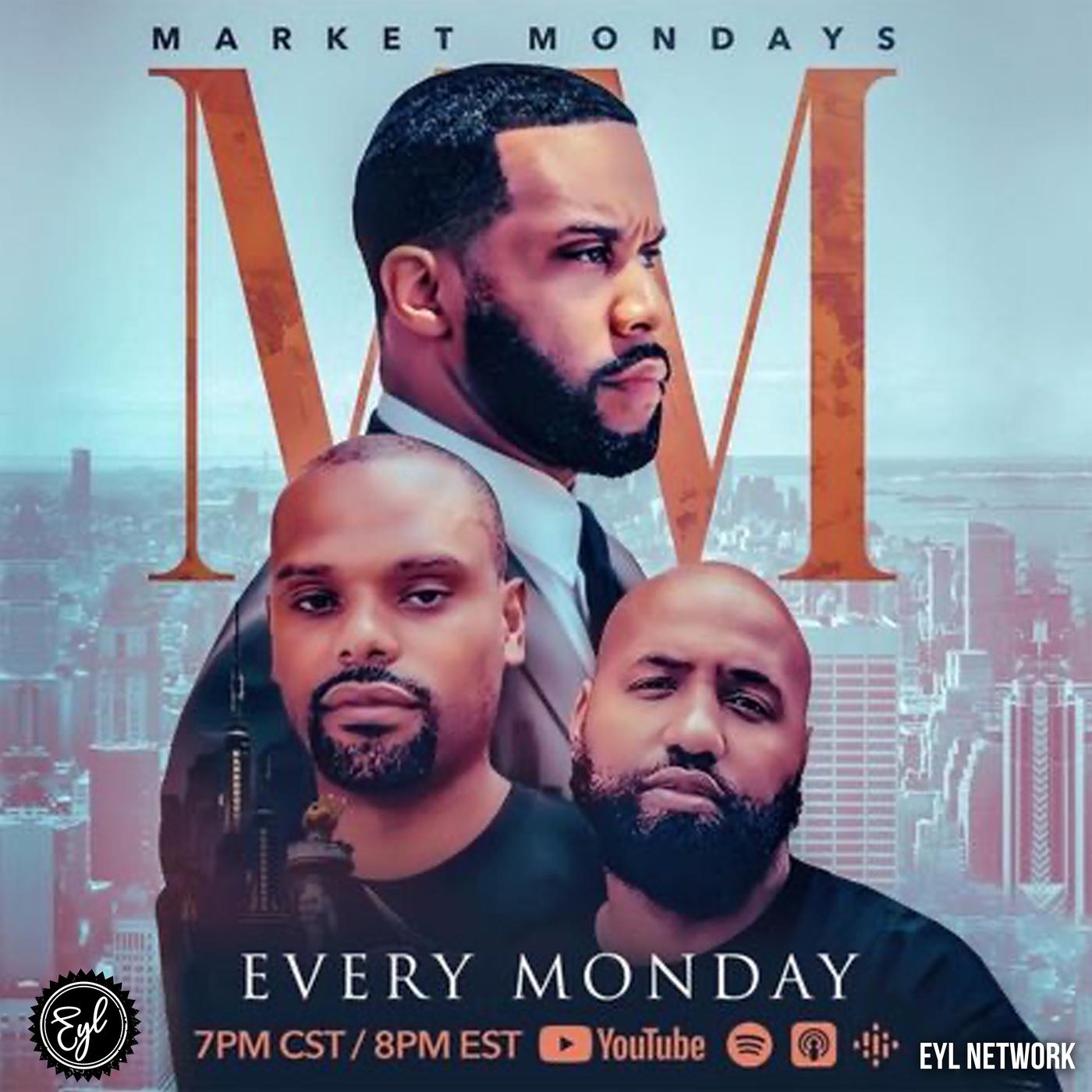
ANTHROPIC: BIGGEST IPO EVER? 🚨 NOVEMBER RALLY & 2 TOP CHIP STOCKS
The episode weighs whether AI’s extraordinary infrastructure buildout can produce durable returns or leave investors exposed to debt, overcapacity, and rapid workforce disruption.
- 1Anthropic’s potential valuation forces investors to compare explosive AI revenue expectations with uncertain profitability and heavy infrastructure commitments.
- 2CoreWeave and other neoclouds face a difficult test as debt costs, customer concentration, depreciation, and demand assumptions shape their valuations.
- 3The hosts favor patience, financial literacy, and selective exposure to quality chip and technology companies over chasing every AI-related opportunity.
Don't miss
The hosts use Anthropic’s potential $2 trillion valuation to ask whether AI revenue and infrastructure commitments can support expectations of that scale.
The brief
The hosts open with a market week dominated by AI companies, debt access, earnings, and the question of whether investors are pricing future growth too aggressively.
Anthropic’s potential IPO becomes the episode’s central valuation test: its revenue, enterprise customers, liabilities, lockups, and timing must justify expectations approaching $2 trillion.
The discussion widens to CoreWeave, IREN, Supermicro, and other neoclouds, where debt, GPU depreciation, customer concentration, and infrastructure built ahead of demand create fragile valuations.
Meta’s AI capital spending and Microsoft’s efficiency push sharpen the stakes, as the hosts connect enormous computing budgets with layoffs and broader workforce disruption.
The hosts close by comparing semiconductor and energy investments, weighing a possible November rally, and returning to patience: quality matters more than owning every fashionable AI stock.
What was said on this episode
44 statements · 31 positive · 8 negative · 2 mixed · 3 neutral
Market conditions will become unusually difficult, rewarding disciplined investors.
“over the next year, the market is going to be trickier than ever, and those who are disciplined are going to get paid.”
Listen at 10:25
180 S&P 500 companies will report earnings during the week.
“180 of the S&P 500 companies are going to be reporting”
Listen at 11:20
Long-term investors have no reason to exit the market.
“there's no reason to get out of the market”
Listen at 14:06
The current bull market ranks among history’s strongest.
“This bull market is one of the strongest in history.”
Listen at 14:18
The equity bull market could continue for five or six years.
“We can potentially have a five-year or six-year run”
Listen at 14:20
QQQ, VOO, and VTI should perform well for long-term accounts.
“QQQ, VOO, VTI will be good.”
Listen at 14:32
Brent crude could remain above $113–$114 if the war continues.
“if this war does not cease do we see a chance of us staying above 113 or 114 for brent oil”
Listen at 15:02
Anthropic’s IPO would become the largest ever above $1.7 trillion.
“If it hits the $2 trillion, or anything above 1.7, it will be the largest IPO in the history of the stock market.”
Listen at 16:53
Investors should wait six months before investing in Anthropic.
“you have to wait six months to invest in it according to my thesis and logic”
Listen at 18:46
Anthropic’s IPO timing positions it ahead of OpenAI’s expected IPO.
“Anthropic happening now is perfect. It gets ahead of ChatGBT's IPO”
Listen at 22:50
Anthropic is not worth a $2 trillion valuation.
“It's not worth $2 trillion.”
Listen at 23:34
Anthropic’s proposed valuation is somewhat excessive.
“the valuation is a little bit lofty”
Listen at 24:58
Anthropic could reach a $1.5–$2 trillion valuation if compute economics improve.
“if that trend can continue, then yeah, you could see it being worth somewhere in that ballpark, that 1.5 to 2 trillion.”
Listen at 26:40
Anthropic and OpenAI are probably too important to fail.
“anthropic is probably too big to fail so is open ai”
Listen at 37:02
Long-term DRAM demand remains strong despite ETF volatility.
“the long-term perspective is still strong because the demand is still strong”
Listen at 38:39
Every company eventually reaches a generationally attractive buying price.
“every company comes down to a buy level that is a generational buy price”
Listen at 40:57
Investors should buy DRAM at 47.
“buy at 47”
Listen at 42:33
Calling Microsoft “over” means it is uninvestable, not bankrupt.
“when we say over it doesn't mean bankruptcy it means uninvestable”
Listen at 43:26
Meta is a buy for investors.
“meta is a buy”
Listen at 55:45
Meta becomes attractive around $581.
“if meta gets to like 581 i definitely like it at that level”
Listen at 55:53
Meta has a credible answer for achieving returns on AI spending; most peers do not.
“For Meta, I do think they have an answer. But most of these companies don't.”
Listen at 59:35
CoreWeave leads the neocloud sector because of strategic partnerships.
“they do lead in NeoCloud for sure”
Listen at 1:03:25
Hyperscaler AI spending will approach $1 trillion in 2027.
“you're talking about nearly a trillion dollars in AI spend for 2027”
Listen at 1:07:13
Hyperscaler AI spending will generate future revenue, efficiency, and cash flow.
“the revenue will come back. They're going to have more efficiency and they're going to have more cash flow.”
Listen at 1:07:51
Hyperscalers may be making a major mistake with AI spending.
“They could be making a huge mistake.”
Listen at 1:08:39
NVIDIA is the primary beneficiary of current AI spending.
“The main beneficiary of this AI spin is only NVIDIA.”
Listen at 1:11:23
Microsoft’s OpenAI investment represents a strong return at a $1.5 trillion IPO.
“paying $10 billion? to own 49% of that company that's now trying to IPO for 1.5 trillion, that's good business.”
Listen at 1:17:20
Several companies announced large 2026 workforce reductions, including Microsoft’s 60,000.
“Layoffs in 2026, we talked about Microsoft, UPS 30,000, Oracle 30,000, Amazon 16,000, Omnicom 15,000, Meta 8,000. Microsoft, $60,000.”
Listen at 1:19:09
NVIDIA and AMD are the safest semiconductor choices.
“If you want safety, and that's NVIDIA and AMD.”
Listen at 1:20:31
AMD and NVIDIA lead the GPU semiconductor market.
“If we're talking about GPUs, it's going to be AMD and it's going to be NVIDIA for sure.”
Listen at 1:21:17
Broadcom and Marvell will lead custom ASICs.
“Broadcom and Marvell will be the top two in that space.”
Listen at 1:21:39
Historical patterns support a November market rally.
“history's on our side of the November rally. Yeah. So I would say I'm going with yes.”
Listen at 1:31:46
Indexes have historically been positive one year after midterm elections.
“after the midterms, one year out from that date, you have like a 99.9% chance of being positive.”
Listen at 1:32:11
The market indexes will rally after the midterm elections.
“I think we're going to have a rally.”
Listen at 1:32:19
Major market indexes will remain resilient despite political uncertainty.
“the indexes will be fine for sure.”
Listen at 1:33:18
OpenAI, Anthropic, and NVIDIA will remain resilient under any administration.
“OpenAI, Anthropic, NVIDIA, they'll be fine.”
Listen at 1:34:36
“I'ma probably lean towards iron at 1665 for a multi-year hold”
Listen at 1:35:52
Nebius is preferred over CoreWeave when choosing between them.
“Nibius would probably be the pick”
Listen at 1:38:41
CoreWeave’s debt structure and interest burden are major risks.
“the debt structure is so, so much of an issue. And the interest burden on that debt is a really high issue.”
Listen at 1:39:42
CrowdStrike is preferred over Anthropic as an investment currently.
“I would pick CrowdStrike.”
Listen at 1:46:31
CrowdStrike will remain highly important over the next four or five years.
“I think CrowdStrike is incredibly important going into these next four or five years”
Listen at 1:46:34
Companies will increasingly build internal cybersecurity instead of buying enterprise services.
“I think these companies are going to realize that they're going to build their own security”
Listen at 1:47:31
Anthropic could become more prominent as companies build internal cybersecurity with its code.
“I think Anthropic comes to the forefront”
Listen at 1:47:47
Cybersecurity will be the dominant technology priority in 2026–2027.
“In 2026, 2027, cybersecurity reigns supreme.”
Listen at 1:51:07
Statements are attributed to the speaker as said on the episode and reflect their view at the time, not PodLume's. They are not advice.
Books & mentions
Some links are affiliate links — PodLume may earn a commission if you buy.

Weekly email
State of the Pod, every Monday
The week's most-discussed names and stories from podcasts, with the moments behind them. Free, five minutes, unsubscribe in one click.