Sep 27, 2026 · 1h 34m
AI reshapes work without erasing human judgment
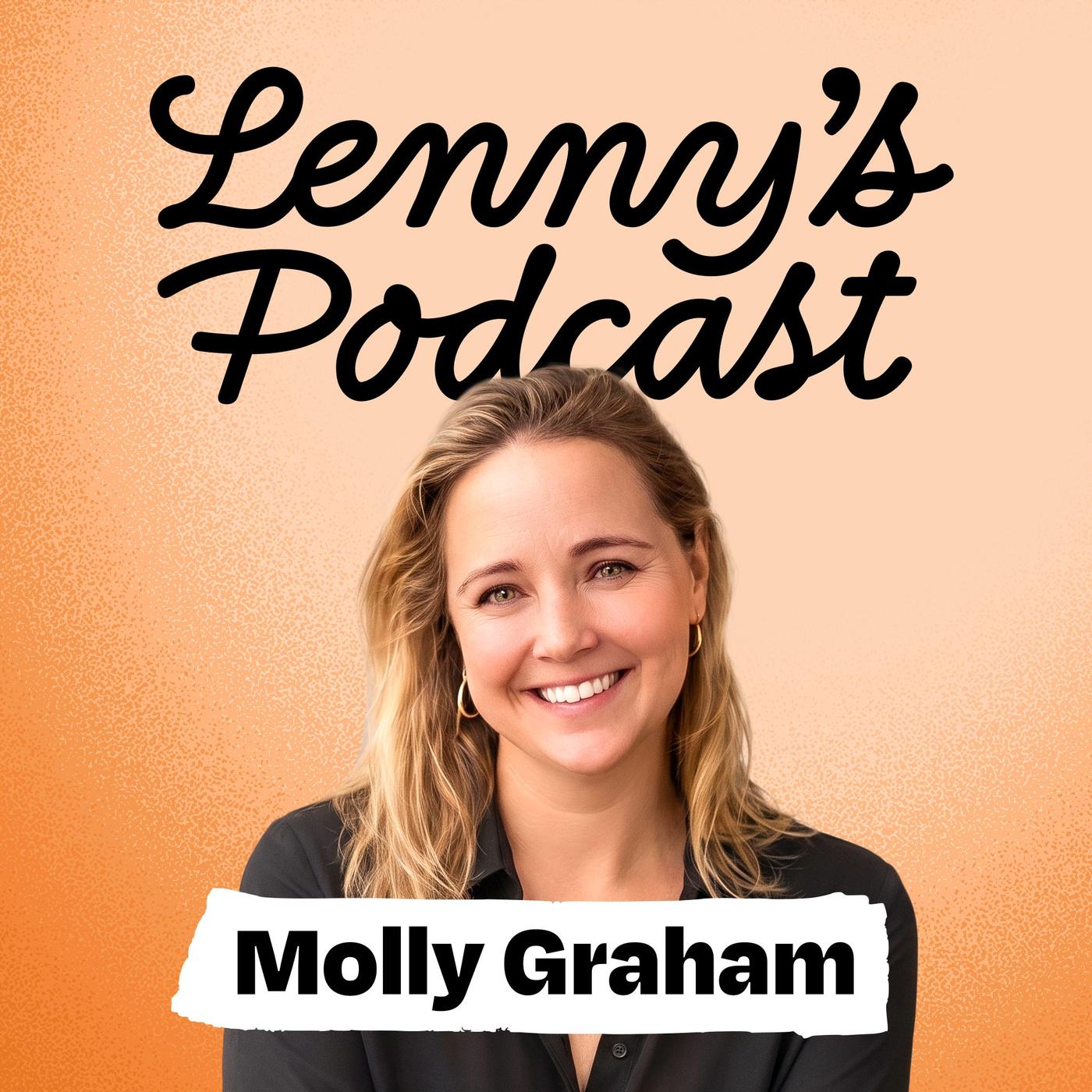
The grief, loneliness, and burnout sweeping through the tech industry right now | Molly Graham
As AI changes how people build, manage, and grow, the episode examines what to delegate, what to protect, and how to navigate the grief of transition.
- 1AI can absorb execution, but humans still own vision, taste, judgment, accountability, and meaningful craft.
- 2Giving work away remains essential for growth, yet AI makes the next opportunity less certain and delegation more emotionally difficult.
- 3Managers and communities become more important during disruption because support, coordination, and perspective cannot be automated away.
Don't miss
Molly Graham revises her own career advice, arguing that people should delegate execution to AI while keeping vision, judgment, accountability, and meaningful craft.
The brief
Molly Graham revisits her “give away your Legos” framework, which helped people grow by handing off projects and responsibilities as companies scaled.
AI intensifies the emotional cost of change: familiar work can disappear, identity can shift, and people may fear that giving away execution leaves no opportunity ahead.
The episode recasts AI as a capable but junior collaborator, requiring review and correction while humans retain accountability for outcomes and direction.
As AI expands individual output, the scarce skills become judgment, taste, ambition, and the ability to choose work worth making rather than merely producing more.
Graham’s revised advice is selective delegation: keep vision, judgment, accountability, and meaningful craft, while using communities and managers to navigate the storming phase.
What was said on this episode
35 statements · 10 positive · 19 negative · 2 mixed · 4 neutral
Some work should not be outsourced to AI.
“There are some Legos that shouldn't be given away. There's just some work that shouldn't be outsourced.”
Listen at 0:32
Workers should make themselves irrelevant to prepare for future change.
“your main job in the face of rapid growth and change is to make yourself irrelevant because it is the only way that you can be prepared for whatever is coming next.”
Listen at 13:31
Future success will favor people who learn over people who merely know.
“the future will be defined by the people that learn, not the people that know.”
Listen at 15:50
Failing to evolve in a changing workplace causes people to fall behind.
“standing still is like the least safe thing you can do. It's basically you're guaranteed to fall behind.”
Listen at 16:58
Removing humans from teams may improve efficiency but harms employee wellbeing and work quality.
“maybe you can like strip out all the humans and you get all this productivity and maybe you get efficiency, but you also get sad humans. Do you know what I mean? And like, that doesn't lead to like the best work for anyone.”
Listen at 23:14
Current evidence does not strongly show AI is eliminating jobs.
“As of right now, like there is not a lot of data, although you may have more than I do, that says that AI is genuinely taking jobs away.”
Listen at 27:03
Many AI-branded layoffs reflect poor management rather than AI-driven displacement.
“I have a lot of beef to pick with all the AI-branded layoffs out there because they're bullshit. Like they're not about AI. Like they're about badly run companies slapping an AI label”
Listen at 27:10
Many companies label layoffs as AI-related to obscure overhiring or poor management.
“they're about badly run companies slapping an AI label and getting some share points from that versus saying, whoops, we hired too many people.”
Listen at 27:16
AI will transform many jobs rather than eliminate them entirely.
“what if we believe that they're not going away, they're just going to reinvent themselves?”
Listen at 28:56
AI systems require context, onboarding, coaching, and training like human workers.
“AI needs the same coaching and training that a human does, right? It needs context, it needs onboarding, it needs all of these things.”
Listen at 35:52
AI should be treated as a junior intern rather than an infallible superemployee.
“we need a change from like this super intelligent being that's better than all of us at our jobs jobs to like, no, it's just a fucking intern, man.”
Listen at 37:00
AI-enabled productivity can increase low-quality output that burdens other workers.
“we've proven we can all generate a bunch of shit that other people then have to wade through”
Listen at 38:37
AI increases engineering productivity while multiplying code rewrites eightfold.
“for engineering, it has genuinely made people more productive. But the amount of lines of code that have had to be rewritten has gone up like 8x.”
Listen at 39:12
Delegating work to AI does not eliminate human oversight responsibility.
“delegating something to a robot is not the same as giving it to a human because you cannot get rid of the oversight”
Listen at 44:37
AI delegation leaves the delegator responsible for the mental burden of oversight.
“the mental tax stays with you”
Listen at 45:06
Managing AI systems requires skills similar to managing human employees.
“managing robots, those skills are very similar to managing humans.”
Listen at 46:48
AI technology will create many jobs.
“I'm a believer that a lot of jobs are gonna be created because of this technology”
Listen at 50:57
Protecting existing knowledge is not an effective way to thrive through technological change.
“that protection and holding on and gripping to what you know is not the way you thrive in change.”
Listen at 53:05
Organizations should reduce rigid boundaries between design, engineering, and product roles.
“we gotta break down some of these walls between what was a designer, right? What was an engineer? What was a PM?”
Listen at 56:27
Some responsibilities should remain with humans rather than being delegated to AI.
“in AI land, I think we gotta caveat this. Like, I think there are some Legos that shouldn't be given away, that the robots, like, both, like, don't deserve and, like, that we should hold onto.”
Listen at 1:00:40
Humans should retain certain responsibilities instead of delegating them to AI.
“there are some Legos that shouldn't be given away, that the robots, like, both, like, don't deserve and, like, that we should hold onto.”
Listen at 1:00:44
AI should reduce undesirable work and increase uniquely human work.
“my fervent hope for AI is that it lets us do less of the things we shouldn't have been doing in the first place and more of the things that humans are best in the world at”
Listen at 1:01:05
Human driving should be replaced because driving is automatable and humans perform it poorly.
“Humans shouldn't be driving. Driving is fundamentally just code and systems, and we're really bad at that.”
Listen at 1:01:22
Humans should retain work they are uniquely suited to perform.
“what are the, what are the things that we're uniquely suited to do? Those are the things we should hold onto.”
Listen at 1:01:35
CEOs should retain ownership of strategic judgment rather than outsource it to AI.
“things that require judgment, right? Things that require, like, again, to the CEOs that are asking AI for a strategy and then copying and pasting it and sending it to their company, like, no, like that is fundamentally something that a human brain that you as a CEO of your company need to own.”
Listen at 1:01:44
Work requiring trust and relationships should not be outsourced to AI.
“I think things that require trust, like that are, you know, fundamental to relationships, like we should not be outsourcing these things to robots”
Listen at 1:02:03
Trust-based relationship work should not be outsourced to AI.
“things that require trust, like that are, you know, fundamental to relationships, like we should not be outsourcing these things to robots”
Listen at 1:02:04
Tasks lacking a clear quality standard should not yet be outsourced to AI.
“if you don't understand what quality is, like, you can't outsource that yet.”
Listen at 1:02:24
People should not outsource their distinctive strengths and judgment to AI.
“do not outsource that. Like you can enable it, you can amplify it to use your data, but don't outsource it to these weird robots”
Listen at 1:05:56
Organizations and AI leaders generally consider current AI adoption to be at an early stage.
“Every single conversation I have with every leader, every manager at, you know, all of the big labs, every company is like, we are early.”
Listen at 1:11:10
AI progress will unfold gradually, taking years to understand its capabilities.
“it is a slow takeoff, and it isn't like the future is next day, next month. Like, it's gonna take years to really understand what this new tool, this new technology, all these fun interns can actually do”
Listen at 1:11:59
Many AI startups may produce products that become irrelevant within six to twelve months.
“what is the AI slop version of startups? Like, are we about to see a shit ton of companies just shipping stuff out into the world that's gonna last for like 6 or 12 months and then just disappear or get irrelevant.”
Listen at 1:17:57
Leaders should preserve standards for accountability and quality amid AI adoption.
“We need to hold on to the definition of accountability and what good means.”
Listen at 1:21:30
Eliminating management layers will harm organizations because management may matter more in AI-driven workplaces.
“I think it is a huge mistake. Like I think it is going to end up biting people in the ass long-term because I see no signs right now that management matters less. If anything, to your point, I think it matters more.”
Listen at 1:23:17
Available evidence suggests AI will create substantial job opportunities.
“the data isn't saying like there are no jobs for you. The data is saying like, actually, there's gonna be a lot of opportunity created by this”
Listen at 1:28:52
Statements are attributed to the speaker as said on the episode and reflect their view at the time, not PodLume's. They are not advice.
Books & mentions

The Odyssey
The epic is mentioned through the episode’s discussion of uncertainty, change, and the journey through disruption.

Lightning Thief
The book appears in a brief cultural reference during the conversation’s discussion of AI and uncertainty.

Worklife with Molly Graham
A related show centered on the changing world of work and the human experience of ambition, burnout, and self-doubt.
Weekly email
State of the Pod, every Monday
The week's most-discussed names and stories from podcasts, with the moments behind them. Free, five minutes, unsubscribe in one click.