Oct 2, 2026 · 1h 41m
Alex Zhang argues better harnesses could unlock hidden AI capability
Academia is for Ambition — Alex Zhang, MIT
The episode examines whether AI’s limits reflect model weakness or interfaces that cannot support reliable, persistent, long-running work.
- 1Recursive language models use code, external memory, and subagents to extend what a single context window can accomplish.
- 2Agent swarms depend on deliberate harness design, persistent communication, and coordination economics rather than model intelligence alone.
- 3Academic researchers can pursue unconventional bets that industry labs may overlook, especially in AI for science and open-ended discovery.
Don't miss
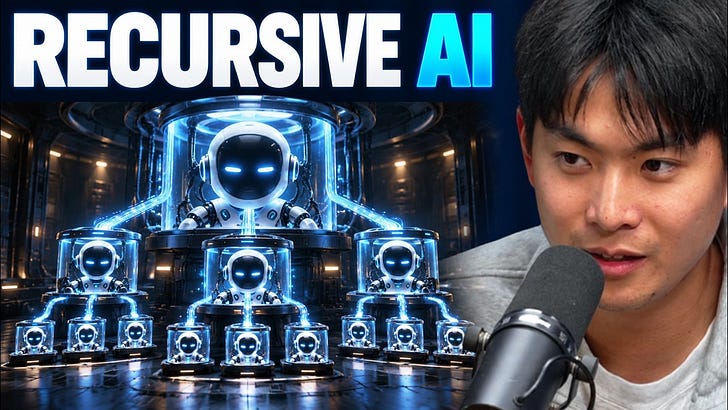
Zhang explains how a recursive language model can use code, external memory, and programmatically called subagents to manage work beyond a single context window.
The brief
Alex Zhang traces a path from GPU kernel optimization and KernelBench to broader questions about how interfaces shape what AI systems can accomplish.
His central claim is that current models may be more capable than their tools suggest: external memory, recursive subagents, and persistent communication could support longer, more reliable work.
Prime Agent makes that idea concrete with a minimalist harness where code calls subagents and manages context, while speculative execution reduces the latency of tool use.
The conversation widens to agent swarms, open-ended discovery, and AI for science, where coordination, filtering, and choosing durable research problems remain harder than generating possibilities.
Zhang’s academic case is deliberately contrarian: researchers should pursue strong, unconventional ideas that frontier labs may dismiss before their value becomes obvious.