Oct 3, 2026 · 1h 41m
Listen from 1:06:29
Listen at 1:06:29
Angela Duckworth argues discipline starts with better surroundings
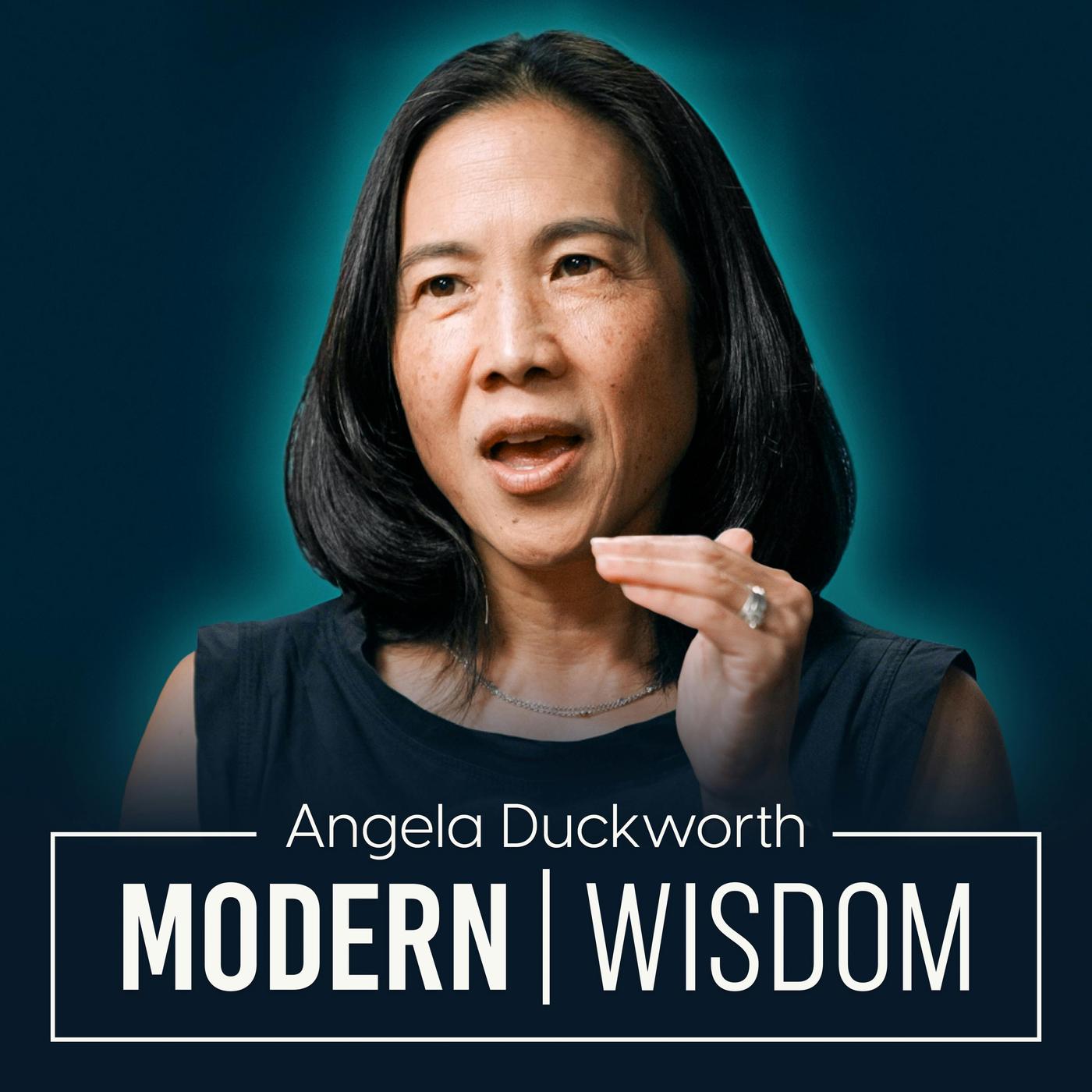
Willpower Expert: The Secret To Effortless Discipline - Angela Duckworth - #1158
The conversation challenges the idea that achievement comes from effort alone, showing how relationships, culture, and environment determine whether persistence remains sustainable.
- 1Sustained achievement requires alignment and supportive conditions, not simply more effort or stronger willpower.
- 2Disciplined people often design environments that make good choices easier and reduce unnecessary friction.
- 3Burnout signals that persistence has become misaligned, making recovery and changed circumstances more important than continued force.
Don't miss
Angela Duckworth explains how her own burnout exposed the limits of pushing through and changed her understanding of sustainable grit.
The brief
Angela Duckworth expands her account of grit, arguing that effort matters only when it is aligned with the right goals, relationships, and circumstances.
The conversation reframes willpower as environment design: disciplined people often arrange their lives so desirable behaviors require less resistance.
Michael Phelps and Bob Bowman illustrate why talent and grit need a fitting situation, while mentors, groups, and culture can make excellence more attainable.
Duckworth describes burnout as exhaustion, dissociation, and helplessness, warning that isolation and relentless self-reliance can turn grit into harm.
The episode’s broader lesson is to change the system when constant force is required, curating inputs and communities that make sustained effort possible.
What was said on this episode
41 statements · 22 positive · 12 negative · 3 mixed · 4 neutral
Excellence requires consistent effort over time.
“there is a final common path to becoming great that requires consistency over time”
Listen at 1:02
DNA influences individual differences in grit.
“your DNA will incline you to be grittier or less gritty”
Listen at 1:33
Trying harder alone is an incomplete strategy for progress.
“try harder is not wrong, but it's incomplete”
Listen at 3:23
Treating effort as everything can be dangerous.
“effort is everything. If it's not working, try harder. I think is dangerous.”
Listen at 4:19
Effort-focused achievers may need higher-return situations rather than more effort.
“Those people are the ones who make the mistake of just pushing harder instead of finding a situation where their effort has higher return.”
Listen at 6:33
Situations often control people’s thoughts more than they realize.
“very often the situation is in charge of your thoughts”
Listen at 11:30
Highly successful people arrange life to reduce reliance on willpower.
“highly successful people are not using willpower. Highly successful people are doing exactly what you said, which is they're arranging their lives so they don't need to use willpower.”
Listen at 12:23
Highly successful people arrange their lives to reduce reliance on willpower.
“highly successful people are doing exactly what you said, which is they're arranging their lives so they don't need to use willpower”
Listen at 12:26
Small environmental friction can change whether people exercise.
“That microfriction, the microfriction of like, I could open the drawer, I could hunt around, I could find it. Is enough to make the difference.”
Listen at 13:54
Relying on willpower is an ineffective way to change behavior.
“don't wait for willpower. That's the worst way to change human behavior.”
Listen at 14:07
Time pressure substantially affects whether people help others.
“It has a massive effect on whether they stop and help the person who needs help.”
Listen at 17:16
Changing circumstances can reinforce further situational agency.
“situational agency begets situational agency”
Listen at 18:33
Grit is necessary but insufficient for Michael Phelps’s excellence.
“grit is essential and how grit is not enough”
Listen at 19:26
Michael Phelps’s Olympic medal record is unlikely to be surpassed.
“Nobody's going to approach this record that he has of 28 medals, 23 of them gold across a 20-year career.”
Listen at 20:20
Exceptional gritty performers also benefit from supportive situations.
“You show me the paragon of grit, and if you keep looking, you will also find a situation that was their ally.”
Listen at 22:32
People achieve individual goals more successfully within supportive groups.
“you'll be more successful on average if you do that in a flock, as part of a tribe.”
Listen at 27:25
Giving students advice can improve their grades.
“their grades went up”
Listen at 33:37
Modern society’s default settings are harmful.
“I don't think the default settings of the modern world are good.”
Listen at 36:36
Award-winning scientist mentorship increases award-winning scientist likelihood two- to fourfold.
“your likelihood of becoming, for example, an award-winning scientist is 2 times to 4 times larger if you're mentored by an award-winning scientist.”
Listen at 39:29
Cody Coleman graduated from MIT with a 4.9 out of 5.
“he graduated with a 4.9 out of 5”
Listen at 43:02
Success requires grit plus agency to enter better situations.
“you need grit, but you also need to have the agency to navigate into better and better situations.”
Listen at 46:31
Burnout involves exhaustion, disconnection, and perceived helplessness.
“That's what burnout is. It's an emotional state characterized by, I'm exhausted, I feel strangely not connected to my work anymore, And also nothing I do is working and I have no agency”
Listen at 47:23
Overreliance on grit while neglecting situational change can worsen burnout.
“the danger of only thinking that grit is your superpower and also being ashamed or negligent of the change of the situation that would make things better”
Listen at 48:39
Willpower or thought alone cannot resolve burnout; circumstances must change.
“You cannot will yourself to not be burned out. You cannot think yourself out of burnout. You have to change the situation”
Listen at 55:32
Burnout is recoverable and is not a permanent personal characteristic.
“the prognosis is good”
Listen at 55:38
Burnout is a temporary emotional state, not a permanent personal trait.
“Burnout to me is not like a characteristic of a person, like their height.”
Listen at 55:40
For some illness-related capacity problems, working harder worsens the condition.
“working harder actively makes the problem worse.”
Listen at 1:00:14
Grit is not simply forcing oneself to act.
“I don't think the grit muscle is a voice that says, just do it.”
Listen at 1:06:29
Sustained effort requires interest, importance, capability, and a next step.
“what alignment is, is that internally, You're aligned. I want to do this. Why? Because it's interesting and it's important and I can do this and I know what to try next.”
Listen at 1:07:46
People should align internal and external forces supporting their goals.
“All I'm saying in this book is line up the arrows. Don't ignore the arrows.”
Listen at 1:08:49
Environmental design can ease hard work without eliminating effort required for excellence.
“you can't take the hard work out of excellence, but you can make hard work easier, and you do that by setting up your situation.”
Listen at 1:14:55
Supportive parents and teachers contributed to Amanda’s later mathematical success.
“What about the father who learned all this really hard math and sat with her and gave her the next problem, explained things?”
Listen at 1:18:24
Michael Phelps’s achievements depended on coach Bob Bowman.
“You cannot be Michael Phelps without Bob Bowman, full stop.”
Listen at 1:19:24
Roger Federer’s excellence depended on an ecosystem of support.
“if you want to get all the points, you can give Roger Federer all the points if he doesn't have all those people that he relies on, his agent, okay, that's fine, but he won't be the Roger Federer that we know.”
Listen at 1:23:18
Self-reliant achievement limits how far a person can progress.
“You can keep all the points, but you won't go as far.”
Listen at 1:23:46
Self-reliance can preserve credit while limiting total achievement.
“You can have 100%, but the size of the pie is going to be smaller.”
Listen at 1:23:53
Feeling burned out usually indicates excessive effort and requires changing circumstances.
“if you feel burned out, then you probably are trying really hard”
Listen at 1:24:48
Sustained higher effort eventually requires changing one’s circumstances.
“eventually that's where you end up anyway.”
Listen at 1:26:36
Consistent excellence depends on situations that support consistency.
“the path to consistency is a situation that sets up consistency.”
Listen at 1:27:50
Changing one’s location may be the most powerful life change.
“I think the biggest change you can make in your life is to change your zip code.”
Listen at 1:34:45
AI and screens are reshaping human behavior more than recent technological changes.
“the seismic changes in technology, phones, social media, AI, Everyone's talking about it, but as a behavioral scientist, I can't say that I have seen anything that's changing the way we spend time, the way we do or don't socialize, the way we exercise, the way we do everything, religions, that's greater than the things that are happening right now with AI, with screens.”
Listen at 1:39:40
Statements are attributed to the speaker as said on the episode and reflect their view at the time, not PodLume's. They are not advice.
Books & mentions

Situated: Find the People and Places That Bring Out Your Best
Duckworth develops the episode’s central argument that environments and relationships shape motivation, behavior, and achievement.

Grit
Her earlier account of perseverance provides useful context for the episode’s expanded view of effort and alignment.
Weekly email
State of the Pod, every Monday
The week's most-discussed names and stories from podcasts, with the moments behind them. Free, five minutes, unsubscribe in one click.