Oct 7, 2026 · 2h 38m
Biblical scholar traces how stories become doctrine
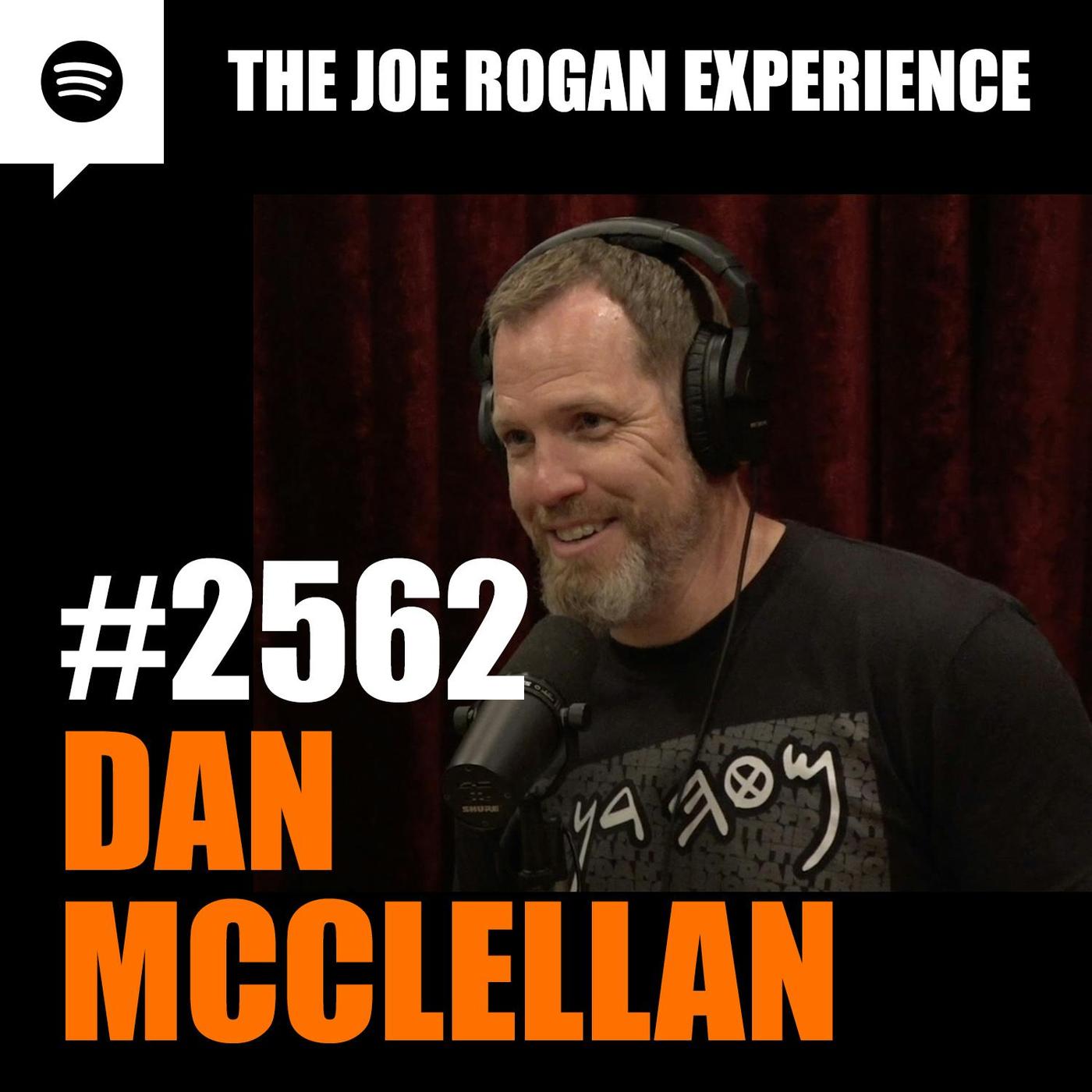
#2562 - Dan McClellan
The conversation shows how ancient texts, manuscript changes, social identity, and modern assumptions shape religious belief and public life.
- 1Ancient Near Eastern traditions and cultural borrowing shaped biblical creation, flood, and origin narratives.
- 2Manuscripts, translations, and changing expectations complicate literal readings of Christian scripture and doctrine.
- 3Religious identity can foster cooperation while also narrowing empathy and enabling political dehumanization.
Don't miss
McClellan uses a visual illusion to show how cognition constructs perception, then applies the lesson to ideology, projection, and claims of objectivity.
The brief
Dan McClellan joins Joe Rogan to examine how biblical narratives developed from older Near Eastern traditions, oral transmission, cultural borrowing, and later written contexts.
From Sargon and Moses to Genesis, Gilgamesh, and flood traditions, the discussion treats familiar stories as layered texts rather than isolated revelations.
McClellan explains why Hebrew, Greek, manuscripts, and translations resist simple word-for-word interpretation, with preservation itself shaping what survives.
The conversation turns from ancient texts to modern psychology: group identity can support cooperation and empathy, but also make exclusion and political violence easier to justify.
A visual illusion becomes a compact lesson in how perception and ideology work, linking intuitive certainty to projection, jury decisions, and the limits of objectivity.
The episode closes by connecting Christian ethics to inequality, urban policy, and intellectual humility, while McClellan separates private faith from performative religiosity.
What was said on this episode
49 statements · 9 positive · 19 negative · 21 neutral
Creatine may modestly improve brain function.
“There is some research that is suggesting creatine might be a little more helpful for brain function”
Listen at 7:11
Avoiding high-FODMAP foods improved Tom’s digestive comfort.
“when I was avoiding things that are high in FODMAPs, I was just, I felt better.”
Listen at 10:54
Altitude-restrictive training masks are probably less effective than hypoxia training.
“It's probably not as effective.”
Listen at 15:02
Most scholars interpret the artifact as depicting Israel’s God and Asherah.
“I think the majority of scholars agree this is probably intended to reflect the interpretation of these two deities as the God of Israel and God's wife, Asherah.”
Listen at 16:51
Several Pauline texts were not authored by Paul.
“scholars are in pretty widespread agreement that there are several of those texts that weren't written by Paul.”
Listen at 30:31
The Pastoral Epistles were written decades after Paul’s death.
“1 and 2 Timothy and Titus are called the pastoral epistles, and they are widely agreed to have been written toward the end of the 1st century or beginning of the 2nd century, maybe 30 years after Paul was dead or more.”
Listen at 30:39
Genesis was probably composed between the eighth and fifth centuries BCE.
“Genesis was probably written between around the 8th century BCE down to the 5th century BCE.”
Listen at 39:43
Genesis traditions were mainly adapted from Babylonian material dating eighth to sixth century BCE.
“the closest connections are 8th to 6th century BCE. That's probably where the traditions that were recorded in Genesis were mainly borrowed.”
Listen at 43:00
Ancient aliens are not a plausible explanation for the emergence of hieroglyphs.
“The ancient alien stuff is fun, but we don't have a lot of evidence that gets us to that being really even a plausible solution to the problem.”
Listen at 45:01
Writing likely developed from accounting and administrative records.
“the writing seems to develop from receipts or from counting.”
Listen at 45:37
Nearly every alphabet except Hangul descends from Phoenician.
“apart from Hangul, which is the Korean script, I think virtually every other alphabet on earth is descended from the Phoenician.”
Listen at 47:32
Simple Hebrew-English tools omit substantial translation complexity.
“there is a lot more under the hood of that relationship between the Hebrew and the English translation that they don't have any idea about.”
Listen at 53:13
Amateur biblical-language interpreters often spread misinformation online.
“they end up stepping in it because they really don't know what they're talking about. Or the main reason I'm on social media and the main thing I'm trying to combat, they will spread misinformation.”
Listen at 53:40
Ugarit was destroyed before Hebrew developed.
“The destruction of Ugarit happens before the invention of Hebrew.”
Listen at 59:12
Ancient dragon deities personified watery chaos.
“the chaos of the waters became... kind of personified as a deity who could be represented as a dragon”
Listen at 1:02:34
Supernatural monitoring beliefs can support larger, more complex societies.
“it also allows societies to grow and get larger and more complex without descending into chaos because we have kind of this social superstructure.”
Listen at 1:06:06
Dehumanizing opponents makes mistreatment and imprisonment easier to justify.
“the more you can dehumanize them and other them and make it seem like they are just so alien and so corrupt, the more you can do that, the easier it is to justify. Yeah. Not just treating them bad, not just voting for the other guy, but even imprisoning them.”
Listen at 1:09:32
Shanidar 1’s survival indicates Neanderthals provided social support to disabled individuals.
“the skull aged to... Pretty old age for a Neanderthal, which indicates that that was only possible if they had a social support group around them”
Listen at 1:11:41
Shanidar 1 suggests Neanderthal society cared for vulnerable members.
“I think it shows that this was someone who grew up in a society that was like, we'll take care of you.”
Listen at 1:13:00
Genesis 3 functions as an etiological explanation for present conditions.
“when you look at the Adam and Eve story, and particularly the curses in Genesis 3, it's like, oh, this is why childbirth is painful. This is why men have to work hard to make plants grow. Oh, this is why we hate snakes. And this is why snakes oddly don't have legs.”
Listen at 1:17:15
Modern New Testament translations omit over a dozen King James verses.
“Most modern translations of the New Testament have taken out more than a dozen verses that are in the King James Version.”
Listen at 1:24:58
Mark 16:9–20 was added after the original Gospel of Mark.
“scholars agree that's not original. That was something that was added.”
Listen at 1:28:06
Destruction by fire has preserved some of archaeology’s best discoveries.
“some of our best discoveries have been because somebody burnt a building down and it happened to be an archive”
Listen at 1:31:12
Cannabis residue shows ancient Israelites used cannabis in worship.
“one of them had three different kinds of cannabis on it. So we know for a fact they were using cannabis in their worship practices in ancient Israel.”
Listen at 1:38:38
Linguists reject Allegro’s proposed Sumerian-Hebrew-Greek connections as implausible.
“the connections that are made are just not considered plausible by linguists today.”
Listen at 1:40:17
Allegro’s proposed etymology of Christ lacks a plausible evidentiary link.
“the connection there is, as far as any scholars can tell, entirely imaginary. There's no real plausible link.”
Listen at 1:42:29
Sumerian is not directly related to other known languages.
“Sumerian is a language isolate too, which means it's not directly connected to any other languages that are still around or that were even around anciently.”
Listen at 1:43:11
Genesis may have circulated before its flood story was added.
“Genesis actually was circulating in a version that didn't have a flood story. Until someone put it in there.”
Listen at 1:44:11
The Ethiopian Bible likely derives from a Septuagint tradition brought to Aksum around the fourth century.
“The Ethiopian Bible descends probably from some people who probably brought a version of the Septuagint, the ancient Greek translation of the Bible, down to the kingdom of Aksum, probably late 3rd or early 4th century CE.”
Listen at 1:48:12
Ethiopian manuscripts have limited value for reconstructing the earliest biblical text.
“text critically. In trying to reconstruct the earliest possible Bible, the Ethiopian manuscripts are of very little value.”
Listen at 1:49:54
First Enoch likely lost favor before Christian canon formation.
“First Enoch probably fell out of favor before the canon was formalized.”
Listen at 1:50:44
First Enoch is a five-part collection with internally inconsistent overlapping traditions.
“So it's a collection of five different stories. And the five different stories, and they're not all telling the exact same story, but where there is overlap, they don't align perfectly. So it is internally inconsistent.”
Listen at 1:53:40
Early Isaiah imagery probably did not originally mean eternal punishment.
“It probably wasn't intended to say that.”
Listen at 1:57:26
The Bible never explicitly states that all non-Christians burn eternally in hell.
“That's not something that's ever stated anywhere in the Bible. Yeah, that's what I thought. That is an interpretation, yeah.”
Listen at 1:58:36
Religious authority changes as communities renegotiate traditions under changing circumstances.
“what is authoritative changes. It always changes based on our reception of the received tradition, which we then have to negotiate with in light of our Social, historical, rhetorical circumstances and what we want for the future.”
Listen at 2:02:13
The exclusive-hell interpretation was read into the New Testament later.
“I think it's something that we have to read into the text afterwards.”
Listen at 2:03:26
Visual perception uses learned lighting assumptions to interpret identical shades differently.
“your mind thinks it's looking at an object in space. And objects in space, as we know from a whole lifetime of experience, when they're in the sun, they're lighter. And when they're in the shade, they're darker.”
Listen at 2:05:42
Human perception is mediated by evolution-shaped cognitive lenses.
“we are not... experiencing the world in an unmediated way.”
Listen at 2:08:22
Social identity makes people resist interpretations that threaten group interests.
“if we like a particular interpretation of the Bible, because that serves our interests within the communities that are important to us, we're going to be loath to accept. a different interpretation that complicates things for us.”
Listen at 2:09:40
Rationalization uses reflective reasoning to defend potentially wrong intuitions.
“And then the other is rationalization. And that's where you use your reflective cognition to try to defend and rationalize the intuitive cognition, even though it may be entirely wrong.”
Listen at 2:12:44
Tom recommends practicing personal prayer privately rather than publicly.
“I do believe that it is as Jesus. in the New Testament says, when you pray, go into your closet and pray in secret”
Listen at 2:14:29
Public displays of piety can serve personal benefit while masking misconduct.
“what seems to be in the crosshairs is people who go out and put on display their piety so that they can benefit from publicly being pious.”
Listen at 2:17:16
American inner-city systems were designed to trap certain populations.
“we kind of designed the inner cities. specifically to trap certain people in them.”
Listen at 2:19:48
Redlining continues and remains subject to active lawsuits.
“redlining continues to this day. There are lawsuits active right now related to redlining.”
Listen at 2:19:59
Many newer American cities are designed for driving rather than walking.
“our new cities that are popping up are, you know, they're not designed for people to walk around in.”
Listen at 2:21:24
Future observers may view the present as an era of substantial AI profits.
“I'm sure in 75 years, there will be people look back on now and be like, we sure made a ton of money off of AI”
Listen at 2:27:28
Personal example is more persuasive than preaching.
“A good example is the best preacher.”
Listen at 2:32:23
Many Confederate statues were erected to terrorize Black Americans and signal white supremacy.
“The Confederate statues, these came up in the early 20th century, and we know explicitly the goal was to terrorize the black population, to let them know who was in charge around here.”
Listen at 2:33:50
Tom’s forthcoming book is expected around early 2028.
“hopefully it should be out the beginning of 2028.”
Listen at 2:36:21
Statements are attributed to the speaker as said on the episode and reflect their view at the time, not PodLume's. They are not advice.
Books & mentions
Some links are affiliate links — PodLume may earn a commission if you buy.
Book of Enoch
The text’s influence, competing traditions, and role in Ethiopian biblical history receive substantial discussion.

Epic of Gilgamesh
Its flood and mortality themes provide an important comparison for the episode’s account of biblical narrative development.

Genesis
The episode repeatedly returns to its creation, flood, and Eden stories as products of textual and cultural history.