Nov 10, 2026 · 34 min
Bionic voices push AI toward human-centered communication
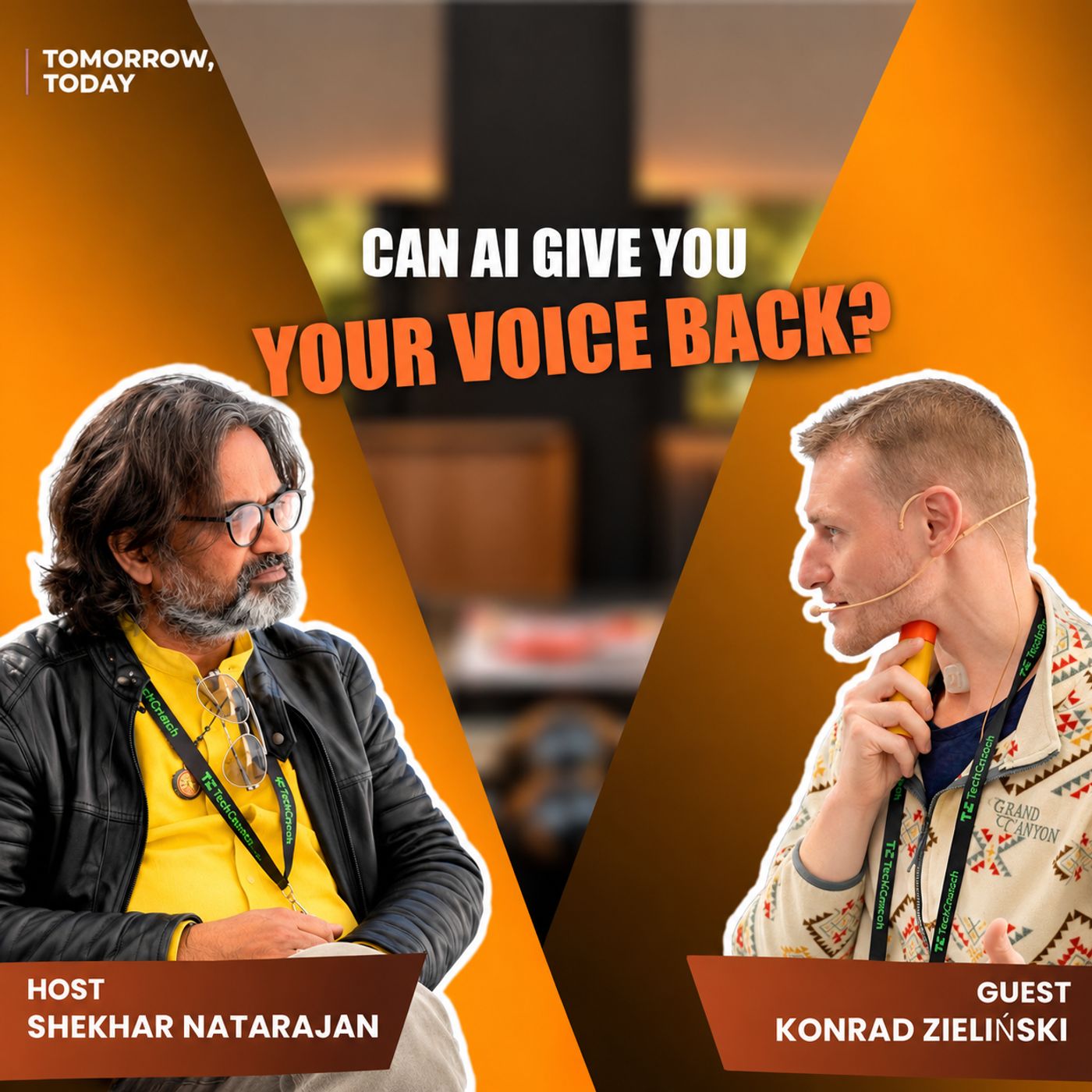
The Future of Human Communication: AI, Bionics and Voice Technology | Konrad Zielinski x Shekhar Natarajan
Voice-restoration technology could return expressive speech to people who have lost it while forcing new decisions about privacy, identity, and access.
- 1Non-invasive bionic voice technology can restore expressive communication after voice loss and broaden access for people with speech disabilities.
- 2Natural interaction depends on reproducing timing, emotion, and vocal nuance while bringing speech-conversion latency toward roughly 50 milliseconds.
- 3Wearable AI raises unresolved questions about voice-data ownership, human authentication, affordability, and preserving identity as communication becomes augmented.
Don't miss
Konrad embraces the label of augmented human or early cyborg while emphasizing that AI-assisted speech does not diminish his humanity.
The brief
After losing his biological voice to laryngeal cancer, Konrad Zielinski uses a non-invasive electronic system and frames voice restoration as a route back to expressive communication.
The conversation moves from assistive technology to augmentation: future wearables could combine neural, muscular, and cardiac signals while connecting people to continuously listening AI agents.
The hardest engineering problem is not merely generating speech but preserving timing, sarcasm, laughter, and affection, with natural conversation requiring latency near 50 milliseconds.
Konrad argues that real-time inference should happen on the device, while humans retain control of emotional intent and voice data rather than surrendering either to opaque systems.
The standout tension arrives when augmented speech challenges the boundary between person and machine: Konrad embraces being an early cyborg while insisting that he remains fully human.
The episode ends with a practical warning: voice authentication will become unreliable as synthetic speech spreads, requiring identity systems that recognize both the speaker and the technology assisting them.
Weekly email
State of the Pod, every Monday
The week's most-discussed names and stories from podcasts, with the moments behind them. Free, five minutes, unsubscribe in one click.