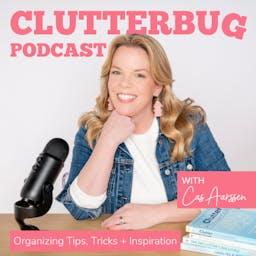
Cas argues clutter starts before checkout
The Scariest Thing in Your House Isn’t a Ghost. It’s Your Shopping Cart. | Clutterbug Episode #349
The episode reframes decluttering as a problem of consumption while making room for compassion, accessibility, and imperfect family life.
- 1Preventing clutter often means interrupting impulse purchases before they cross the threshold.
- 2Parenting demands realistic household standards, not perfection that turns ordinary disorder into failure.
- 3Accessible organization should preserve familiar routines while adapting to deteriorating vision.
Don't miss
Cas turns the idea of possessions that “bully” their owners into permission to discard uncomfortable skincare and makeup products.
The brief
Cas opens with a darkly comic story about repeatedly finding teeth and locks of hair among her belongings, then turns household weirdness toward a larger question: what enters the home, and why.
The episode’s central argument is preventive: impulse buying and holiday overspending create clutter before any organizing system has a chance to help, with online and televised shopping amplifying the pressure.
A listener caring for young children asks about keeping a home tidy. Cas rejects perfectionism, recommending realistic rules, some tolerated chaos, and self-compassion modeled for the family.
Another listener describes possessions that feel like they bully her. Cas extends the idea through troublesome skincare and makeup, treating persistent discomfort as a valid reason to let things go.
For a mother with deteriorating vision from dry AMD, Cas focuses on accessibility without erasing familiar routines, and considers ChatGPT as a possible organizing-style tool.
Weekly email
State of the Pod, every Monday
The week's most-discussed names and stories from podcasts, with the moments behind them. Free, five minutes, unsubscribe in one click.