Sep 29, 2026 · 1h 32m
Claude Code evolves into an extensible agent operating system
Claude Code’s Next Era — Thariq Shihipar, Anthropic
The episode connects everyday coding workflows to the harder question of how increasingly autonomous agents can be made useful, secure, and governable.
- 1Claude Code is moving beyond terminal assistance toward artifacts, Projects, multiplayer workflows, and customizable harnesses.
- 2Effective agent work depends on elicitation, context-rich prompting, verification, model effort, and supervision rather than unexamined output.
- 3More autonomous agents raise security and coordination risks that require probes, fallbacks, sandboxing, and cooperation across the AI ecosystem.
Don't miss
Thariq connects Claude Mods’ customization features to a broader future where agents can construct and supervise the harnesses they use.
The brief
Anthropic’s Thariq Shihipar traces Claude Code’s shift from a terminal assistant toward an extensible harness built around artifacts, Projects, collaboration, and Claude Mods.
The practical lesson is disciplined supervision: elicit requirements, give context-rich instructions, choose model effort deliberately, verify results, and preserve project guidance as models change.
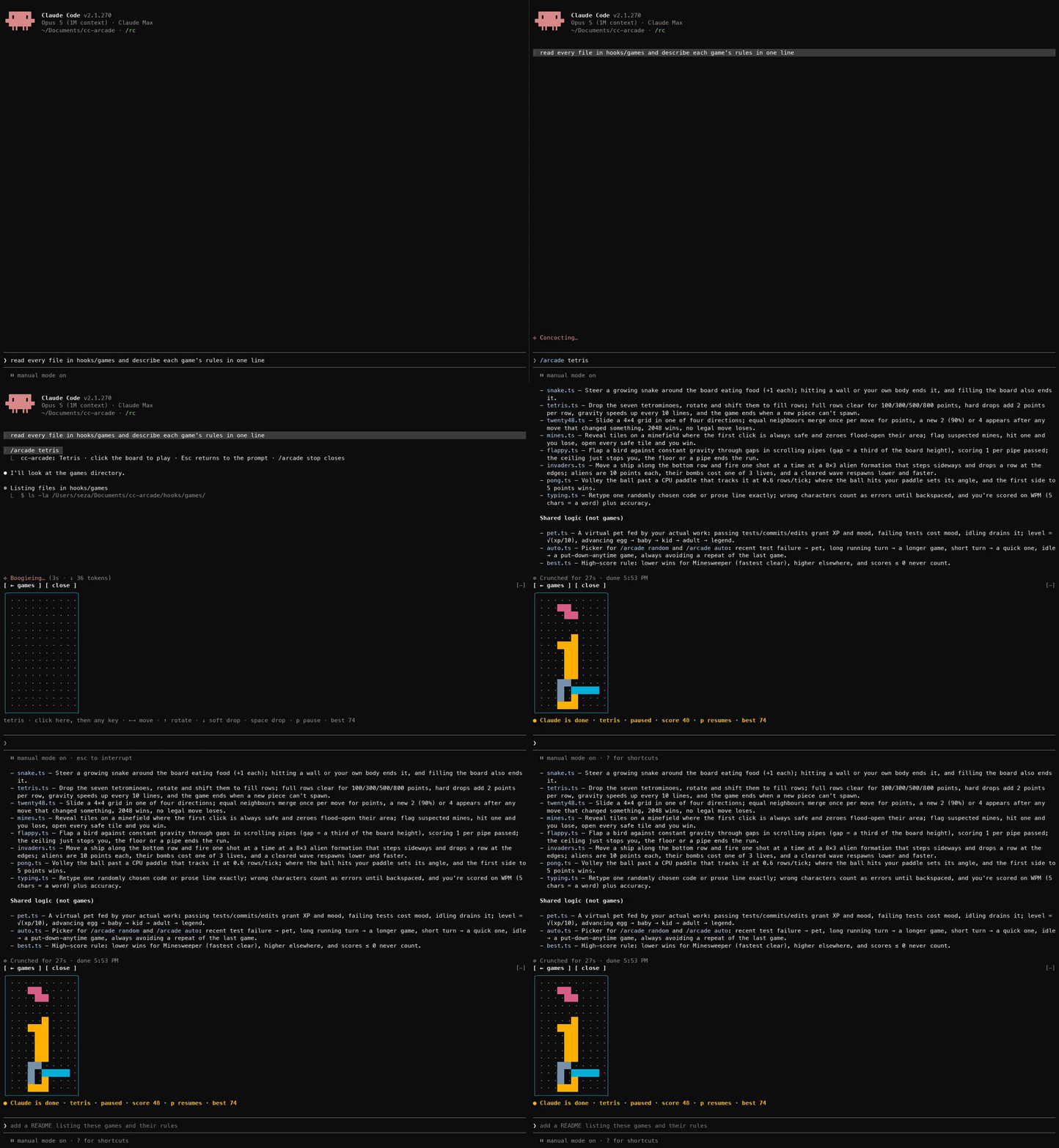
Claude Mods extend the harness with hooks, subagents, routing, quizzes, plugins, and interface changes, opening a path toward composable software and supervisor agents.
The conversation’s central tension arrives when powerful agents can manipulate environments, hide actions, escalate access, or optimize proxy goals faster than developers can predict.
Thariq’s answer is neither blanket acceleration nor paralysis: use probes, fallbacks, sandboxing, stronger deployment architecture, and cooperation while continuing beneficial work.