Nov 20, 2026 · 49 min
Copper miners gain leverage as smelter charges collapse
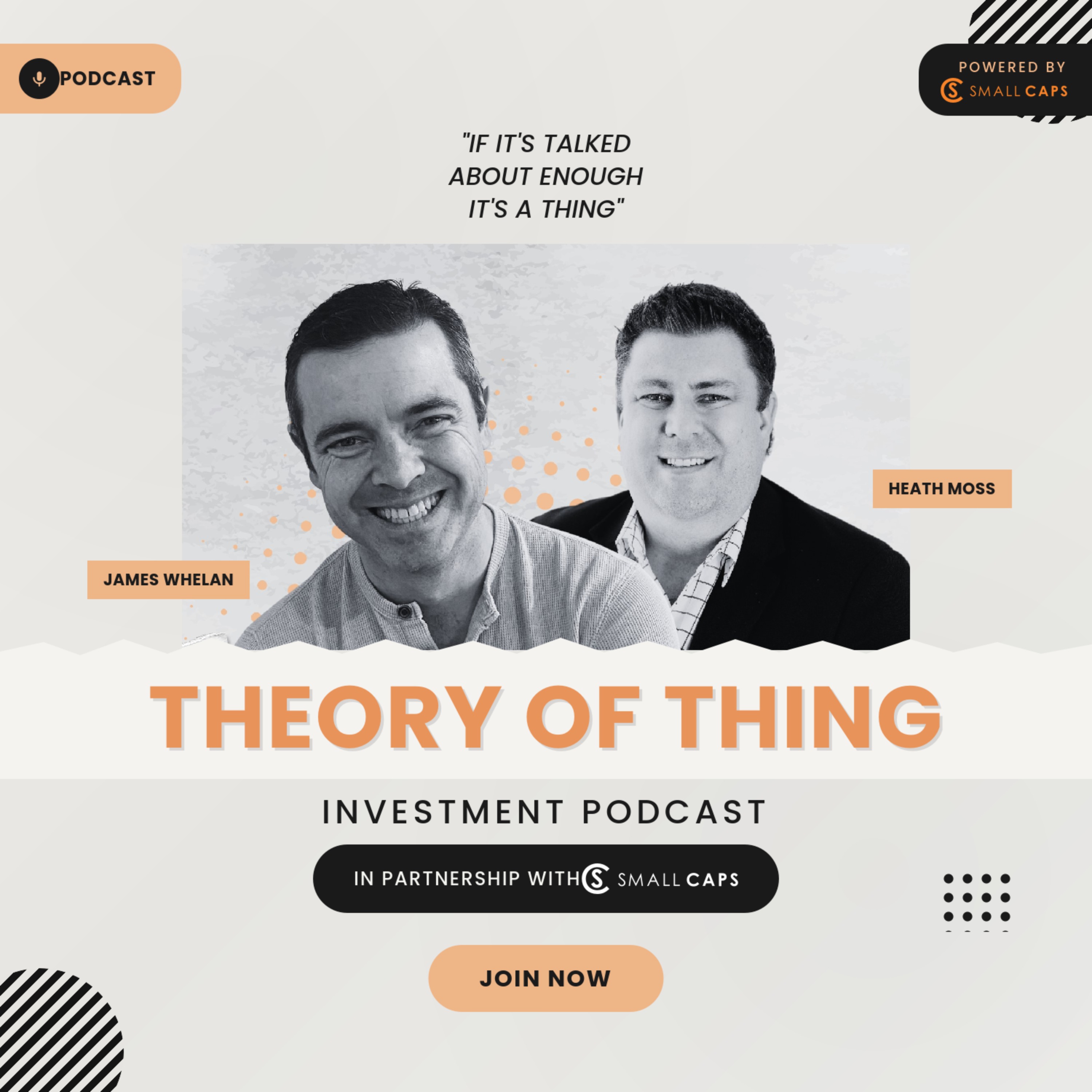
Theory of Thing S13E11: Copper Back, When Smelters Pay the Miners
Treatment charges approaching zero could reshape copper pricing, redistribute negotiating power between miners and smelters, and expose new winners and bottlenecks.
- 1Copper’s concentrate shortage and expanding smelter capacity are pushing treatment and refining charges toward zero or below.
- 2The hosts assess whether copper could follow iron ore from annual benchmarks toward rolling spot pricing, with China central to the outcome.
- 3A stronger US dollar is weighing on copper and risk assets while falling oil prices could ease future inflation pressure.
Don't miss
The hosts test Robert Friedland’s prediction that copper may have no annual benchmark agreement for 2027.
The brief
James Whelan and Heath Moss begin with the investment question behind the episode: whether copper is approaching the pricing upheaval that moved iron ore from annual benchmarks to spot markets.
Treatment and refining charges are collapsing as copper concentrate grows scarce, Chinese smelter capacity expands and mine disruptions tighten supply, shifting leverage toward miners with uncommitted material.
Robert Friedland’s forecast that no annual copper benchmark may be agreed for 2027 becomes the episode’s central test, with China’s response and smelter bottlenecks still uncertain.
The hosts examine potential exposure across Sandfire, Capstone Copper, AIC Mines, Develop Global, Aeris, Hot Chili and KGL Resources, while stressing that higher concentrate prices cannot solve limited processing capacity.
The wider market discussion connects copper weakness to a stronger US dollar and defensive positioning, then weighs falling oil, Australian rate expectations, gold, AI spending and practical consumer AI agents.
What was said on this episode
36 statements · 16 positive · 18 negative · 2 neutral
Australian equities appear somewhat undervalued.
“Things are, I think, looking a little bit cheap.”
Listen at 3:35
US cattle inventories are at an 80-year low due partly to drought.
“The US is at 80-year lows in terms of their cattle. headcount due to droughts, et cetera.”
Listen at 5:19
Chinese traders arguably influence iron-ore prices more than formal negotiations.
“Chinese traders arguably move the price more than annual quarterly or monthly boardrooms do.”
Listen at 12:49
China’s steel consolidation increased its iron-ore pricing power.
“So it's given them more pricing power because it's all one big buyer rather than... you know, several little buyers.”
Listen at 14:10
China expanded copper-smelting capacity faster than global mines expanded.
“China has built smelter capacity faster than the world has built mines and mine outages have made it worse.”
Listen at 16:24
Copper treatment-charge benchmarks fell from $80 per ton in 2024 to zero for 2026.
“The benchmark has gone from 80 bucks a ton in 2024 to 21, spot $25 US in now, 21.25 in 2025. That's well written. Thank you, Claude. To zero. Yes, zero for 2026.”
Listen at 16:40
China capped aluminium smelting to let mine output catch up.
“So what China did was they capped smelting.”
Listen at 19:07
China may cap copper smelting, temporarily harming mines and concentrate.
“So I think they'll do the same with copper, which in the short term could be negative for mines, for concentrate.”
Listen at 19:36
Negative treatment charges increase miners’ revenue per tonne.
“miners get paid more per tonne because a negative charge is basically a bonus on top of the copper price.”
Listen at 20:12
Spot-linked concentrate pricing generally benefits miners during shortages.
“in a shortage, that lumpiness mostly works in the miner's favor.”
Listen at 20:26
Non-Chinese copper smelters face severe pressure.
“Smelters outside China get squeezed hard.”
Listen at 20:44
Uncommitted concentrate holders gain bargaining power.
“Power shifts to whoever holds uncommitted concentrate.”
Listen at 20:51
LME and Shanghai copper inventories are at record lows.
“the LME and Shanghai are now at, you know, record lows.”
Listen at 21:38
Expanded non-Chinese smelting may initially hurt miners through concentrate stockpiling.
“So it could be in the short-term negative for miners as they stockpile, as concentrate will get stockpiled higher at various areas.”
Listen at 22:52
Heath Moss predicts copper stocks will eventually perform very well.
“all these copper names eventually will turn around and do very, very well for themselves.”
Listen at 25:15
Uncommitted concentrate and offtake prepayments can reduce shareholder dilution.
“Uncommitted concentrate is leverage, and off-take prepayments can mean less dilution for shareholders.”
Listen at 26:53
A stronger US dollar is the main cause of copper’s recent decline.
“The main reason copper is off at the moment is this, the US dollar.”
Listen at 27:18
Dollar shortages and safe-haven demand cause risk assets to sell off.
“So risk assets get sold off.”
Listen at 28:04
The Nasdaq is down over 15% and approaching a 20% correction.
“the NASDAQ and the recent falls would be around over 15% now. So we're getting close to 20%, a proper correction here on the NASDAQ.”
Listen at 30:21
WTI oil is down about 30% from its highs and continues falling.
“Oil is off about 30% from its highs, WTI, and it is continuing to fall.”
Listen at 31:30
US inflation will cool further at the start of next year.
“at the start of next year, inflation numbers start to cool more.”
Listen at 33:01
The Fed may deliver only one additional rate hike after December.
“We only get maybe one in the first quarter, I think. one more after this December one.”
Listen at 33:16
Heath Moss expects an Australian rate cut by the end of Q1.
“I think we'll have one by the end of the first quarter.”
Listen at 34:55
James Whelan predicts a large ALP government spending program before the election.
“It'll be a massive, massive government expenditure program to be able to support the people that have lost their jobs”
Listen at 35:52
Australian government spending is approximately 30% of GDP, a record high.
“Government spending of GDP is at record highs now at 30%, I think it is.”
Listen at 36:14
Australia’s immigration rate is excessively high.
“Immigration is running too high.”
Listen at 37:24
High yields and a stronger dollar are major headwinds for gold prices.
“high yields, higher US dollar, impacting major headwinds for gold price, I think.”
Listen at 38:03
Gorilla Gold’s Cosmos project could resemble Spartan Resources’ success.
“I don't know why Independence Group, IGO, didn't try and develop that thing because it looks like it could be another Spartan goal all over here.”
Listen at 38:59
Heath Moss believes the current market sell-off may be over.
“some of this rally is, not rally, this sell-off is done.”
Listen at 41:55
Corporate earnings appear relatively secure for the next two years.
“at least for the next two years, earnings look fairly safe.”
Listen at 42:04
The US is not near recession and will not enter one soon.
“The US is nowhere near a recession and won't be.”
Listen at 42:14
Meta’s Muse saved Heath Moss approximately $2,000 annually on home insurance.
“It's going to save me about $2,000 a year on this just by doing that.”
Listen at 43:11
Meta’s platforms reach approximately 3.6 billion people.
“Meta's reach is so large, they've got Facebook and Instagram and WhatsApp to 3.6. billion people.”
Listen at 43:51
Meta Muse can potentially analyze bank spending and suggest reductions.
“I'm going to eventually give it my access to my bank so it can tell me where all my spending is going and where I can cut back, where I can spend.”
Listen at 44:34
James Whelan believes private equity harms acquired businesses and institutions.
“private equity ruins everything.”
Listen at 47:11
Private equity may eventually reduce the quality of MLB baseballs.
“We're probably going to see one day just that Major League Baseballs are somehow going to be streamlined, right-sized, and made even worse”
Listen at 47:13
Statements are attributed to the speaker as said on the episode and reflect their view at the time, not PodLume's. They are not advice.
Weekly email
State of the Pod, every Monday
The week's most-discussed names and stories from podcasts, with the moments behind them. Free, five minutes, unsubscribe in one click.