Jul 6, 2026 · 1h 35m
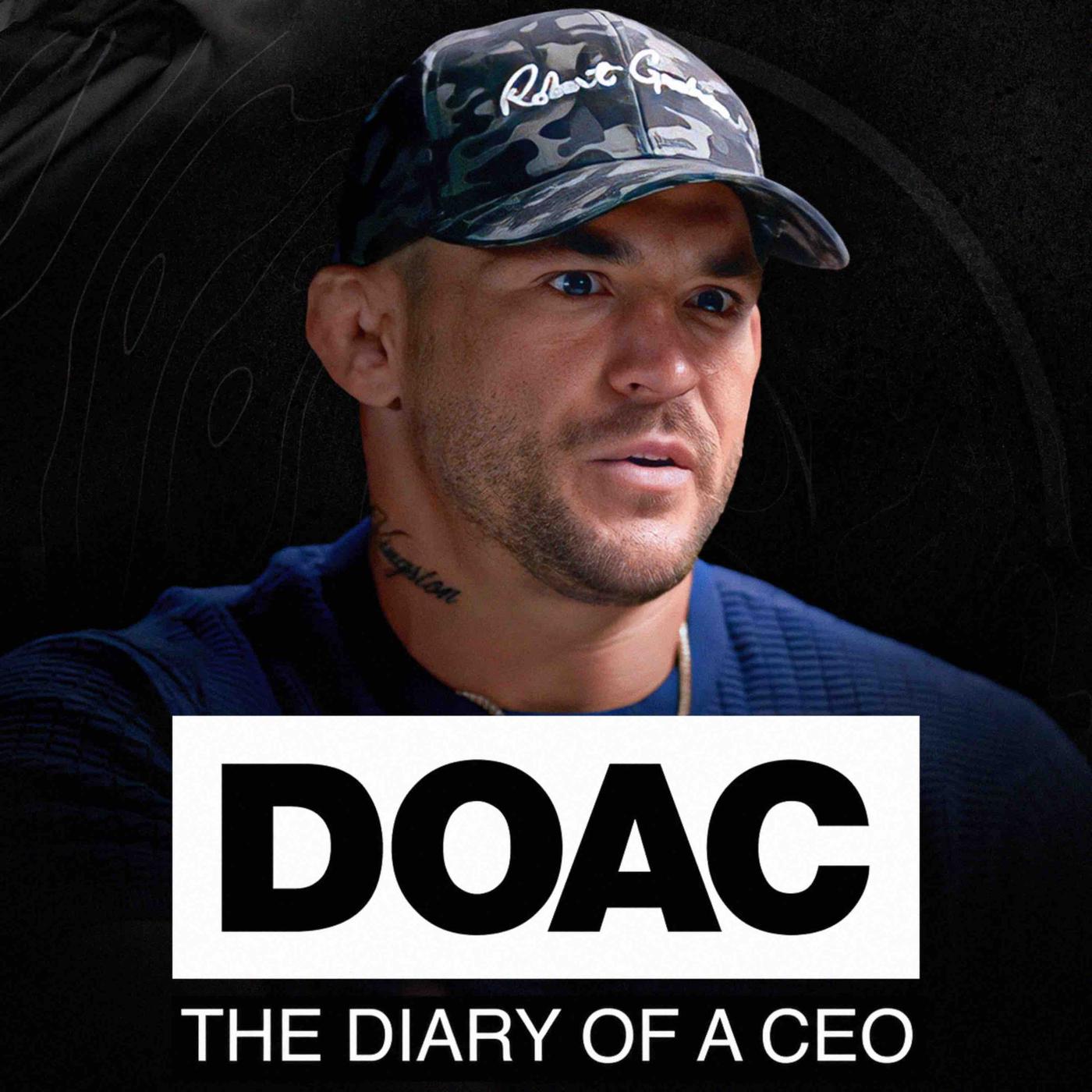
Dustin Poirier confronts retirement void and brain trauma after airport arrest
UFC Legend Dustin Poirier: I Lost My Mind. I’ll Never Let It Happen Again.
Poirier's vulnerability exposes the hidden mental and physical toll of professional fighting, challenging the tough-guy stigma of combat sports.
- 1Retirement left a psychological void that exposed deep-seated childhood trauma and triggered a public intoxication arrest.
- 2Neurological scans from his fighting career show physical brain changes linked to mood swings and impulsive behavior.
- 3Poirier is committing to lifelong sobriety and therapy while focusing his energy on his family and charitable foundation.
Don't miss
Dustin Poirier discusses his neurological scans, linking physical brain trauma from his UFC career to his recent struggles with mood swings.
The brief
After retiring from a grueling 20-year career in the UFC, Dustin Poirier faced a quiet void that proved far more dangerous than any opponent in the octagon, culminating in a public intoxication arrest at the Atlanta airport.
The incident forced Poirier to confront how he used the extreme discipline of training camps as a temporary shield against unresolved childhood trauma, his father's ongoing homelessness, and a family history of severe alcoholism.
In a raw moment, Poirier details the physical reality of his career, sharing that recent brain scans revealed neurological changes that may directly contribute to his sudden mood swings and impulsive decision-making.
Now committed to complete sobriety and active therapy, the former champion is channeling his focus into his family and the Good Fight Foundation, proving that his hardest battle is the one taking place outside the cage.
What was said on this episode
31 statements · 8 positive · 19 negative · 4 neutral
Alcohol has severely damaged Dustin Poirier’s father’s life.
“Alcohol has ruined his life.”
Listen at 7:22
Alcohol does not benefit Poirier, especially during poor mental health.
“alcohol has never benefited me, especially in times like that where I'm mentally not the best.”
Listen at 13:13
Mental health requires continuous work rather than a one-time fix.
“it's not something that you just fix. It's something you have to work on always.”
Listen at 18:50
Unstable father figures increase boys’ risks of anger, depression, and life struggles.
“young boys in particular that grow up without a stable father figure are much more likely to be. Have anger issues, be depressed, struggle in life.”
Listen at 19:55
Childhood household violence worsens problems associated with unstable father figures.
“if you compound that with there being violence in the home from a young age, that's also another factor which exacerbates the situation worse.”
Listen at 20:09
Fighting and gym training functioned as therapy for Poirier.
“the gym was a part of therapy for me. Fighting was a part of therapy, you know, for me.”
Listen at 21:42
Poirier intends to abstain completely from alcohol.
“I'm going to cut alcohol completely out of my life.”
Listen at 28:30
Poirier evaluates alcohol as wholly harmful to him and recommends eliminating it.
“it's not benefiting me in any way. So I got to cut it out, cut it off from my life.”
Listen at 28:45
Quitting alcohol will benefit Poirier and his children in the future.
“this decision, this arrest, this quit drinking for the rest of my life is going to benefit me and my kids in the future.”
Listen at 36:56
Poirier predicts his children will never see him intoxicated.
“my son and my daughter is never going to grow up and see me intoxicated.”
Listen at 38:47
Having no goals makes Poirier a danger to himself.
“I'm a danger to myself when I'm have nothing. No. No goal circle on my calendar.”
Listen at 44:35
All-or-nothing personalities can become dangerous when directed toward fighting or drinking.
“you have to be all in at something. Those kind of people who are Built like that, whether it's fighting or drinking or whether it's good or bad, you're going all in. It's dangerous.”
Listen at 46:07
Athletes may redirect intense commitment toward harmful activities after losing their sport.
“when they don't have the fighting, then they go all in with the other things.”
Listen at 46:20
Managing Poirier’s mental health likely requires daily lifelong effort.
“this is everyday work for the rest of your life. Most likely, I'm pretty sure.”
Listen at 51:10
Suppressing emotions eventually causes them to emerge in another way.
“you bottle it up so long until it finds a way out, you know?”
Listen at 53:00
Excessive busyness may cause people to neglect their mental health.
“Maybe I was being too busy. Maybe I wasn't focusing on my mental health and myself as much.”
Listen at 55:16
The airport incident caused Poirier to lose sponsors, gigs, and money.
“That day cost me not only embarrassment and embarrassment to my family. It cost me a lot of money, too, you know, I'm losing sponsors, I'm losing gigs and losing things that I had set up, you know.”
Listen at 59:47
Poirier believes his finances are sufficient for lifelong financial independence.
“I don't have to work another day in my life.”
Listen at 1:05:38
Poirier believes he can accomplish anything he commits himself to.
“I feel like anything I set my mind to, I can accomplish. I can make it happen.”
Listen at 1:14:22
CTE is a progressive brain disease caused by repeated head trauma and protein buildup.
“CTE is a progressive brain disease caused by repeated head trauma leading to abnormal protein buildup”
Listen at 1:16:05
Older adults with traumatic brain injuries have a 230% greater Alzheimer’s risk.
“Older adults with a history of traumatic brain injuries have a 230% greater risk of developing Alzheimer's than those without.”
Listen at 1:16:12
Sixty-one percent of UFC fighters worry about potential long-term brain damage.
“61% of UFC fighters stated they worry about potential long term brain damage”
Listen at 1:16:20
More than 40% of examined brains from young deceased contact-sport players had CTE.
“more than 40% of brains from contact sport players who died before the age of 30 had CTE.”
Listen at 1:16:33
Poirier believes his CTE status cannot be confirmed until after death.
“we won't know until I pass away. And they study my brain if I. If I have it or not.”
Listen at 1:17:27
Poirier’s neurologist suspects brain-side communication is impaired by septum separation.
“the neurologist thinks my left and right side aren't communicating as smoothly as they should because of the separation.”
Listen at 1:19:09
Poirier estimates a five-percent chance of returning to the UFC.
“Five percent.”
Listen at 1:20:49
Poirier believes UFC eligibility would require six months of clean drug testing.
“I think I'd have to do, like, six months of clean drug testing before I'm eligible to compete again.”
Listen at 1:21:10
Family members cannot do much to help an unwilling person with addiction.
“if he doesn't want to help himself, we can only do so much”
Listen at 1:23:32
Poirier recommends staying offline and maintaining daily self-improvement routines.
“Stay off the Internet, continue to work on myself. Have good mornings. That's it.”
Listen at 1:25:53
Poirier believes his public platform benefits as many people as possible.
“I truly, honestly, 100% believe I'm doing it. You know, I think I'm using the platform I built through hard work to benefit as many people as I can.”
Listen at 1:29:50
The Good Fight Foundation plans to distribute approximately 1,300 supply-filled backpacks in Louisiana.
“in a couple of weeks, we have the backpack back to school drive. We do. We do probably 1300 backpacks filled with every school supply on the school supply list for Louisiana.”
Listen at 1:31:28
Statements are attributed to the speaker as said on the episode and reflect their view at the time, not PodLume's. They are not advice.