Oct 2, 2026 · 1h 5m
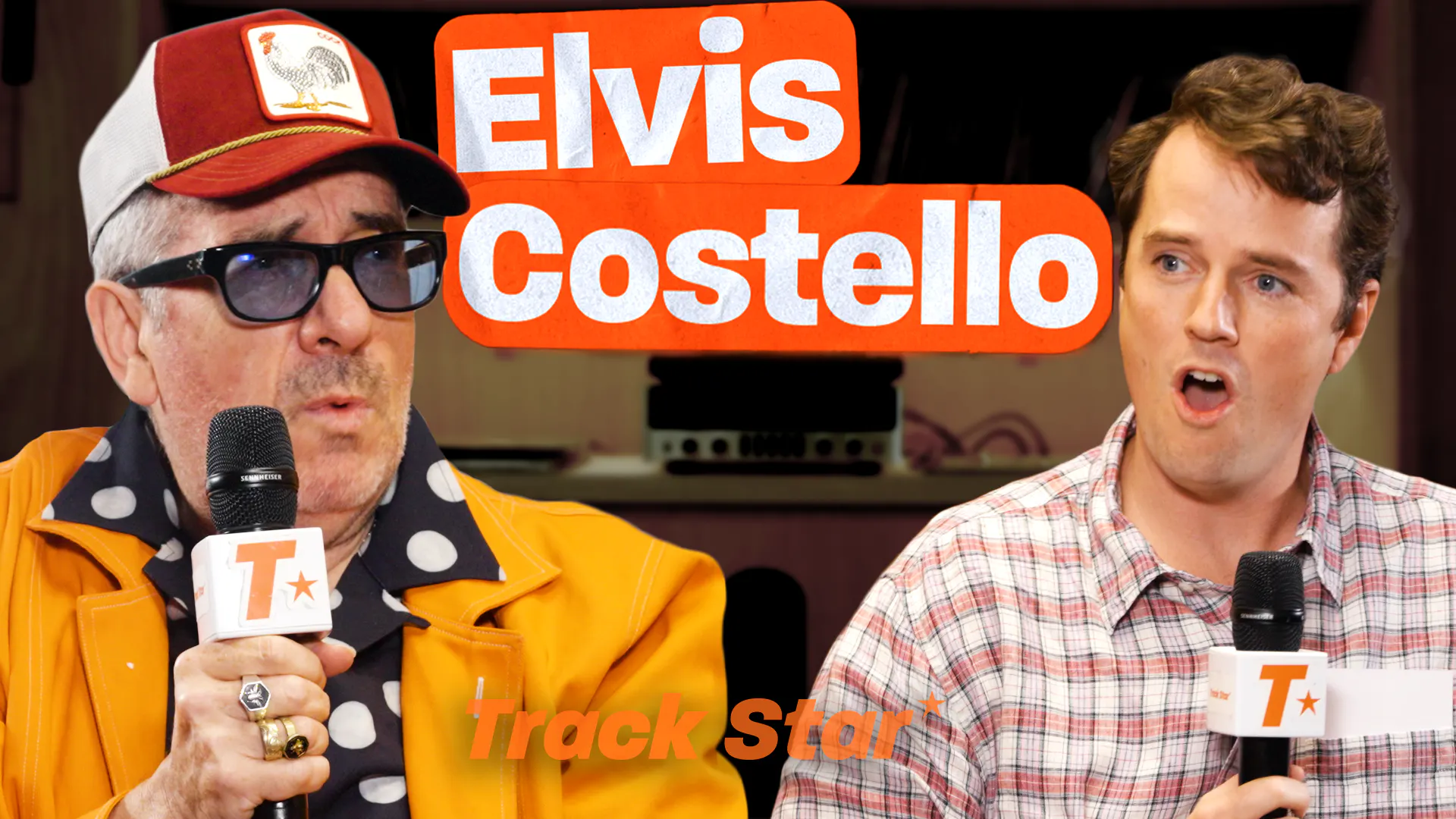
Elvis Costello traces the sounds behind his artistic identity
Testing Elvis Costello's Music Knowledge
Costello shows how family listening, intimate recording spaces, collaborators, and musical openness shaped the songs that established his career.
- 1Costello’s father and mother created a jazz- and record-shop education that taught him to hear music across genres.
- 2Nick Lowe and the early Stiff sessions gave Costello’s first recordings their stripped-down urgency and practical sense of possibility.
- 3The Attractions, Linda Ronstadt, and Bruce Springsteen helped Costello reconsider ownership, interpretation, and the emotional reach of a song.
Don't miss
Costello explains how the audible room and direct performances helped his earliest recordings preserve a sense of place and authenticity.
The brief
Elvis Costello begins with Nick Lowe and the tiny North London sessions that produced early songs, recalling how limited equipment intensified the excitement of recording.
His musical education started at home: a father memorizing bebop for radio performances and a mother whose record-shop experience widened the family’s listening.
Costello revisits My Aim Is True, including the conflicted devotion of “Alison,” the formation of the Attractions, and the pressure of finding a public identity.
Linda Ronstadt’s interpretation forces a reckoning with possessiveness, while Bruce Springsteen’s romantic treatment of harsh landscapes reveals how influence can redirect a songwriter.
The episode’s central insight is physical: audible rooms, direct performances, and intimate sessions preserve an authenticity that later projects can only reinterpret.