Sep 30, 2026 · 25 min
ICE expands enforcement through local stops and removals
The ICE Surge Isn't Over
The episode traces how immigration enforcement reaches more people through shootings, local partnerships, lost legal protections, and third-country deportations.
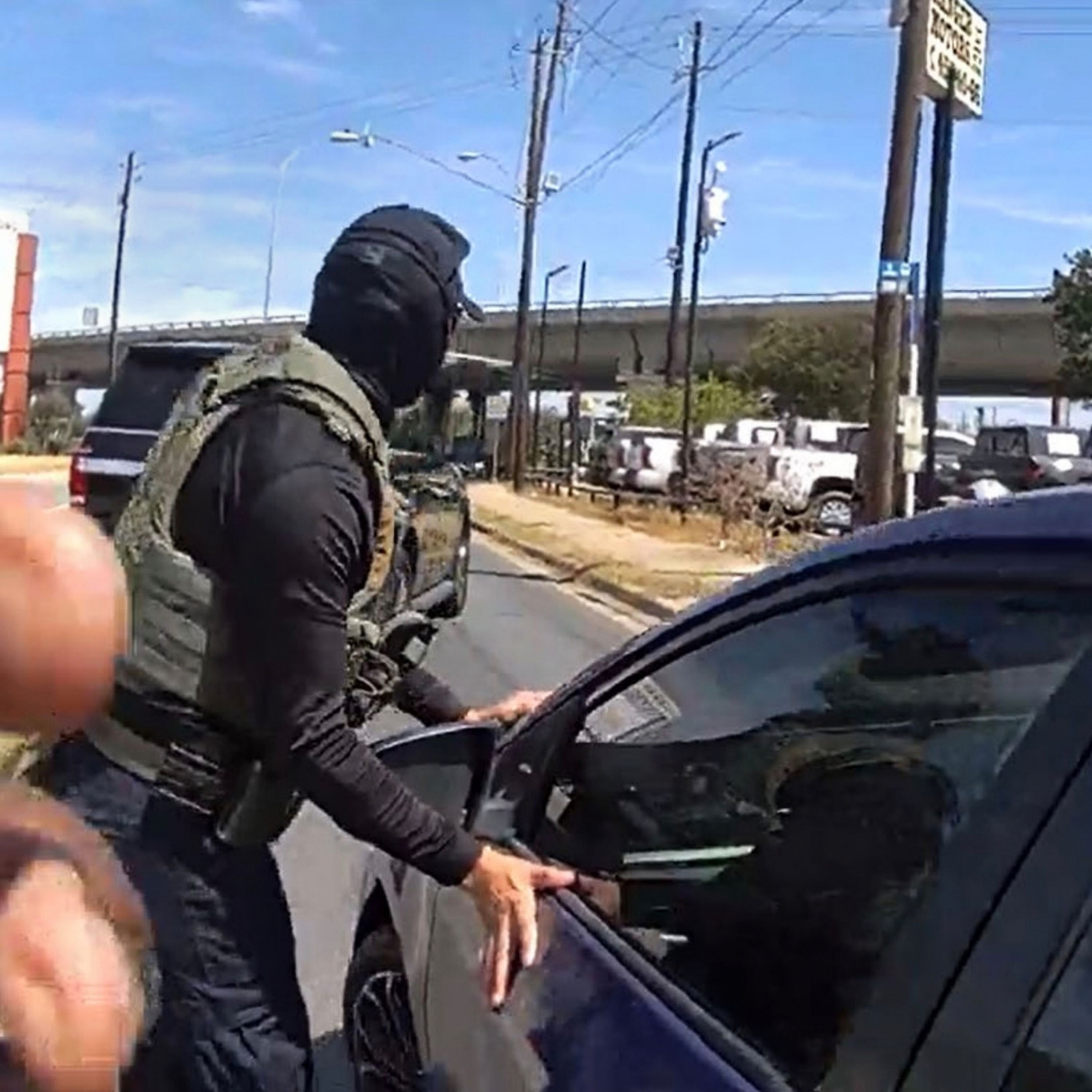
- 1An Austin shooting involving Wilbert Garces-Perez raises questions about ICE-related stops, assault charges, and missing body-camera footage.
- 2Local law-enforcement partnerships and broad document checks can widen immigration enforcement beyond federal agents.
- 3Temporary protections, third-country removals, and shifting Latino voter sentiment show the policy’s reach and possible political consequences.
Don't miss
The discussion of missing body-camera footage in immigration-enforcement shootings turns one Austin case into a broader accountability question.
The brief
Sergio Martínez-Beltrán describes fear among immigrants and longtime citizens before examining an Austin shooting involving Venezuelan immigrant Wilbert Garces-Perez.
The case raises questions about an ICE-related traffic stop, assault charges against Garces-Perez, his detention and treatment, and the absence of body-camera footage.
The episode argues that immigration enforcement can expand quietly through local partnerships, perceived-status stops, and broad document checks under the 287(g) program.
Ending temporary protections and humanitarian parole enlarges the population vulnerable to detention, while removals to Burundi and Eswatini raise persecution concerns.
Sergio says many policies could be reversed through executive action, even as enforcement reshapes Latino political calculations ahead of the midterms.