Oct 27, 2026 · 9 min
Israel’s Election Puts Netanyahu’s Coalition on Trial
Israeli voters decide what kind of country to be
The vote could reshape Israel’s leadership and determine its approach to security, Palestinians, and escalating regional tensions with Iran.
- 1Exit polls gave Netanyahu’s opponents a narrow lead, but the final parliamentary balance remained unsettled.
- 2Small right-wing parties, soldiers’ ballots, and coalition negotiations could decide who governs Israel.
- 3The result carries consequences for Palestinians, Israel’s security policy, and the risk of renewed conflict with Iran.
Don't miss
Daniel Estrin explains how small right-wing parties and soldiers’ ballots could overturn the opposition’s early exit-poll advantage.
The brief
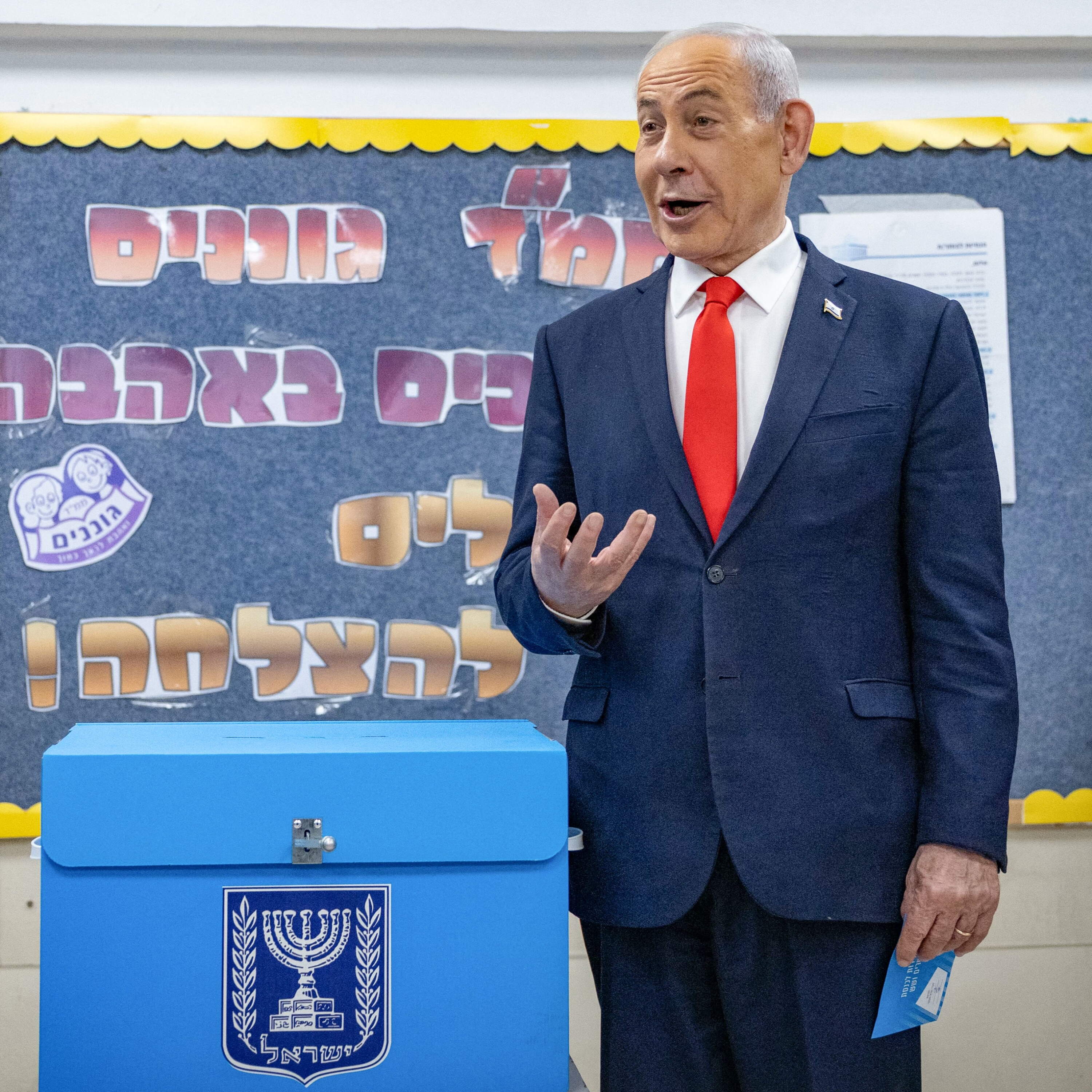
After three years of war, Israeli voters faced a choice between Benjamin Netanyahu’s right-wing coalition and a fragmented opposition, exposing a country divided over its direction.
Early exit polls put the opposition bloc slightly ahead, while contrasting scenes at the two campaign headquarters showed how little confidence either side could claim.
Daniel Estrin explains why the apparent lead was not enough: small right-wing parties, soldiers’ ballots, and coalition negotiations could still reverse the parliamentary balance.
The stakes extend beyond who becomes prime minister, reaching Israel’s security choices, the consequences for Palestinians, and the possibility of renewed conflict with Iran.
The episode’s central tension is simple but consequential: voters may signal a change, yet Israel’s next government will depend on parties still bargaining after election night.
Weekly email
State of the Pod, every Monday
The week's most-discussed names and stories from podcasts, with the moments behind them. Free, five minutes, unsubscribe in one click.