Jul 27, 2026 · 1h 28m
Jared Isaacman outlines NASA plans for a permanent Moon base by 2028
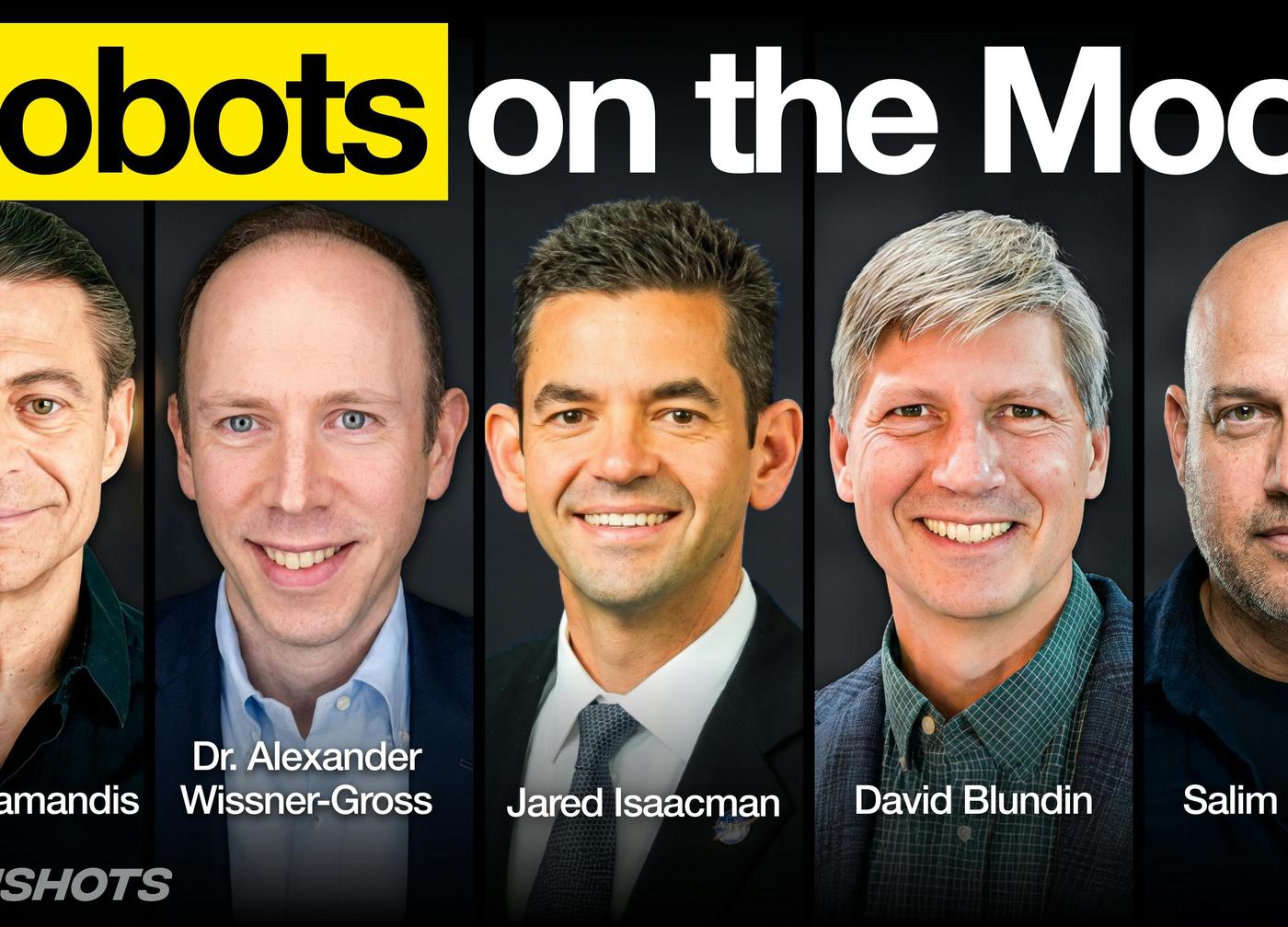
Jared Isaacman: NASA's Moon Base by 2028, Optimus Robots on the Moon, The Truth About UFOs | Ep #274
The race to establish a permanent presence on the Moon and reach Mars hinges on a critical shift toward commercial partnerships, rapid robotic deployment, and nuclear propulsion.
- 1Establishing a permanent base on the Moon by 2028 is essential for testing deep space infrastructure and robotic assistants.
- 2Nuclear propulsion is a non-negotiable requirement for making sustainable and repeatable return missions to Mars a reality.
- 3Geopolitical competition with China acts as a healthy catalyst that accelerates technological breakthroughs in the space program.
Don't miss
Jared Isaacman explains why nuclear propulsion is an absolute necessity for sustainable, repeatable return trips to Mars.
The brief
Commercial astronaut Jared Isaacman joins the show to discuss the future of space exploration, mapping out a vision where artificial intelligence, humanoid robotics, and nuclear propulsion converge to make humanity a multiplanetary species.
Establishing a permanent Moon base by 2028 serves as the critical proving ground. Before attempting long-duration Mars missions, NASA must test infrastructure, logistics, and robotic force multipliers in the harsh environment of the lunar south pole.
While the modern space race is fueled by geopolitical competition with nations like China, Isaacman argues this rivalry is a net positive. The pressure accelerates technological development and forces a cultural shift toward faster, higher-risk experimentation.
For sustainable, repeatable return trips to Mars, nuclear propulsion is a necessity. Isaacman explains that relying on traditional chemical rockets limits our reach, making advanced nuclear power the true key to unlocking deep space travel.
Addressing the search for intelligent life and UAPs, Isaacman emphasizes the need for strict scientific credibility. He advocates for deploying cheaper, high-risk probes to search for past microbial life on Mars rather than relying on unproven rumors.
What was said on this episode
28 statements · 20 positive · 5 negative · 3 neutral
DaVinci will use onboard AI to choose actions from collected data.
“we're designing it from the get go to have on mission AI and it will determine what, what actions it needs to take based on the data it's able to collect as quickly as it possibly can”
Listen at 7:34
NASA should expand autonomous AI use beyond the DaVinci mission.
“just the beginning for where we should be going with this technology”
Listen at 7:58
AI should help NASA develop propulsion that extracts more energy from matter.
“How do we leverage AI and go well beyond that and try and unlock a little bit more of the energy potential from matter”
Listen at 12:24
Humanoid robots should support eventual human outposts on the Moon and Mars.
“it would be crazy not to make a force multiplier and put humanoid robots there to do some of the work”
Listen at 14:01
Robotics are essential for lunar infrastructure and logistics.
“Leveraging robotics there for all things from infrastructure, build out logistics is imperative”
Listen at 14:24
Robots exploring Europa, Enceladus, or Titan need not be humanoid.
“It doesn't necessarily have to obviously take on any sort of humanoid form”
Listen at 15:22
Orbital data centers will come into existence if SpaceX continues pursuing them.
“If Elon and SpaceX are betting on this right now, there is no reason to believe this will not come into existence.”
Listen at 17:25
Orbital data centers have real economic potential and can fund space infrastructure.
“The economic potential there is real and it will help fund a lot of the things we are all excited about in space”
Listen at 19:47
Rapid reusability will determine the rate of lunar development.
“the biggest driver there is going to be just, I mean it's going to be the breakthroughs in rapid reusability”
Listen at 25:08
Lunar humanoid robots will bridge early debris-filled bases and future lunar cities.
“that's what's going to bridge the gap between those two worlds”
Listen at 27:17
NASA plans near-monthly lunar lander and rover deployments before astronauts arrive.
“we're going to be dropping landers and rovers on a near monthly basis”
Listen at 30:03
The first lunar-base phase will leave substantial debris and failed hardware.
“phase one is going to leave a lot of debris everywhere like that, a lot of dead rovers and landers”
Listen at 30:47
Humanoid lunar robots will be deployed after frequent Starship launches and orbital propellant transfer mature.
“once Starships are launching with frequency and they've worked out orbital prop transfer, and once Blue Origin's got their on orbit aggregation strategy down, then when you're moving mass very efficiently to surface, that's when you roll in the humanoid robots”
Listen at 30:58
Humanoid robots may reach the Moon within four to six years.
“you're talking the next four years, maybe six years as a window as these start showing up and building that infrastructure”
Listen at 31:41
Private and commercial space populations will eventually exceed NASA astronaut populations.
“private and commercial will far out overtake that in terms of the number of people living and working in space, on moon or elsewhere”
Listen at 34:59
The lunar south pole poses greater survival problems than Mars.
“we actually have survival problems in the south pole of the moon that exceed that of Mars”
Listen at 35:42
China and the United States are strongly committed to returning to the Moon.
“China and the US for sure are both very committed to getting to the moon”
Listen at 40:03
China will achieve its goal of reaching the Moon by 2030.
“Yes, I do. I think that they have a second mover advantage in a lot of ways.”
Listen at 40:51
NASA should launch flagship science missions annually rather than once every decade.
“We want to be doing it annually”
Listen at 44:55
Nuclear propulsion should enable round-trip astronaut missions to Mars with fewer extraordinary dependencies.
“the ultimate goal is to be able to bring astronauts to Mars and back with the fewest miracles required”
Listen at 47:02
NASA’s first crewed Mars mission will use chemically augmented nuclear-electric propulsion.
“the first human mission to Mars will be, at least if it was, you know, as NASA would be Chemically augmented nuclear electric propulsion”
Listen at 47:18
NASA could send four people to Mars within 10 to 15 years.
“I don't know, put four people on Mars in the next 10 to 15 years”
Listen at 57:07
Round-trip crewed Mars missions must limit dependence on chemical propulsion.
“your dependency on chemical propulsion has to be limited in that”
Listen at 58:32
Active life currently surviving on Mars is extremely unlikely.
“it would be extremely unlikely, like virtually non existent chance that there's anything still active there”
Listen at 1:10:10
Some publicly released UAP observations remain unexplained.
“there is some unexplained anomalous phenomenon and we are putting it out there as part of these disclosure efforts”
Listen at 1:20:15
Isaacman has seen no evidence of secret alien-biologics or crashed-spacecraft programs.
“I have not seen anything. There's no secret programs that I'm aware of related to biologics or crashed”
Listen at 1:23:58
Reported UAPs appear disproportionately near naval ships and advanced weapons tests.
“they tend to seem to show up where we keep our naval ships and where we test our advanced weapon systems”
Listen at 1:24:49
NASA’s lunar base program primarily exists to develop capabilities for Mars missions.
“We are going to the moon and we are building a moon base first and foremost to master the skills to go to Mars”
Listen at 1:25:40
Statements are attributed to the speaker as said on the episode and reflect their view at the time, not PodLume's. They are not advice.
Books & mentions
Moonshots with Peter Diamandis
Explore more episodes focused on exponential technologies and the future of space exploration