Oct 22, 2026 · 1h 15m
Juan Verde links responsible prosperity to AI’s human stakes
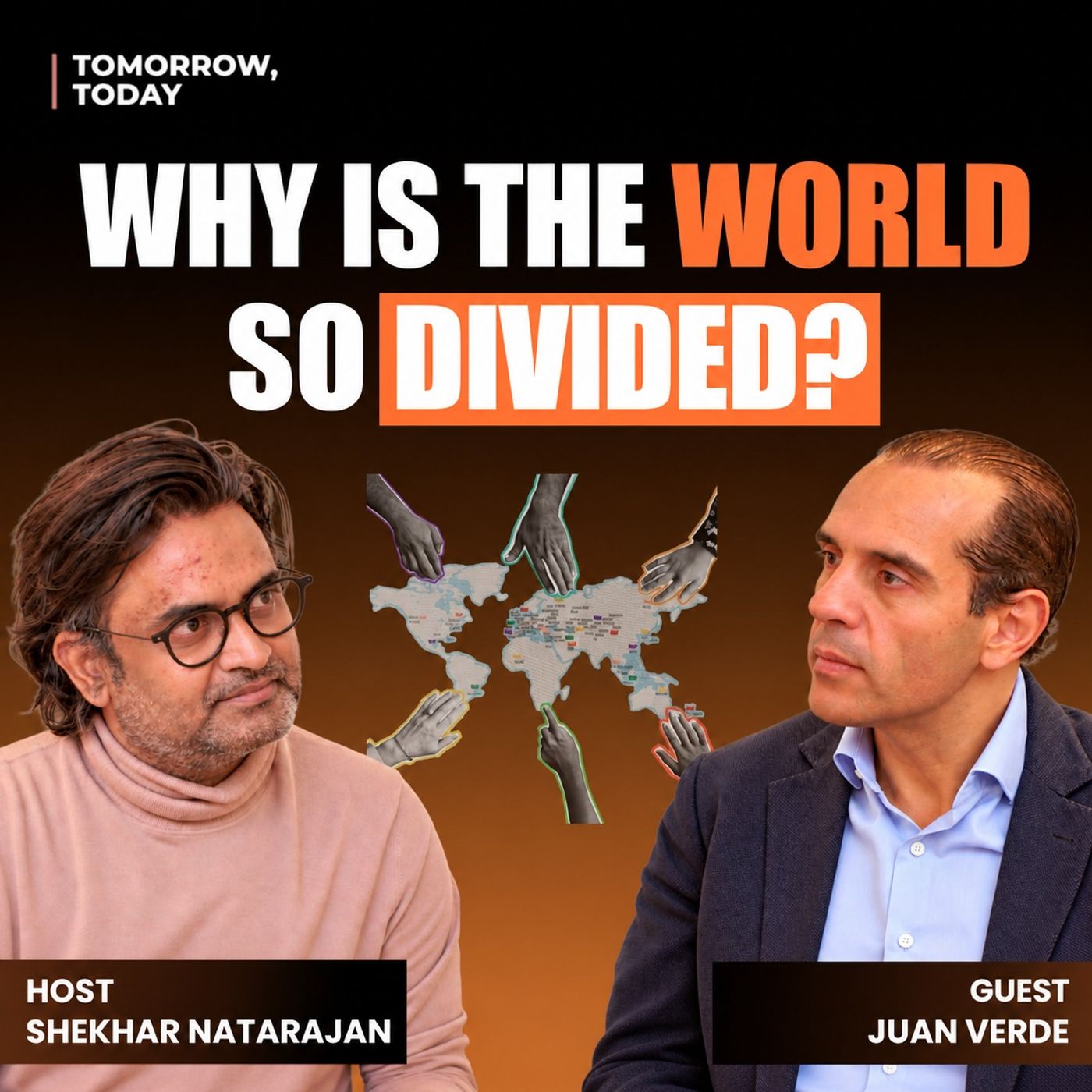
Juan Verde on Politics, Purpose, Leadership, Sustainability and the Future | Shekhar Natarajan
The conversation connects trade, sustainability, political compromise, and AI to a central question: how can progress preserve human dignity and purpose?
- 1Verde argues that trade creates peace and prosperity only when it adds value responsibly and protects the environment.
- 2He traces polarization to globalization’s uneven costs and favors pragmatic cooperation over ideological extremes.
- 3AI demands more than technical adaptation; governments must shape incentives around work, dignity, and human purpose.
Don't miss
Verde reframes AI disruption as a question of human dignity and purpose, not merely job loss or technical efficiency.
The brief
Juan Verde’s path from a modest family in the Canary Islands to public service begins with a lesson in generosity, purpose, and mentors who demanded more.
His account of trade and globalization rejects both naive optimism and retreat: commerce can distribute prosperity and create peace, but only when benefits and responsibilities are shared.
Verde connects polarization to globalization’s uneven costs, then makes the case for centrist compromise and cooperation on threats that no country can manage alone.
On sustainability, he argues that business responds to competitiveness, consumer demand, and measurable outcomes more reliably than to moral appeals alone.
The episode’s sharpest turn comes with AI: efficiency may eliminate work while leaving dignity and purpose unresolved, making government incentives and social preparation urgent.
Verde closes by defending optimism, difficult questions, and listening—leadership habits he sees as essential when the future remains uncertain.
Weekly email
State of the Pod, every Monday
The week's most-discussed names and stories from podcasts, with the moments behind them. Free, five minutes, unsubscribe in one click.