Nov 21, 2026 · 2h 11m
Listen from 57:20
Listen at 57:20
Jurvetson links SpaceX’s bet to AI’s capital race
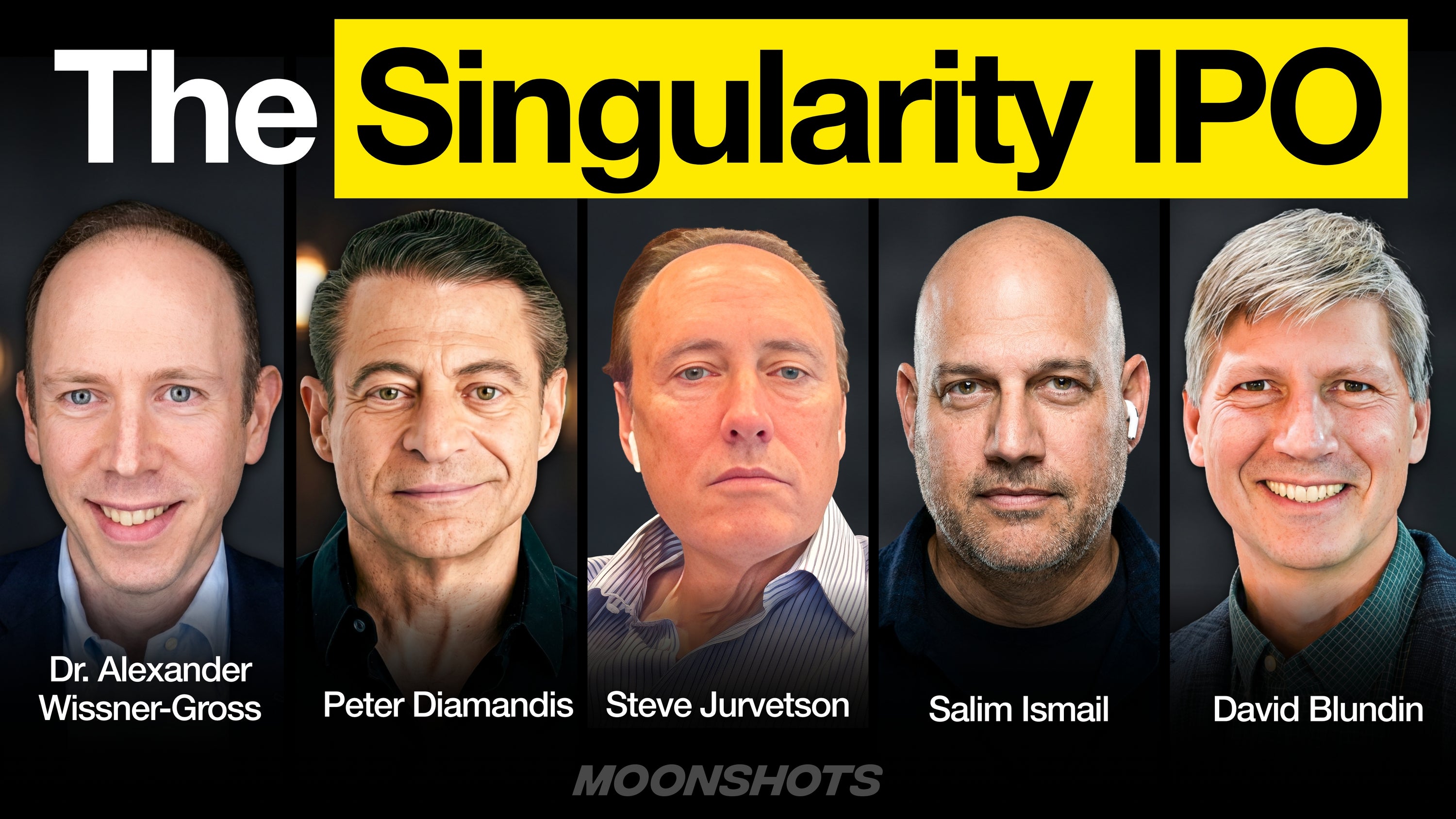
Steve Jurvetson on the SpaceX Deal That Almost Didn’t Happen | EP #314
The episode connects one venture investment’s near-collapse to a broader contest over compute, infrastructure, governance, and space-based industry.
- 1Mission-driven founders can justify unconventional bets when vertical integration reduces strategic dependencies.
- 2Anthropic, OpenAI, and Google face a capital race shaped by compute, public-market pressure, and safety concerns.
- 3SpaceX’s expansion into chips, connectivity, robotics, and launch infrastructure reflects a return to hardware-scale ambition.
Don't miss
Jurvetson and the panel connect SpaceX’s culture of vertical integration to a future spanning compute, chips, Starlink, robotics, and lunar industry.
The brief
Steve Jurvetson revisits the SpaceX investment that nearly collapsed, including Elon Musk’s refusal to lower the valuation and the deal protections that finally won over skeptical partners.
Jurvetson argues that investing beyond pattern recognition means backing companies unlike anything seen before, especially when mission, talent, and unusual risk tolerance align.
The panel treats Anthropic’s IPO and the AI capital race as a test of whether public markets can absorb companies whose value depends on future breakthroughs and immense compute.
OpenAI, Google, and Anthropic are compared on safety, leadership, distribution, model capability, and infrastructure as AI systems move toward organizational and governmental decision-making.
SpaceX’s compute plans, TerraFab, Starlink, Starship, and robotics turn vertical integration into an investment thesis spanning chips, connectivity, launch, and lunar industry.
The conversation closes with Voyager 1 crossing one light-day from Earth, shifting the frame from today’s machines to humanity’s possible robotic and AI descendants.
What was said on this episode
54 statements · 34 positive · 16 negative · 2 mixed · 2 neutral
Falcon 1’s fourth-flight success enabled SpaceX’s subsequent progress.
“Falcon 4's success sort of rippled out and everything else was history.”
Listen at 3:56
Deal protections converted two partners from opposing to supporting SpaceX investment.
“by adding structure to the deal in a way that neither I nor Elon thought mattered, but it turned two partners from a no to a yes.”
Listen at 5:24
Personal passions should influence venture investment judgment.
“in retrospect, I think we should let our personal passions invest, you know, influence and guide our investment judgment.”
Listen at 8:27
Jurvetson invests in novel technologies adjacent to his prior experience.
“I try to invest in things that are unlike anything I've seen before.”
Listen at 10:24
Public-market infrastructure is not yet equipped for Anthropic-scale IPOs.
“the machinery is not really geared up for this scale yet.”
Listen at 13:51
AI-tested infrastructure should reduce cybersecurity vulnerabilities in the future.
“in the not too distant future, when you build more and more infrastructure with bulletproof testing of a whole army of AIs to find vulnerabilities, in theory, this should all get a lot better going forward.”
Listen at 19:13
AI-enabled cyber offense scales faster than human-involved cyber defense.
“Cyber defense is still human in the loop, plugging one vulnerability at a time. And cyber offensive is agents scaling and attacking multiple vulnerabilities in parallel at scale.”
Listen at 21:08
More infrastructure outages are likely to occur.
“there's going to be more infrastructure outages coming, like the FAA one and more.”
Listen at 24:05
Frontier AI is a large, dynamic, capital-intensive business.
“this is a large, dynamic, capital-intensive business.”
Listen at 27:29
Orbital data-center economies could exceed the entire terrestrial economy.
“the economy there exceeding that of everything on Earth combined.”
Listen at 27:49
AI productivity has grown approximately fourfold annually for thirteen years.
“4x per year for 13 years running now in AI productivity.”
Listen at 28:03
Intelligence and computation have no upper bound on economic value.
“there's no bound to the economic value of intelligence and computation.”
Listen at 30:58
Quarterly public-market evaluation will slow Anthropic’s long-term mission.
“this is going to be a big problem for Anthropic because how do you optimize for a 50-year mission? When you're being evaluated every quarter on your results, that tension is going to slow them down.”
Listen at 32:07
OpenAI may not survive as a leading long-term AI company.
“I'm not sure I put open AI in the likely survivor list”
Listen at 34:17
Gemini is progressing faster than OpenAI and belongs among the top three.
“I would put Gemini in the top three ahead of OpenAI in terms of the pace at which progress is being made.”
Listen at 36:05
AI will substantially improve policymaking and major decisions.
“The opportunity to use AI in policymaking and major decision-making is going to be unbelievable.”
Listen at 41:00
Bots and agents will take over analyst, legal, finance, and accounting roles.
“in the world of bots and agents, hand over analyst roles, hand over legal, hand over finance, hand over accounting”
Listen at 41:36
OpenAI trails competitors in enterprise and code-generation markets.
“OpenAI missed enterprise. They missed Cogen. They're running from behind.”
Listen at 43:14
Startups should appoint AI board members.
“I think that all startups now should have an AI board member.”
Listen at 48:54
Anthropic leads frontier AI, followed by OpenAI and Google.
“the current lineup, as I see it, is Anthropic's number one, OpenAI's number two, and Google is a solid number three.”
Listen at 53:38
Jurvetson evaluates AI companies by innovation pace rather than static benchmarks.
“it's the slope that I look at.”
Listen at 55:42
Google is likely to compete aggressively in consumer AI services.
“google's actually going to come very hard at people”
Listen at 58:19
AI agents are shifting engineers from coding toward managing agent fleets.
“these engineers are not writing code anymore. They're managing huge fleets of agents to create massive amounts of product.”
Listen at 1:02:43
Sergey Brin is likely working to move Google to first place in AI.
“I have to imagine that Sergey is engaged to try and move Google up to number one.”
Listen at 1:05:31
Bureaucratic companies are unlikely to make bold bets like Falcon or DeepMind.
“the slow moving voting control bureaucracy companies never create a Falcon rocket or buy DeepMind”
Listen at 1:05:47
SpaceX is building each successive data center faster than the previous one.
“each time they build a data center, it's more rapid than the prior.”
Listen at 1:10:50
Recursive self-improvement could reduce Anthropic’s dependence on SpaceX compute.
“Anthropic's hardware needs might actually change, and Anthropic might not need SpaceX or Elon as much as they do right now.”
Listen at 1:14:34
xAI could match Anthropic’s model quality within two years.
“if you look a year or two from now, XAI has a model that's every bit as good as Anthropic”
Listen at 1:16:02
Inference-time training could rapidly obsolete current GPU investments.
“that entire investment, which just came online and is just starting to get plugged in, is irrelevant within its sort of three-year expected lifespan.”
Listen at 1:16:58
A rapid shift away from current GPU infrastructure is extremely likely.
“I think that third outcome is extremely likely at this point”
Listen at 1:17:19
AI demand will continue exceeding compute supply despite architectural shifts.
“we're still going to be compute bound even if we end up shifting it to architectures that are diversified”
Listen at 1:18:32
AI compute infrastructure is Jurvetson’s strongest investment theme to date.
“It's the best investment theme I think I've ever seen.”
Listen at 1:21:40
Companies should internalize strategically limiting external dependencies.
“When an external dependency becomes limiting and strategically limiting, A good EXO internalizes it”
Listen at 1:22:13
More efficient AI architectures could significantly hurt RAM and Nvidia.
“That is very bearish for RAM, along with the other things. It's very bearish for NVIDIA.”
Listen at 1:25:14
Point-to-point satellite communication can be faster than terrestrial fiber.
“Point to point in space, not only are you not going like submarine cables going around the coast and not a direct line, you're going like... Yeah, it's faster.”
Listen at 1:31:52
Satellite-to-ground optical or microwave links will be deployed.
“microwave that'll happen”
Listen at 1:32:50
Orbital data centers could provide immense compute per unit of bandwidth with low latency.
“the orbital data centers are so beautiful is that you know you can tee up an inference request and have a small bit of latency and then returning the results you can have an immense amount of compute per unit of bandwidth”
Listen at 1:35:14
Netflix successfully led its own disruption by switching from DVDs to broadband.
“only Netflix is an example of a company that led its own disruption where they switched from DVDs to broadband.”
Listen at 1:37:51
Tesla’s projected battery demand exceeded global production, prompting Gigafactory construction.
“we're going to need more than the entire world is producing. Oh, boy, we better make the first gig factory”
Listen at 1:39:24
Elon Musk is primarily motivated by mission rather than wealth.
“it is the mission that drives him”
Listen at 1:43:43
Tesla’s mission was to accelerate the transition to sustainable energy.
“Tesla's mission was to catalyze the conversion of sustainable energy.”
Listen at 1:44:31
Mission-focused companies avoid conflicts between short- and long-term goals.
“the companies that are mission focused never have that conflict.”
Listen at 1:46:38
Starship’s projected fuel cost is $2.50 per kilogram.
“here we're coming in at $2.50.”
Listen at 1:50:32
ULA is effectively no longer viable as a launch company.
“ULA's been dead for years.”
Listen at 1:50:59
Vulcan is unattractive because success would still leave it commercially unsuccessful.
“why would you invest money and effort into a product that if it succeeds in all of its possible objectives is a failure?”
Listen at 1:51:17
A universal influenza vaccine could cure all influenza with one shot.
“We do. Single shot to cure all influenza.”
Listen at 1:52:46
Mining is the leading killer application for Optimus robots.
“mining is the answer.”
Listen at 1:54:06
Mining operations will ultimately become fully automated.
“ultimately it'll be a fully automated thing right”
Listen at 1:56:21
Humanoid robots will perform varied construction tasks in lunar settlements.
“You're going to have the humanoid robots doing the landing party build of all kinds of odd jobs.”
Listen at 1:57:30
Humanity may soon launch relativistic self-replicating probes in many directions.
“we're on the verge of being able to launch relativistic von Neumann probes in every direction in the next few years.”
Listen at 2:02:20
Humanity is unlikely ever to travel physically to Alpha Centauri.
“I don't think we're ever going there, sadly.”
Listen at 2:04:44
Humanity will colonize the Moon and Mars before interstellar travel.
“we're going to colonize Moon and Mars”
Listen at 2:04:49
Humanity will not send biological human material to other star systems.
“We're not going to send our germplasm.”
Listen at 2:04:58
Humanity’s interstellar presence will likely consist of robots, AIs, and technologies.
“Our robots, our AIs, our technologies.”
Listen at 2:05:49
Statements are attributed to the speaker as said on the episode and reflect their view at the time, not PodLume's. They are not advice.
Weekly email
State of the Pod, every Monday
The week's most-discussed names and stories from podcasts, with the moments behind them. Free, five minutes, unsubscribe in one click.