Nov 21, 2026 · 59 min
McConaughey makes the case for principled difficulty
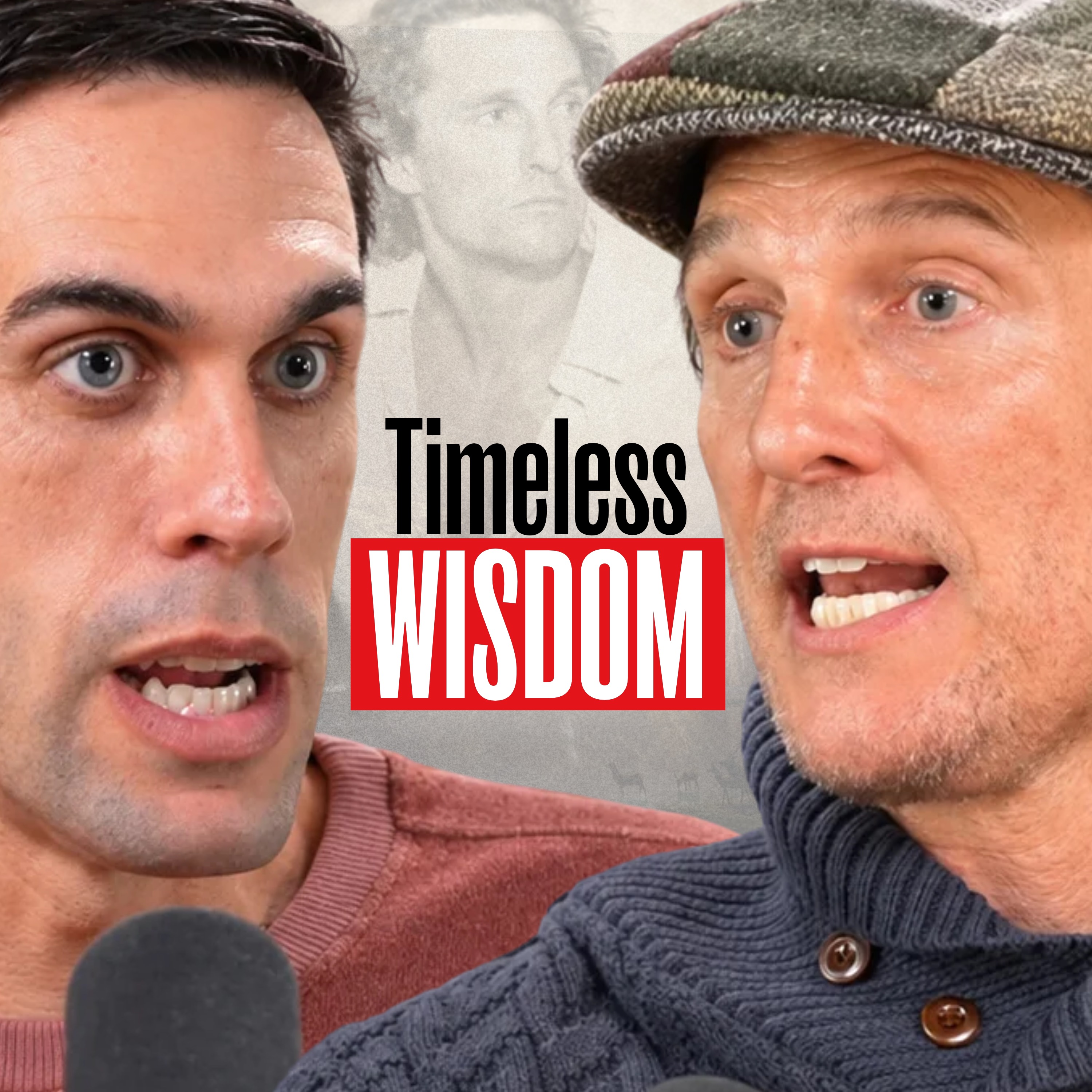
Matthew McConaughey: What Poetry Teaches Us About Being Human
The conversation connects poetry and Stoicism to the harder work of setting boundaries, choosing integrity, and sustaining hope without denying reality.
- 1Poetry, music, and philosophy can turn abstract ideals into memorable guidance for conduct and character.
- 2Integrity often requires accepting professional costs, saying “can’t” clearly, and refusing roles that conflict with personal standards.
- 3Stoic acceptance means engaging reality actively while preserving moral agency, skepticism, hope, and long-term vision.
Don't miss
McConaughey recounts refusing to leave his trailer until an unpaid film crew received their checks, turning personal leverage into advocacy for others.
The brief
Matthew McConaughey and Ryan Holiday treat poetry, songs, and philosophy as practical compasses: indirect forms can guide conduct without sounding like instructions.
McConaughey recalls an isolating Australian exchange at 18, where strict routines, Lord Byron, music, and long letters helped him regain perspective.
Their argument moves from poetry’s lost role as character training to the costs of integrity: leaving easy roles, saying “can’t,” and using leverage for others.
Holiday frames Stoic acceptance as active engagement with reality, not passivity, while McConaughey distinguishes constructive skepticism from cynicism that kills possibility.
The episode closes on hope grounded in evidence: work may outlast its first reception, and long-term vision can coexist with clear-eyed realism.
Weekly email
State of the Pod, every Monday
The week's most-discussed names and stories from podcasts, with the moments behind them. Free, five minutes, unsubscribe in one click.