Oct 7, 2026 · 2h 1m
Napoleon built modern France before overreaching into catastrophe
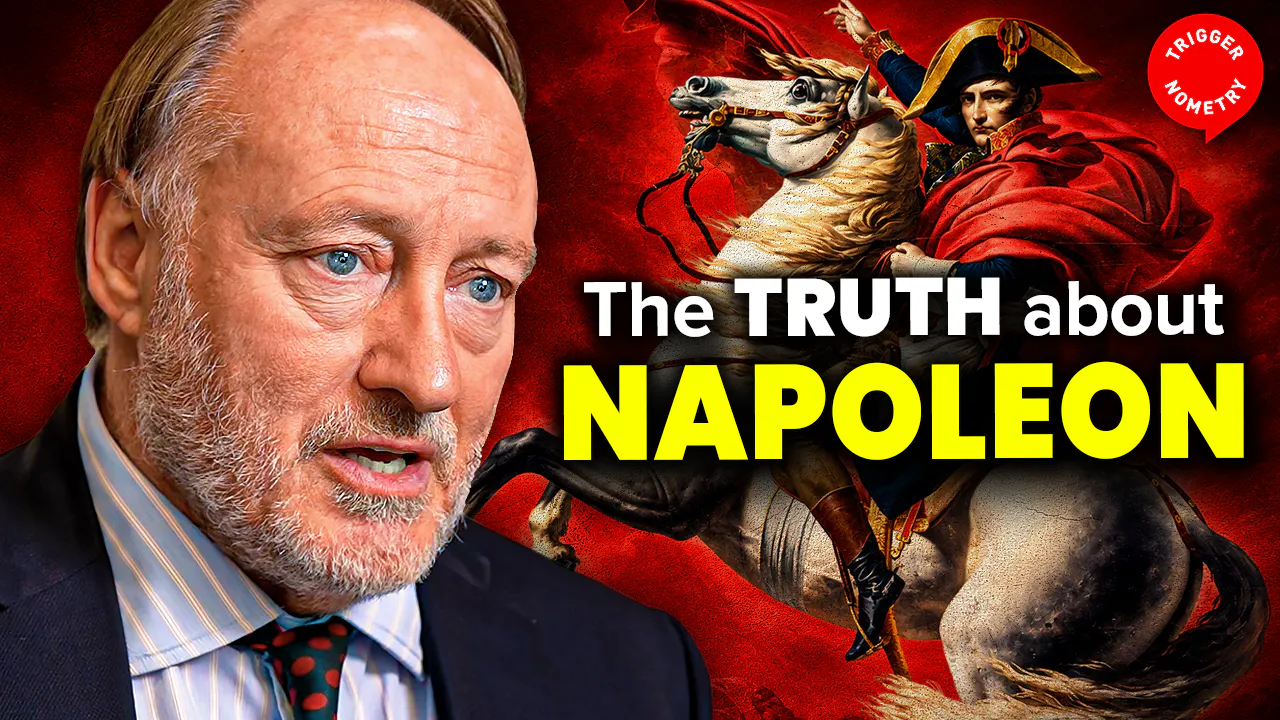
Everything You Know About Napoleon Is Wrong – Historian Andrew Roberts
The episode weighs Napoleon’s reforms and meritocratic state-building against the authoritarian ambition, strategic errors, and human costs that destroyed his empire.
- 1Napoleon fused revolutionary meritocracy, personal charisma, and propaganda to build an unusually effective military and governing elite.
- 2His reforms standardized law and strengthened France, but conquest, extraction, and the Continental System imposed mounting economic and military strain.
- 3Russia, Waterloo, and exile exposed how depleted forces, divided marshals, and Napoleon’s micromanagement turned dominance into collapse.
Don't miss
The discussion of the Russian retreat shows how disease, logistics, exhaustion, and Napoleon’s strategic misjudgments transformed dominance into collapse.
The brief
Andrew Roberts traces Napoleon from Corsican aristocrat and revolutionary general to emperor, presenting his rise as a product of military talent, political weakness, and carefully managed public myth.
Napoleon’s battlefield edge came from speed, manoeuvre, logistics, and striking divided enemies; his political edge came from meritocracy, rewards, writing, and personal recognition.
The episode’s central tension is Napoleon’s double legacy: the Code Napoleon and modern administration on one side, authoritarian rule and imperial conquest on the other.
The Russian campaign marks the decisive reversal, as disease, logistics, exhaustion, and retreat exposed the limits of an empire sustained by constant military success.
At Waterloo, Wellington outmaneuvered a depleted and divided French command; even victory would likely have delayed rather than prevented defeat by advancing coalitions.
Books & mentions
Some links are affiliate links — PodLume may earn a commission if you buy.
