Aug 26, 2026 · 1h 24m
Neural operators push AI beyond language into physical systems
🔬“We have foundation models for language, not for physics” — Anima Anandkumar, Bren Professor of Computing
Physics foundation models could make weather forecasting, climate analysis, fusion control, and other scientific simulations faster and more transferable.
- 1Neural operators learn mappings between physical fields, amortizing simulation costs across many equations, resolutions, and conditions.
- 2Weather and fusion applications show both the promise of fast rollouts and the difficulty of preserving fine-scale physics over time.
- 3Formal guarantees, open-source tools, policy engagement, and compute access will shape whether AI for science reaches safety-critical systems.
Don't miss
Anandkumar describes a neural-operator digital twin for tokamak plasma evolution that could make fusion simulation dramatically faster.
The brief
Anima Anandkumar argues that physical systems cannot be modeled by simply extending token-based language-model scaling: they require representations of fields, geometry, and multiscale structure.
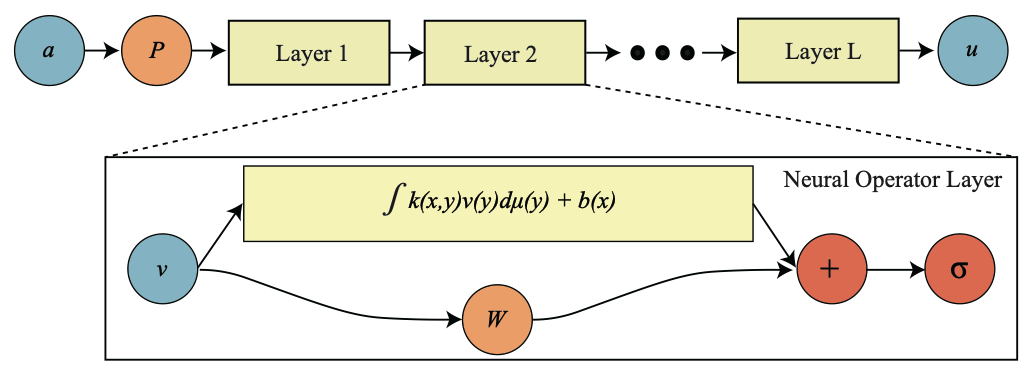
Neural operators learn mappings between functions rather than fixed-size inputs, allowing one model to approximate many physical simulations across resolutions and equation instances.
Weather forecasting illustrates the payoff: autoregressive neural operators can replace repeated traditional simulations with fast predictions, while long rollouts still challenge calibration, extremes, and physical constraints.
A fusion-reactor digital twin shows the stakes, using neural operators to model plasma evolution quickly enough to inform control, where formal sensitivity and robustness guarantees matter.
Anandkumar’s broader case is for physics foundation models that transfer across phenomena and geometries—but only with enough relevant data, compute, and scientific constraints.