Nov 18, 2026 · 19 min
Listen from 16:33
Listen at 16:33
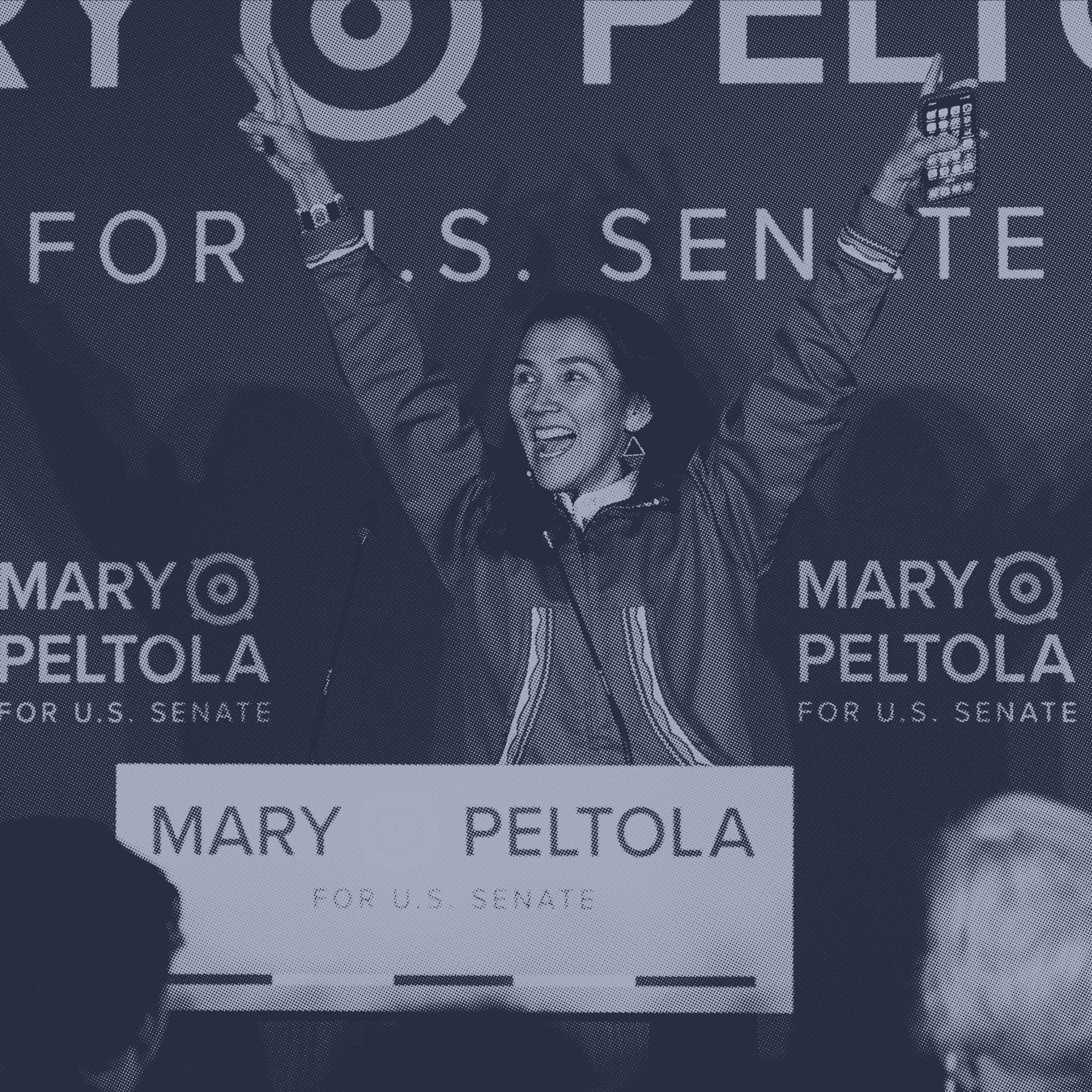
Peltola win reshapes Democrats’ Senate outlook
Dems win another Senate seat
Mary Peltola’s Alaska victory gives Democrats a new lens on Senate control, filibuster reform, and the parties’ direction before 2028.
- 1Mary Peltola’s hyperlocal campaign and outreach to Alaska Native voters helped Democrats expand their Senate majority.
- 2Hakeem Jeffries’s rise highlights Democratic unity alongside unresolved tensions over ideology, Israel, and an increasingly diverse caucus.
- 3Listener questions expose why debt, campaign money, election stakes, and filibuster reform remain politically difficult problems.
Don't miss
The hosts use Mary Peltola’s Alaska victory to show how a hyperlocal campaign could alter Democrats’ national Senate strategy.
The brief
Mary Peltola’s historic Senate victory in Alaska, powered by hyperlocal campaigning and outreach to Alaska Native voters, expands Democrats’ control while reshaping the 2028 map.
The hosts connect the result to a possible filibuster-proof majority, then turn to Hakeem Jeffries’s uncontested rise and the tensions beneath Democratic caucus unity.
A listener mailbag tests the politics of national debt and out-of-state donations, explaining why voters rarely reward spending cuts and why campaign money follows nationalized races.
The filibuster question exposes the difficulty of compromise: even lowering the threshold from 60 to 55 votes requires consensus that reform advocates have struggled to build.
The episode closes on an open 2028 presidential field, Republican uncertainty after Trump, Democratic ideological debates, and anti-establishment populism’s pull across both parties.
What was said on this episode
20 statements · 11 positive · 4 negative · 1 mixed · 4 neutral
Mary Peltola’s hyperlocal campaign contributed to her Alaska victory
“she made it a super hyper local race”
Listen at 0:54
Peltola’s outreach reached Alaska Native voters who shifted toward Democrats
“made it to some of the most far-flung parts of Alaska, which are home to many Alaska Native voters that swung the most toward Democrats from 2024”
Listen at 1:09
Mary Peltola won more than half the vote without ranked-choice tabulation
“She got more than 50%, just barely.”
Listen at 2:06
Alaska’s Senate result improves Democrats’ prospects for 2028
“it does set them up for success in 2028”
Listen at 2:36
Democrats seek four additional Senate seats for a 60-vote supermajority
“Democrats would very much like to get 4 more seats so that they have a supermajority, 60 votes in the Senate”
Listen at 2:42
Republicans face a difficult Senate map in 2028
“The Republican map for 2028 in the Senate is pretty rough.”
Listen at 2:55
House Democrats largely unified behind Hakeem Jeffries
“for the most part, the caucus got behind Jeffries in a unified way”
Listen at 4:19
Israel policy divides the Democratic caucus
“that has become a real dividing line within the Democratic caucus”
Listen at 5:16
Many incoming Democrats will face pressure to govern moderately and emphasize affordability
“many of them are going to be under a lot of pressure to show results, to focus on affordability, to actually be more moderate”
Listen at 5:40
Republicans increased the deficit through tax cuts in the One Big Beautiful Bill Act
“Republicans grew the deficit with those big tax cuts in the One Big Beautiful Bill Act that they passed last year.”
Listen at 8:48
Jon Ossoff’s out-of-state fundraising helped him win Georgia decisively
“that massive fundraising haul not only helped him win Georgia by double digits”
Listen at 9:58
Direct candidate donations are more useful than donations to outside groups
“money sent directly to candidates is much more useful than money that goes to outside groups”
Listen at 10:51
Democrats’ expanded electoral map may redirect donations toward competitive races
“Democrats expanded the map so much”
Listen at 11:16
The United States will enter another period of debate over abolishing the filibuster
“we are going to enter another era of discussion of getting rid of the filibuster”
Listen at 13:24
Democrats shifted campaign messaging from democracy toward affordability
“There was less focus on, you know, democracy is on the line in favor of an argument focused on Democrats are going to make life more affordable for you.”
Listen at 15:48
The 2028 presidential contest will be open and highly competitive
“2028 is going to be wide open”
Listen at 16:33
The midterms give Democrats an early advantage in defining their post-Trump identity
“Democrats, because of these midterms, have a little bit of a head start on figuring out who they are”
Listen at 16:36
The midterms reduced J.D. Vance’s perceived inevitability as a Republican nominee
“the midterms made J.D. Vance look a little bit less inevitable to Republicans”
Listen at 16:59
The Republican Party’s future identity will reflect its eventual nominee
“It will probably be the Republican Party of whoever ultimately wins the nomination.”
Listen at 17:27
Candidates will appeal to populist anti-establishment sentiment through 2028
“that is going to be something all kinds of candidates are going to try to appeal to going forward, especially as we head into 2028.”
Listen at 17:57
Statements are attributed to the speaker as said on the episode and reflect their view at the time, not PodLume's. They are not advice.
Weekly email
State of the Pod, every Monday
The week's most-discussed names and stories from podcasts, with the moments behind them. Free, five minutes, unsubscribe in one click.