Nov 3, 2026 · 1h 26m
Programmable biology tests AI’s promise against human judgment
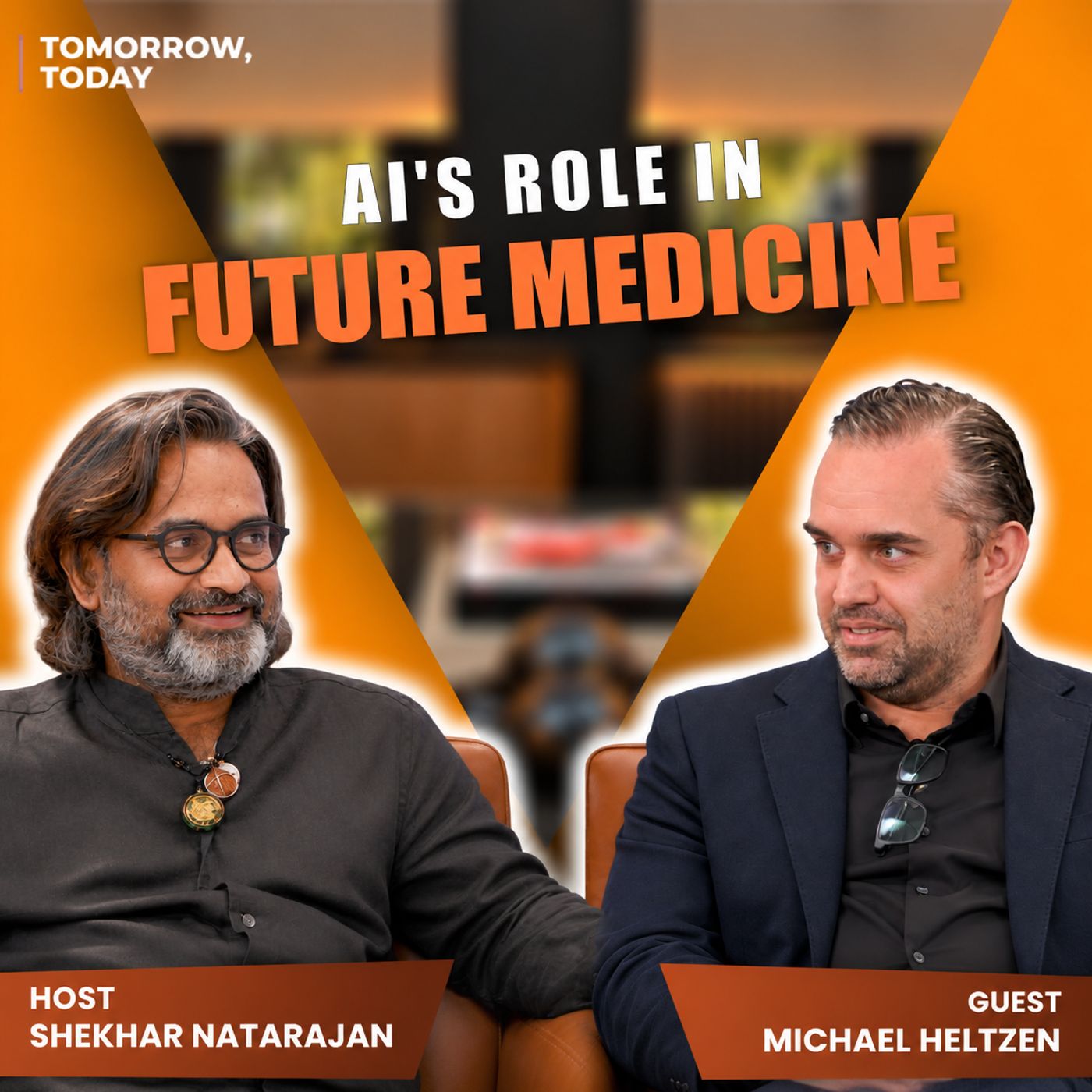
The Future of Biology, AI and Human Innovation with Michael Heltzen | Shekhar Natarajan
The episode connects practical advances in genomic computing and cell-free biology with unresolved questions about AI governance, health, and human responsibility.
- 1Cell-free enzymatic pathways could make rare natural products more controllable while avoiding some risks of living-cell systems.
- 2AI can expand scientific capability, but its values, representation gaps, and misuse require governance grounded in human welfare.
- 3The durable advantage in an AI-shaped economy may be exceptional human judgment, collaboration, and the ability to create impact through teams.
Don't miss
Michael Heltzen explains how protein language models and cell-free pathways could recreate rare natural products without relying on living cells.
The brief
Michael Heltzen’s path from day trading and accounting to bioinformatics frames the episode’s central question: how can powerful technology serve human welfare rather than merely amplify capability?
The conversation moves from the Human Genome Project’s infrastructure to AI’s social risks, including cyber catastrophe, cultural representation, and the difficulty of defining values across communities.
Heltzen explains how graphene biosensors could translate molecular binding into electronic signals, while cell-free biology may produce useful compounds without mutation or unwanted cellular byproducts.
ExoScience’s approach uses protein language models to optimize enzymes and recreate rare natural-product pathways outside living cells, linking AI directly to biotechnology’s manufacturing problem.
Fatty liver disease becomes a concrete test of the stakes: better metabolic tools could affect health and longevity, but regulation and exaggerated claims remain serious constraints.
The closing career argument is deliberately human: as AI changes work, durable value comes from judgment, teamwork, focus, and becoming exceptionally good at creating impact.
Weekly email
State of the Pod, every Monday
The week's most-discussed names and stories from podcasts, with the moments behind them. Free, five minutes, unsubscribe in one click.