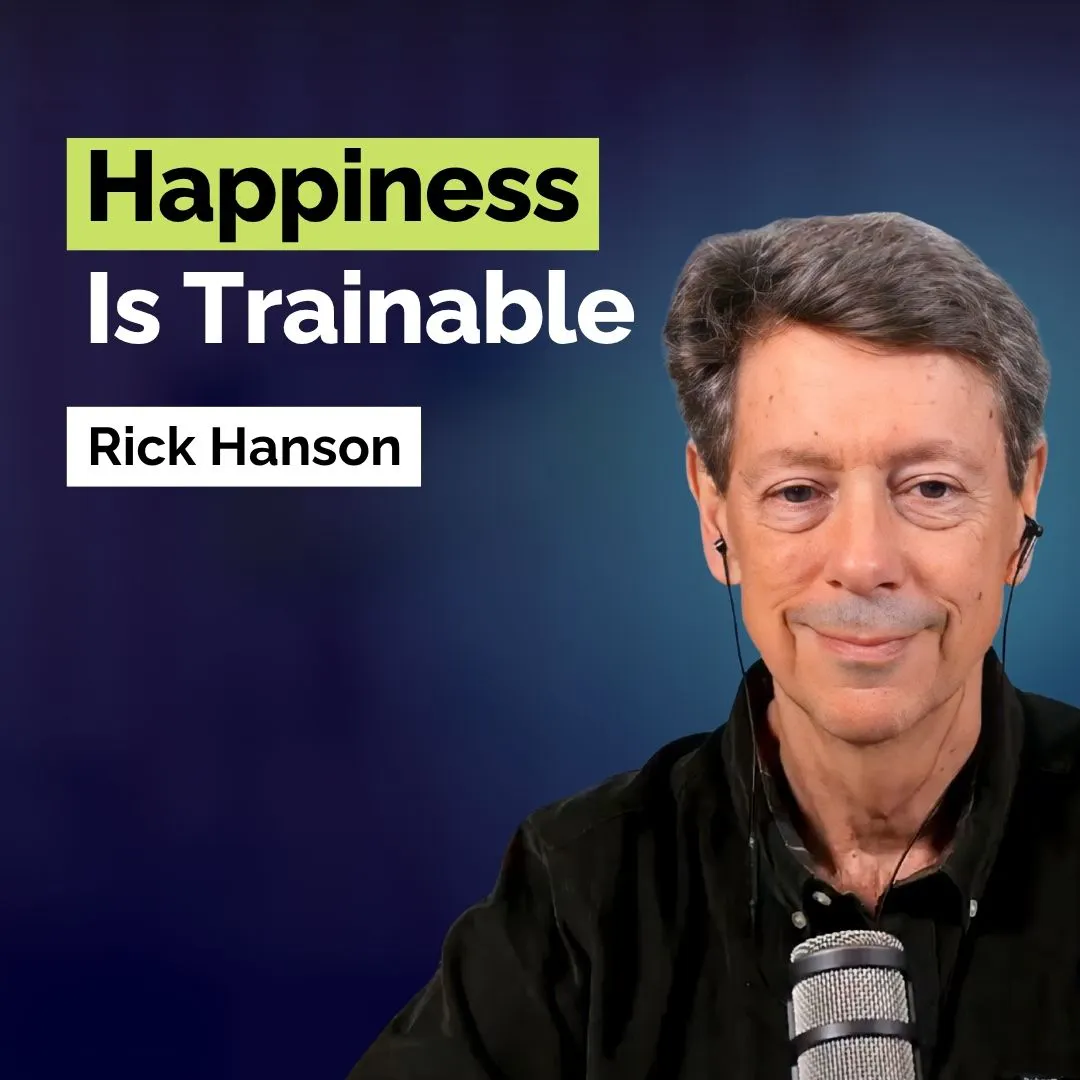
Rick Hanson maps mindfulness onto the changing brain
Rick Hanson: The Neuroscience of Happiness and How Mindfulness Improves Brain Health | Mental Health | YAPClassic
The conversation connects contemplative practice with neuroplasticity, offering a practical framework for reducing avoidable suffering and building durable well-being.
- 1Mindfulness can steady attention and emotional responses by repeatedly training the brain through experience.
- 2Accepting unavoidable discomfort reduces the extra suffering created by resistance, self-criticism, blame, and clinging.
- 3Brief positive experiences become more useful when people slow down, notice them, and deliberately take in the good.
Don't miss
Hanson’s five-minute “take in the good” practice translates neuroplasticity into a concrete way to turn brief positive experiences into durable gains.
The brief
Psychologist and meditation teacher Rick Hanson traces his interest in unhappiness from a shy, unhappy childhood to a search for meaning that led him toward Buddhism and neuroscience.
Hanson argues that steadiness does not require suppressing strong emotions; it means maintaining awareness while attention stops being pulled around by the “monkey mind.”
The neuroscience remains developing, but the episode’s core claim is clear: repeated experiences, including meditation and mindfulness, can reshape attention, emotional regulation, and neural connections.
Hanson separates unavoidable discomfort from “add-on suffering”—the resistance, self-criticism, blame, and clinging that intensify pain—and presents acceptance as a way to reduce that friction.
His five-minute practice turns the theory into a daily experiment: slow down, notice a positive experience, and take it in long enough for a fleeting benefit to become durable gain.
The conversation reframes “profiting” in life as lasting personal growth rather than fleeting pleasure, linking inner development to effort, resilience, and meaningful return.
