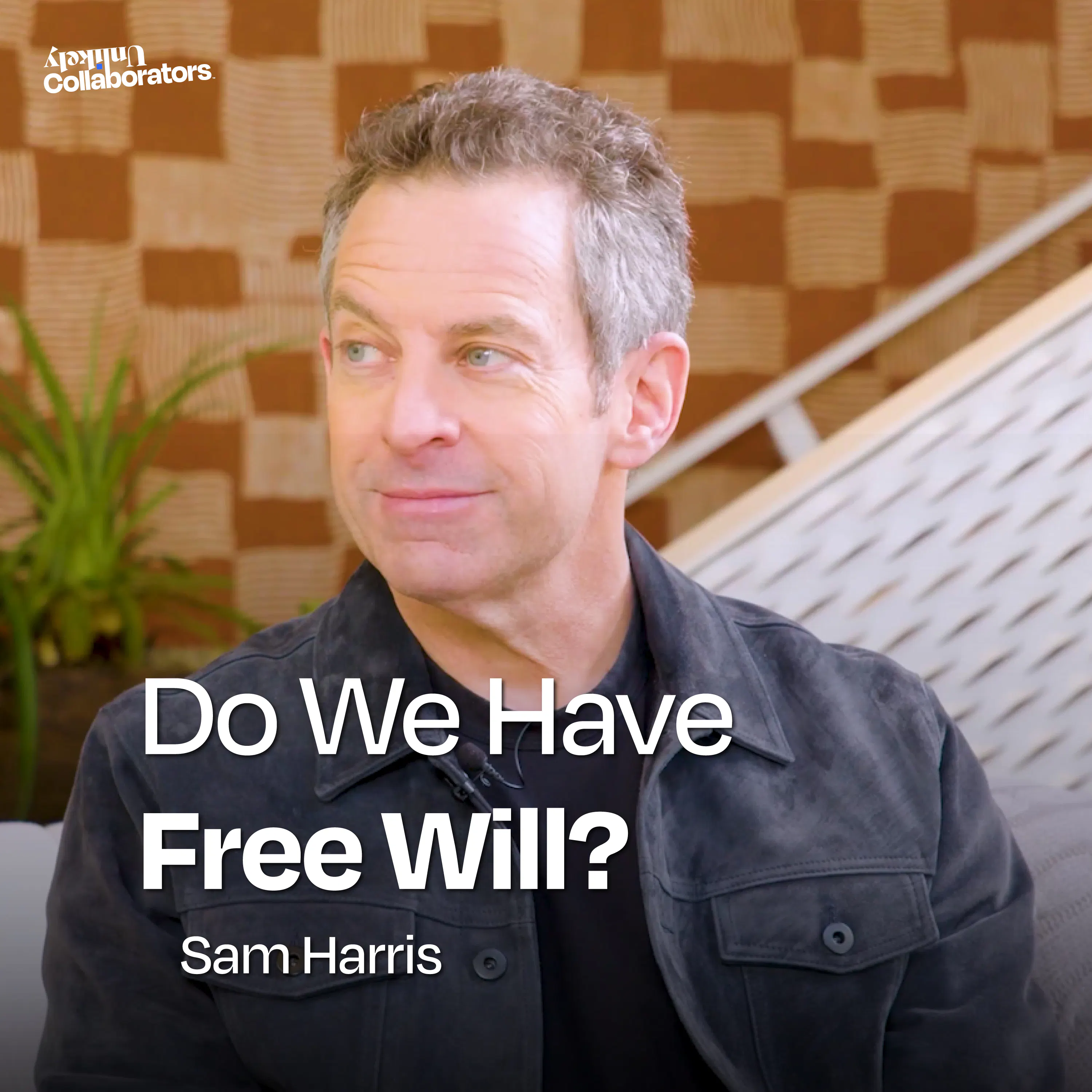
Oct 7, 2026 · 43 min
Sam Harris challenges the self and free will
The ‘Self’ You Can’t Find with Sam Harris
The episode connects a constructed sense of self to debates over agency, responsibility, meditation, psychedelics, and personal change.
- 1Close attention, meditation, and psychedelics can expose the self as a constructed conscious experience.
- 2Sam Harris separates practical control from libertarian free will, while Christof Koch defends consciousness as potentially fundamental.
- 3Changing one’s relationship with thoughts may matter pragmatically even if conscious authorship remains philosophically disputed.
Don't miss
Sam Harris uses meditation and a celebrity-name exercise to argue that thoughts and choices appear before conscious authorship.
The brief
Sam Harris opens with a destabilizing claim: when the feeling of self is examined closely, the apparently separate inner subject can vanish.
Heather Berlin and Christof Koch frame selfhood as a brain-constructed experience, while Harris argues that consciousness can continue without the usual sense of an author.
The free-will debate turns on a sharp distinction between practical control and libertarian freedom, with responsibility and addiction complicating the philosophical stakes.
Meditation and psychedelics become methods for widening the perception box: both can reveal unfamiliar mental possibilities, but meditation may offer a steadier transformation.
The episode’s central tension remains unresolved: if thoughts and intentions arise before conscious authorship, what kind of agency—and responsibility—survives?
Books & mentions
Some links are affiliate links — PodLume may earn a commission if you buy.
