Oct 13, 2026 · 29 min
Scientists recreate alien worlds with telescopes and lasers
Exoplanets
Understanding exoplanets requires both reading their distant atmospheres and testing the extreme materials hidden inside them.
- 1Advanced imaging and adaptive optics help separate faint exoplanet light from overwhelming starlight.
- 2Spectroscopy can identify atmospheric molecules such as water and methane across interstellar distances.
- 3Laser experiments reveal exotic interiors, including superionic ice and possible diamond rain, that observations alone cannot access.
Don't miss
Federica Coppari explains how laser-driven experiments reveal superionic ice and the possibility of diamond rain inside ice giants.
The brief
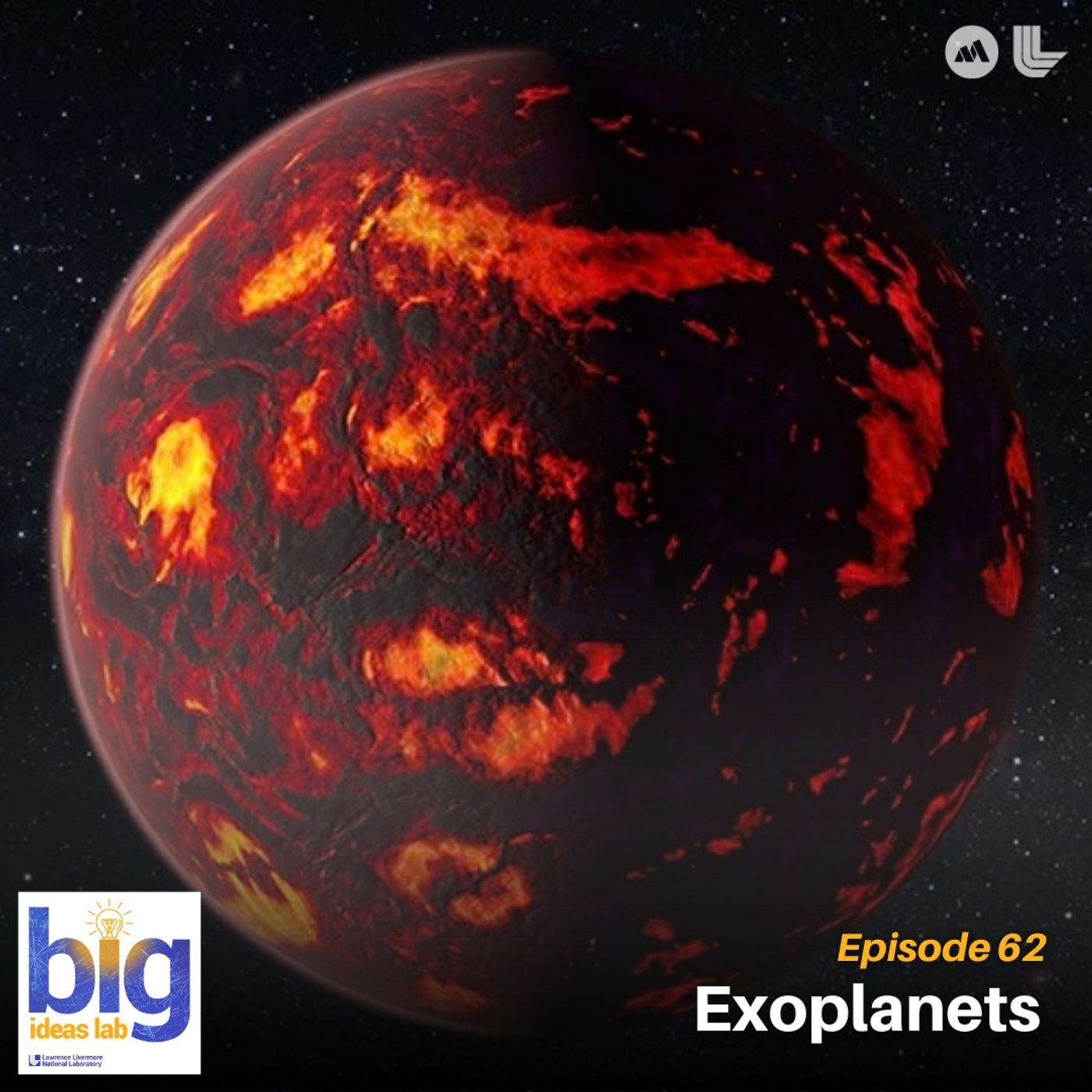
Exoplanets range from molten worlds to planets with exotic ice, but their most revealing features are often hidden by distance and starlight.
Benjamin Lionel Gerard explains how direct imaging, coronagraphs, high-speed imaging, and adaptive optics improve the search for faint planetary light.
Spectrographs turn that light into chemical clues, identifying molecules such as water and methane while pushing toward images of Earth-like worlds.
Federica Coppari describes laser experiments that recreate planetary pressures and temperatures, exposing materials and phases that telescopes cannot observe directly.
The experiments confirm superionic ice and investigate whether carbon forms diamonds inside ice giants, linking laboratory physics to planetary evolution.
Together, better telescopes and more realistic high-pressure experiments could connect atmospheric observations with complete models of planetary interiors and habitability.
Weekly email
State of the Pod, every Monday
The week's most-discussed names and stories from podcasts, with the moments behind them. Free, five minutes, unsubscribe in one click.