Oct 31, 2026 · 1h 10m
StarCloud bets orbital factories can make AI computing cheaper
Inside Starcloud’s $2B Space Factory
The episode tests whether launch economics, cooling, manufacturing, and security can support data centers beyond Earth.
- 1StarCloud is designing orbital data centers around launch costs, radiation, cooling, and the reliability of space-based hardware.
- 2Its lean Seattle team is moving from StarCloud 1 toward StarCloud 2 and a manufacturing campus built for much larger output.
- 3The business case depends on scaling launches and production while proving orbital computing can compete with terrestrial facilities.
Don't miss
Philip Johnston demonstrates StarCloud 2’s enormous ground-based deployable-structure test rig while the episode weighs orbital computing against terrestrial data centers.
The brief
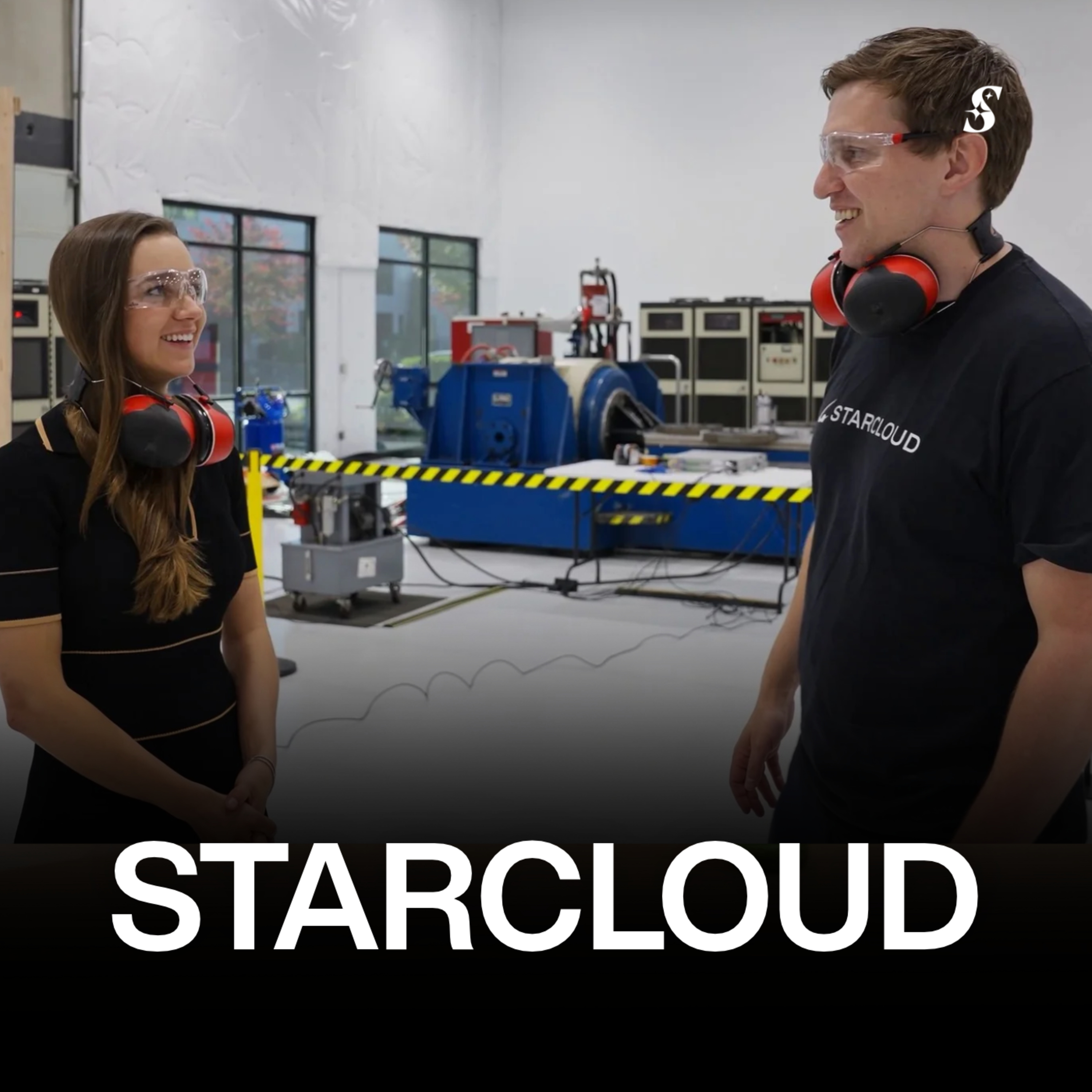
Molly tours StarCloud with CEO Philip Johnston, tracing the company’s path from StarCloud 1’s Nvidia H100 mission to a planned orbital computing constellation.
The central argument is economic as much as technical: orbital data centers must overcome launch prices, radiation, cooling, testing, and chip reliability before scale becomes plausible.
StarCloud 2 reveals the company’s lean, hands-on culture, from rebuilding a used vibration table to fabricating structures, testing radiators, and preparing the spacecraft for launch.
The company is converting nearby buildings into a manufacturing campus intended to support large deployable structures and roughly 100 satellites per week, backed by $450 million in funding.
Johnston also frames orbital infrastructure as a security proposition, arguing that satellites moving at orbital speeds may be harder to attack than terrestrial data centers.
Weekly email
State of the Pod, every Monday
The week's most-discussed names and stories from podcasts, with the moments behind them. Free, five minutes, unsubscribe in one click.