Aug 25, 2026 · 17 min
Listen from 14:26
Listen at 14:26
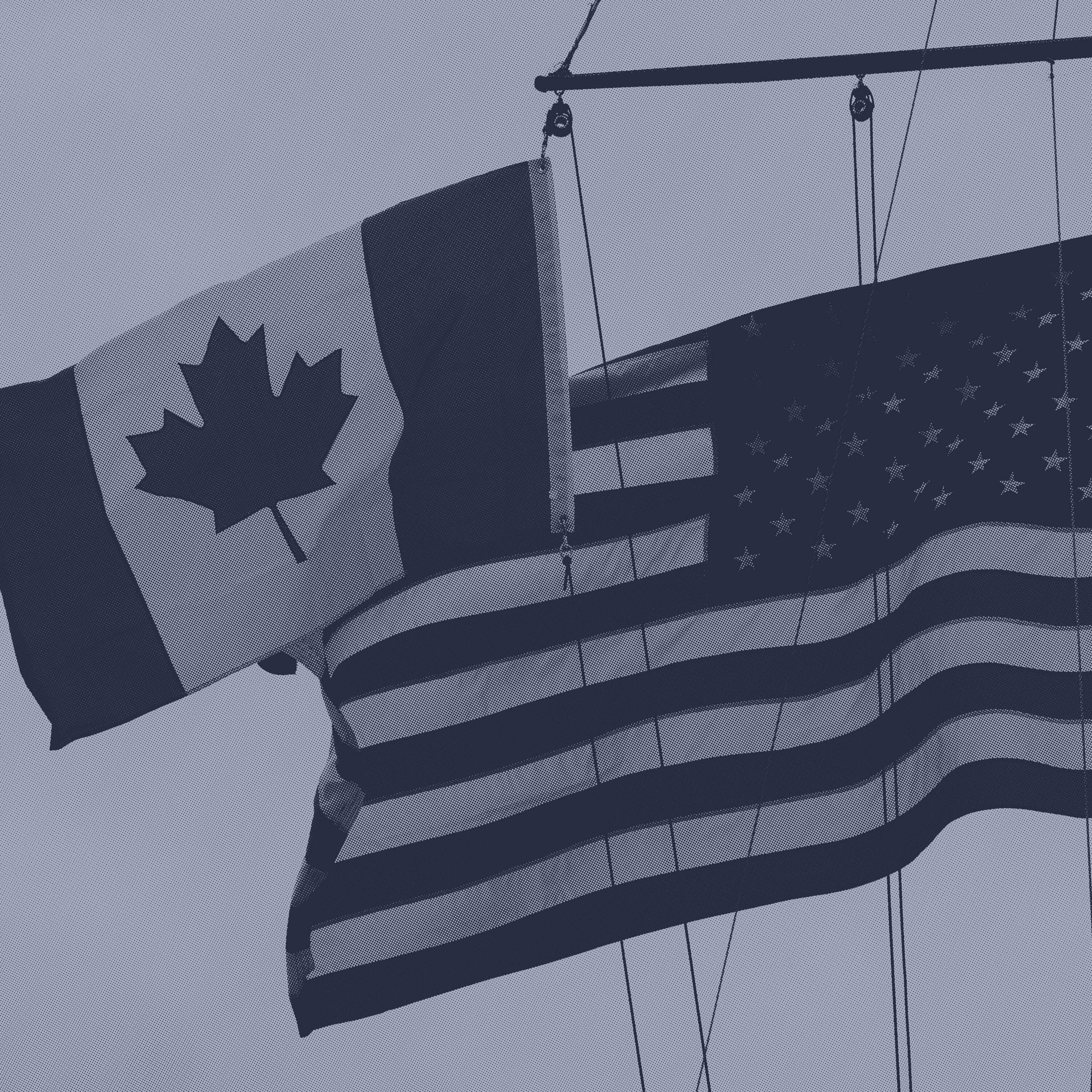
Tariffs put North American trade and midterms under pressure
What a trade war with Canada means for U.S. consumers
The dispute could raise costs, disrupt integrated supply chains, weaken U.S. credibility, and reshape political incentives before the 2026 midterms.
- 1Symbolic tariffs on goods like whiskey and hockey equipment obscure deeper risks to integrated North American manufacturing.
- 2Businesses face uncertainty as tariff escalation threatens the USMCA framework and decades of cross-border investment.
- 3New Iran sanctions depend on international cooperation that U.S. trade and military policies may have weakened.
Don't miss
Mark Carney’s claim that U.S. treaty commitments are now written in pencil distills the episode’s argument about damaged credibility.
The brief
The tariff dispute began with U.S. accusations about fentanyl trafficking, but Canada’s resistance has widened the conflict beyond a narrow trade disagreement.
Whiskey, hockey equipment, motorcycles, appliances, and cheese are politically vivid targets, yet the larger danger lies in auto parts and integrated manufacturing.
The panel weighs Canadian boycotts, American business uncertainty, and the prospect that tariff-driven consumer costs could hurt Republican candidates in the 2026 midterms.
Mark Carney’s warning that U.S. treaty commitments are written in pencil captures the credibility damage created by transactional diplomacy and uncertainty around USMCA renewal.
The discussion then turns to Iran sanctions, arguing that securing cooperation is harder when U.S. trade and military policies have reduced trust abroad.
What was said on this episode
14 statements · 13 negative · 1 mixed
The tariff dispute could escalate into a larger trade war.
“the concern, I think, is that it could really spiral into a larger trade war.”
Listen at 3:03
USMCA collapse would create a major trade problem.
“The real problem would be if the USMCA itself falls apart”
Listen at 5:15
Most Canadians oppose compromise in trade negotiations with the United States.
“the overwhelming majority of Canadians don't want their leaders to compromise on trade with the U.S.”
Listen at 7:22
The trade conflict is already harming U.S. businesses and will harm consumers.
“this is already taking a toll on US businesses, and it's going to take a toll on US consumers as well.”
Listen at 9:02
Retaliatory tariff escalation increases taxes paid by American consumers.
“that's an increasing tax on American consumers”
Listen at 10:26
There is little evidence tariffs have reshored U.S. industries.
“I don't think that we've seen very much evidence of that.”
Listen at 11:11
Applying tariffs to integrated U.S.-Canada production is misguided.
“this is a particularly misguided application of tariffs.”
Listen at 11:31
Tariffs function as taxes paid by U.S. businesses and consumers.
“these are taxes that are paid by U.S. businesses and U.S. consumers”
Listen at 11:51
Destroying the broader trade relationship over small disputes is unreasonable.
“to blow up the broader trading relationship over those relatively small scale issues is just nuts.”
Listen at 13:10
Short-term transactional gains can cause long-term harm to bilateral relationships.
“if you poison the relationship for the sake of some transactional benefit in the moment, ultimately, it's going to come back and haunt you.”
Listen at 13:48
Businesses require planning horizons exceeding six years.
“businesses need planning horizons that are longer than six years.”
Listen at 14:18
USMCA’s six-year renewal requirement creates substantial business uncertainty.
“So that's a huge amount of uncertainty for businesses.”
Listen at 14:26
Chinese enforcement could disrupt entities handling up to 90% of Iranian oil.
“it would be consequential if the U.S. could get. China in particular, to crack down on economic fronts that have bought and shipped the vast majority, up to 90 percent sometimes, depending on the year, of Iranian oil before this war.”
Listen at 16:05
Other countries are currently unwilling to advance U.S. aims in the Iran war.
“the rest of the world right now is in no mood to do the U.S. any favors to advance its own aims in a war that it started without international approval.”
Listen at 16:52
Statements are attributed to the speaker as said on the episode and reflect their view at the time, not PodLume's. They are not advice.
Weekly email
State of the Pod, every Monday
The week's most-discussed names and stories from podcasts, with the moments behind them. Free, five minutes, unsubscribe in one click.