Sep 8, 2026 · 1h 13m
Trump-era uncertainty scrambles the midterm playbook
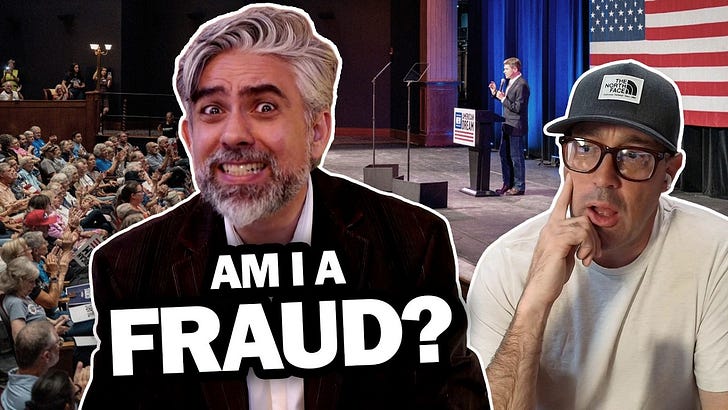
Why It’s So Hard to Make Sense of These Midterms (with Chris Cillizza)
The episode tests whether approval ratings, generic-ballot polling, turnout patterns, and historical precedent still explain elections shaped by Trump and fragmented media.
- 1Democratic unpopularity may prevent Republican dissatisfaction from translating into Democratic votes.
- 2Trump excels at commanding attention but struggles to make a coherent affirmative case for his record.
- 3The midterms could produce anything from unified Republican control to a Democratic sweep, with familiar indicators offering limited certainty.
Don't miss
The hosts lay out three possible midterm outcomes, then treat a Democratic sweep as plausible without pretending the forecast is secure.
The brief
Chris Cillizza joins Justin to examine a midterm landscape where presidential approval, the generic ballot, turnout history, and national mood point in different directions.
The central tension is that Democrats remain unpopular while Republicans are divided, making dissatisfaction with Trump difficult to convert into Democratic votes.
Trump’s attention-driven politics can dominate headlines, but the hosts argue that his administration has struggled to explain Iran, tariffs, or a broader governing record.
Texas becomes a test case: advertising against James Talarico seeks moderate Republicans who dislike Ken Paxton but fear Democratic tax policies more.
The conversation ends with three congressional scenarios, including a Democratic “blue heaven” outcome, while 2018 serves as a warning against treating any forecast as settled.
What was said on this episode
15 statements · 4 positive · 9 negative · 1 mixed · 1 neutral
Unpopular presidents’ parties usually suffer larger midterm House losses.
“The losses of the president's party are almost always worse when the president is unpopular.”
Listen at 7:55
The midterms will produce at least a medium Democratic wave, possibly a huge one.
“at a minimum, a medium sized Democratic wave and at a maximum, like a huge Democratic wave where they win the Senate, they win 30 seats in the House, etc.”
Listen at 8:41
Democrats will definitely win the House, while the Senate is roughly even.
“I think, you know, it's about a 50 50 in the Senate. And I think Democrats definitely win the House.”
Listen at 11:17
Democrats are more likely to gain at least 18 House seats than fewer.
“I would say 18 or more at this point.”
Listen at 11:31
Donald Trump has not been good at developing broader political strategy.
“What he's not ever been good at is any kind of broader strategy.”
Listen at 20:49
Donald Trump cannot maintain message discipline for a midterm campaign.
“he's incapable of doing that. I mean, he just can't do it.”
Listen at 21:51
Donald Trump is not good at affirmative persuasion without an obvious foil.
“He's not good at that.”
Listen at 22:38
Donald Trump has broken most traditional political rules taught to Chris Saliza.
“the vast majority of rules of politics that I was taught when I started covering working for Charlie Cook, working for the Washington Roll Call, working for the Washington Post, he's broken a lot of those rules.”
Listen at 26:08
Historical midterm indicators point toward a good-to-great Democratic year.
“the 50 000 foot atmospherics That you and I, you know, nerd central, since 1932, they all point, all of the indicators are pointing in one direction, which is good to great Democratic year.”
Listen at 27:03
No clear equivalent to the traditional generic ballot exists for 2020s politics.
“I don't know what the equivalent over here of the 2020s generic ballot is.”
Listen at 28:34
Mobilizing young men alone is unlikely to deliver Republican midterm gains.
“I would be skeptical, again, based on all the rules of the road that I've known.”
Listen at 33:19
Young people traditionally vote at lower rates than older people.
“Young people. Old people vote. Young people traditionally don't vote.”
Listen at 33:31
Democrats winning a large House majority and the Senate is most likely.
“I do think it's the my blue heaven one”
Listen at 56:07
Recent history suggests toss-up Senate races usually move in one national direction.
“history, recent history suggests the toss up Senate races 80 to 100 percent of the time move all in one direction”
Listen at 56:52
Eliminating mail-in voting would probably hurt Republicans more than Democrats.
“I actually think it would probably hurt Republicans more at this point.”
Listen at 1:01:24
Statements are attributed to the speaker as said on the episode and reflect their view at the time, not PodLume's. They are not advice.