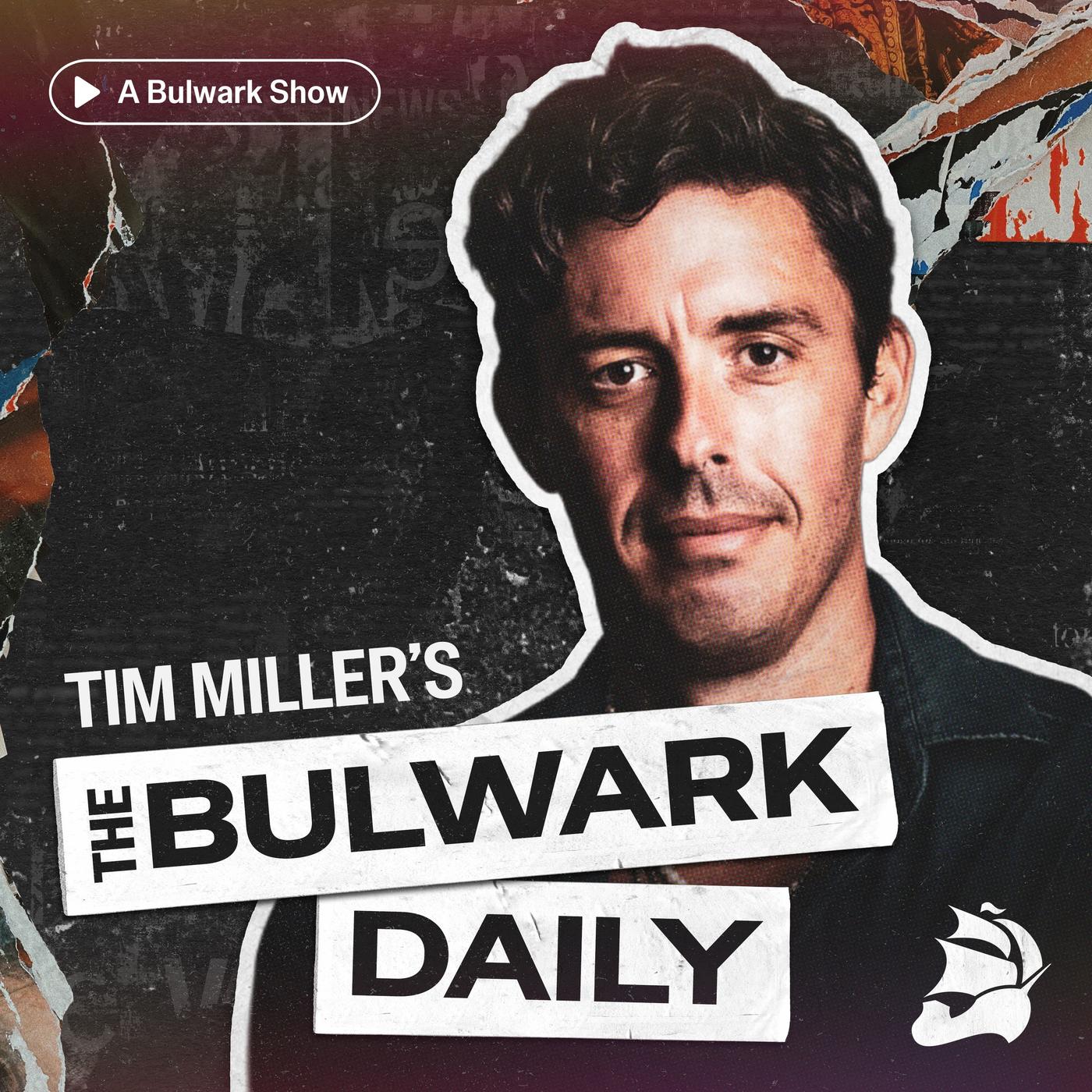
Nov 20, 2026 · 56 min
Trump’s dealmaking weakens Ukraine and unsettles Europe
Anne Applebaum: All the Corruption, All the Time
The discussion connects summit theater, private financial interests, and institutional decay to a broader erosion of democratic and allied safeguards.
- 1Trump’s summit diplomacy offers authoritarian imagery and transactional promises while leaving Ukraine exposed to Russian pressure.
- 2Private deals and alleged conflicts of interest are recasting foreign policy as a channel for influence and immediate financial gain.
- 3Europe is hedging against unreliable American leadership by pursuing greater independence in technology, security, and strategic decision-making.
Don't miss
Applebaum warns that opaque oil deals in Venezuela could produce another kleptocratic partnership rather than a stable democratic ally.
The brief
Tim Miller and Anne Applebaum begin with Europe’s relief after strong Democratic midterm results, tempered by continued Trump power and doubts about reliable American leadership.
They reject the summit’s authoritarian theater as a modern Yalta, arguing that Ukraine cannot be traded away and that Russian escalation threatens Europe’s security.
Applebaum links Jared Kushner’s business dealings and the administration’s China policy to a foreign-policy model where money, deals, and short-term gains displace national strategy.
Europe’s search for alternatives to American cloud, AI, military, and satellite systems shows how quickly confidence in U.S. reliability can become technological independence.
The conversation turns homeward, weighing oversight of corruption, military politicization, and institutional damage against the delayed consequences of dismantling government agencies.
The standout warning is that Venezuela could become another kleptocratic partnership: oil activity changes little for citizens even as democratic hopes persist.
What was said on this episode
32 statements · 10 positive · 20 negative · 2 neutral
Many midterm voters prioritized corruption, money in politics, and voting rights.
“the number of people who in the polling showed this, and you could also hear it in the candidates and you could see it at the various election events, the number of people who were voting on Not just the economy issues, who understood that corruption was a big issue, who understood that money and politics is a big issue, who understood that voting rights are big issues.”
Listen at 4:01
Europe must hedge against unreliable U.S. leadership by developing alternatives and new relationships.
“the general feeling is still we have to hedge. We need alternatives. We need different technology. We need new friends. We need new relationships.”
Listen at 5:11
European countries need a plan to support Ukraine without U.S. assistance for at least two years.
“they have to have a plan going forward for how to support Ukraine in the total absence of U.S. support for at least the next two years.”
Listen at 5:30
Russia cannot control Europe.
“There is no scenario in which Russia can control Europe”
Listen at 8:10
Russian control produces terror, camps, child kidnappings, and killings of local officials.
“when Russia controls Eastern Europe, as it did in 1940, and it does in eastern Ukraine now, that means... terror, concentration camps, the kidnapping of children, the murder of local officials.”
Listen at 8:17
Trump’s proposed end to the Ukraine war would require Ukrainian surrender.
“By end the war, what he means is that Ukraine should surrender.”
Listen at 10:31
Ending support for Ukraine would let Russia overrun the front and seize Kyiv.
“The Russians would overwhelm the front line. The Russians would take over Kiev. The Russians would move their troops to the western border.”
Listen at 10:47
Abandoning Ukraine would greatly increase Europe’s security spending needs.
“Europeans would need to double and triple and quadruple it because the threat from Russia and from a reinvigorated Russian army would be 10 times larger.”
Listen at 11:06
Stopping aid to Ukraine would worsen the war and its consequences.
“The option is we stop spending and the war gets worse and the consequences are more terrible.”
Listen at 11:52
Ukraine is preparing to operate without U.S. support through innovation and European funding.
“There's a they've reinvented this way of doing more. So they are already preparing for a world without the U.S.”
Listen at 12:51
Russian attacks in Europe aim to undermine solidarity and deter Ukraine support.
“These are. part of a campaign against Europe designed to undermine European solidarity, to make people afraid to help Ukraine and so on.”
Listen at 16:05
European governments are privately planning escalation but have not entered the war directly.
“there is scenario planning and discussion, but because of the extreme unpopularity of the idea of going to war, you haven't seen anyone do it yet.”
Listen at 18:21
Russia has never accepted NATO security guarantees for Ukraine.
“nobody in Russia has ever said they would accept NATO guarantees for Ukraine.”
Listen at 22:07
Russia’s main goal remains destroying Ukraine and subordinating it to Russia.
“Their main goal is the destruction of all of Ukraine, turning Ukraine into a Russian state or a Russian satrapy or some kind of Russian. colony.”
Listen at 22:57
Trump, Kushner, and Witkoff’s actions have prolonged the Ukraine war.
“the effect of all of their actions has been to reinforce him in this belief. to prolong the war, to give the Russians belief that if they just keep fighting, they'll eventually have the Americans on their side and they will win.”
Listen at 23:15
Combining business deals with diplomacy undermines negotiators’ credibility.
“This combination of doing business deals while negotiating. undermines their credibility.”
Listen at 25:32
Foreign governments increasingly view money as a way to influence U.S. policy.
“And that's now how the rest of the world... seize America.”
Listen at 26:46
European governments and businesses are seeking to reduce dependence on U.S. technology.
“the need to move away from U.S. technology, and not only military technology, but all technology.”
Listen at 30:53
China is catching up with the United States in artificial intelligence.
“The Chinese we know are catching up.”
Listen at 32:43
Weaponizing U.S. technology against allies will accelerate their move toward alternatives.
“the more the United States uses its technology as a weapon against its allies, whether military technology or civilian technology, the more you will see this kind of reaction.”
Listen at 32:53
European and Ukrainian efforts to move away from Starlink have begun.
“there's already the move to move away from Starlink has already begun.”
Listen at 33:33
The current U.S. administration is the most corrupt in American history.
“this is the most corrupt administration we've ever had, and there isn't one in second place.”
Listen at 35:19
Government corruption and economic weakness are closely related.
“I think the corruption in the economy are very closely related stories.”
Listen at 35:56
Damage to federal institutions will produce delayed negative effects for citizens.
“the impact of it down the road will be.”
Listen at 38:09
Democrats have broad support for opposing military politicization.
“this is one of the areas where the Democrats have really strong cards. They have a lot of Republican support and they have a lot of public support.”
Listen at 38:42
Venezuelans are among the most pro-American people in Latin America.
“The Venezuelan opposition and actually the Venezuelan people more broadly are probably the most pro-American people in Latin America”
Listen at 42:09
The United States has partnered with a disreputable Venezuelan oil figure.
“this is America's partner in Venezuela.”
Listen at 44:32
A stable, legitimate Venezuelan government would benefit the United States long term.
“Long term, we want a good government there, right? I mean, it's good for us.”
Listen at 45:31
Opacity and lack of transparency are indicators of autocratic government.
“opacity, lack of transparency, these are signs of autocracy.”
Listen at 46:57
Venezuelan oil activity has produced little improvement in ordinary people’s lives.
“ordinary people, I mean, I was told this over and over and over again. You know, we don't see any improvement. We're not feeling any change.”
Listen at 47:47
María Corina Machado is viewed as Venezuela’s legitimate leader and a symbol of hope.
“she's really, for Venezuelan, she's a symbol of hope and she is the legitimate leader.”
Listen at 48:50
Venezuela’s organized civil society will eventually improve the country’s prospects.
“I have a lot of hope for Venezuela, actually. I think it's a country that has a little bit like Ukraine. It's a country where there's a real grassroots organized civil society. Despite everything, despite this ugly regime and despite the system, I think they will eventually do a lot better.”
Listen at 49:54
Statements are attributed to the speaker as said on the episode and reflect their view at the time, not PodLume's. They are not advice.
Books & mentions
Some links are affiliate links — PodLume may earn a commission if you buy.


Weekly email
State of the Pod, every Monday
The week's most-discussed names and stories from podcasts, with the moments behind them. Free, five minutes, unsubscribe in one click.