Nov 9, 2026 · 15 min
Trump’s lame-duck strategy puts confrontation first
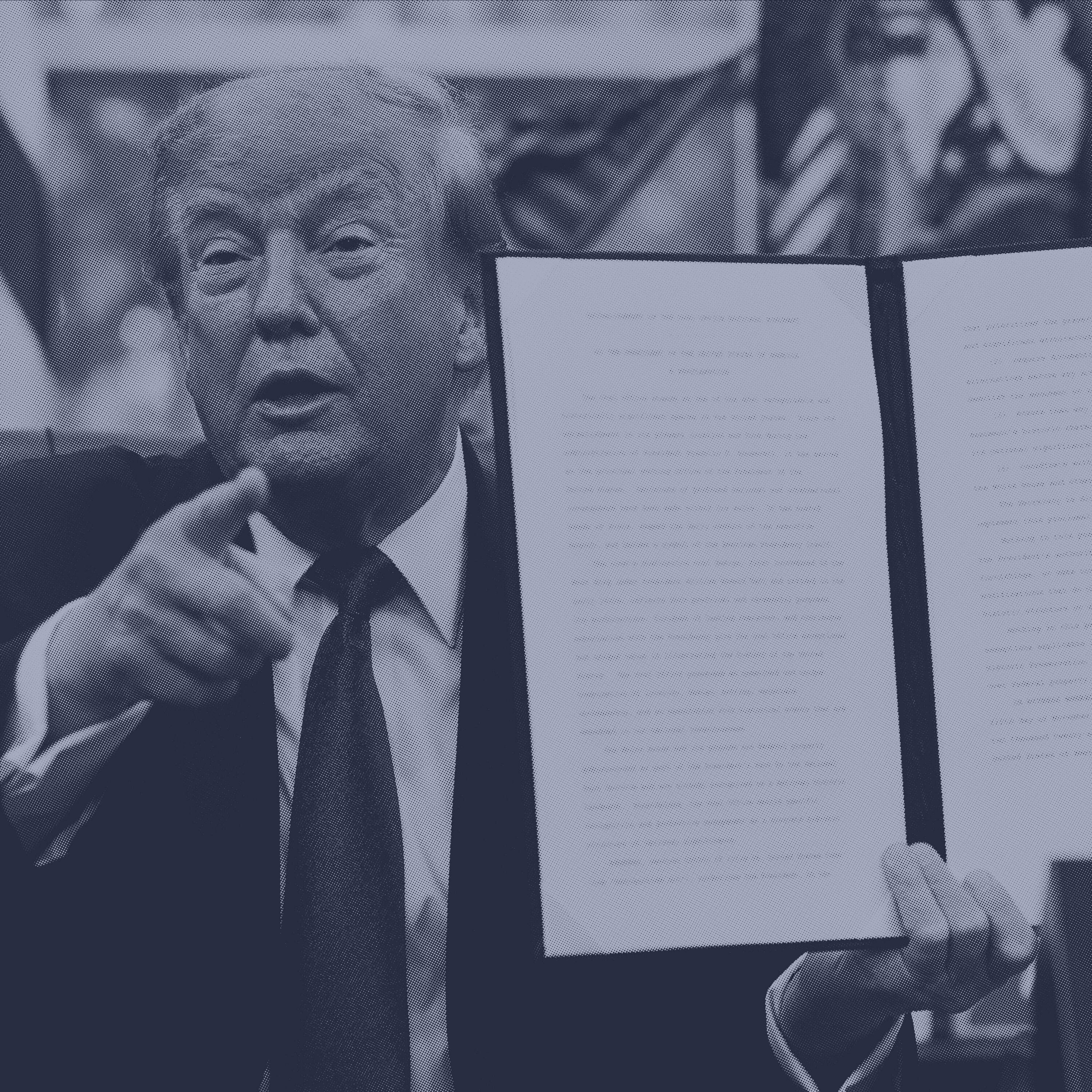
Trump confronts his lame duck era
The episode maps how divided government could intensify clashes over executive power, immigration, funding, tariffs, and congressional investigations.
- 1Stephen Miller’s elevation signals a more confrontational White House approach as Democrats gain congressional power.
- 2Democrats can use oversight, subpoenas, and funding fights to challenge a president inclined toward executive action.
- 3Bipartisan cooperation remains possible on popular economic policies, but investigations and immigration may dominate the next two years.
Don't miss
The discussion connects Stephen Miller’s appointment directly to a more confrontational strategy for governing under divided power.
The brief
Trump’s renewed claims that the midterm election was not honest do not change the balance of power, but they preview the rhetoric he may use in a divided Washington.
Stephen Miller’s appointment as chief of staff is presented as more than a personnel change: it signals a combative White House focused on immigration and expansive presidential power.
Democrats will have legislative and oversight tools, including subpoenas, funding leverage, court challenges, and investigations into Trump, his businesses, and his family.
The approaching government-funding deadline could force an early test of divided government, while tariffs and executive orders create additional avenues for confrontation.
The hosts leave room for bipartisan agreement on popular economic policies, but argue that investigations and immigration are likely to define Trump’s lame-duck era.
What was said on this episode
16 statements · 3 positive · 11 negative · 2 neutral
Trump’s election claims encourage supporters to accept explanations for Republican losses.
“casting doubt on an election and really seems to be giving his supporters sort of a permission structure to believe any sort of thing they want about why Republicans lost.”
Listen at 1:18
Trump litigation would not change congressional control after the midterms.
“it's not going to change the outcome, the balance of power in the House or Senate.”
Listen at 2:04
Stephen Miller supported the Trump administration’s hardline immigration policies.
“if you think about the Trump administration's hardline immigration policies, you think about. Family separation in term one. You think about the mass deportations, the confrontations between federal agents and protesters in U.S. cities. You have Stephen Miller out there cheerleading them the whole time.”
Listen at 4:20
Stephen Miller prepared plans to expand Trump’s executive power in a second term.
“He was working through all the things where they came up against legal barriers in the first term and was working out the plans so that in the second term, President Trump could exert far more executive power”
Listen at 5:24
Trump’s appointment of Miller signals confrontation with Congress.
“by elevating Stephen Miller, he signaled that he is ready for a very confrontational next couple of years.”
Listen at 6:19
The White House will pursue combat rather than compromise for two years.
“this means combat, not compromise for the next two years.”
Listen at 6:42
The Supreme Court will resolve conflicts over presidential executive power.
“you're going to see a lot of conflicts about that that the Supreme Court, I think, is going to have to resolve.”
Listen at 8:18
Congress will reassert its constitutional powers under divided government.
“you will see Congress all of a sudden rediscovering its Article I powers”
Listen at 8:59
Trump and the Democratic Congress will engage in frequent vetoes and conflict.
“You're going to see a lot of vetoes. You're going to see a lot of fighting.”
Listen at 9:42
Congressional Democrats will challenge Trump’s executive actions repeatedly.
“I think that he will be challenged at every step of the way by congressional Democrats.”
Listen at 9:48
Trump’s political influence is declining as he enters lame-duck status.
“Donald Trump became an official lame duck on Election Day. And every single day since then, he's become a lamer duck.”
Listen at 10:15
Congress should pass legislation limiting presidential tariff powers.
“Congress should pass a law somehow curtailing the president's powers”
Listen at 10:38
Trump generally uses another trade law after courts strike down a tariff authority.
“When one of them is struck down by the courts, he generally tries to use another.”
Listen at 10:52
Democrats may pursue caps, billionaire tax increases, and affordability measures.
“A cap on credit card interest rates, raising taxes on billionaires, all sorts of things to make health care and housing and education more affordable.”
Listen at 12:27
Popular bills would make Trump’s vetoes more difficult politically.
“if they pass bills that are popular.”
Listen at 12:44
Almost no congressional subpoenas will be honored.
“I would guess it will be about zero.”
Listen at 14:25
Statements are attributed to the speaker as said on the episode and reflect their view at the time, not PodLume's. They are not advice.
Weekly email
State of the Pod, every Monday
The week's most-discussed names and stories from podcasts, with the moments behind them. Free, five minutes, unsubscribe in one click.