Aug 27, 2026 · 15 min
Listen from 3:39
Listen at 3:39
Trump’s mail-voting order faces legal and logistical hurdles
What's going on with vote-by-mail?
The order could disrupt legitimate voters and election administration even as courts determine whether it can take effect before the midterms.
- 1Mail voting remains available for eligible voters while courts weigh challenges to the executive order.
- 2Implementation could create confusion for military and overseas voters and strain election officials and the Postal Service.
- 3Research finds noncitizen voting extremely rare, while broader restrictions could affect many legitimate mail voters.
Don't miss
Hansi Lo Wang explains how a not-yet-existing online portal and tight deadlines could create chaos for election officials and voters.
The brief
Miles Parks and Hansi Lo Wang examine Donald Trump’s effort to restrict voting by mail, focusing on the order’s legal authority and consequences before the midterms.
The order touches voter lists and the United States Postal Service, but constitutional challenges question whether the executive branch can impose these changes without Congress.
For now, eligible voters can still vote by mail, while court rulings continue to shift the Postal Service’s position and the order’s practical reach.
The sharpest concern is implementation: tight deadlines, military and overseas ballots, and a proposed online portal could overwhelm election officials and create confusion.
The episode also tests the premise behind the policy, noting that noncitizen voting is extremely rare while legitimate mail voters could face widespread disruption.
What was said on this episode
23 statements · 3 positive · 9 negative · 1 mixed · 10 neutral
Trump’s order would limit USPS ballot delivery to voters on state-provided lists.
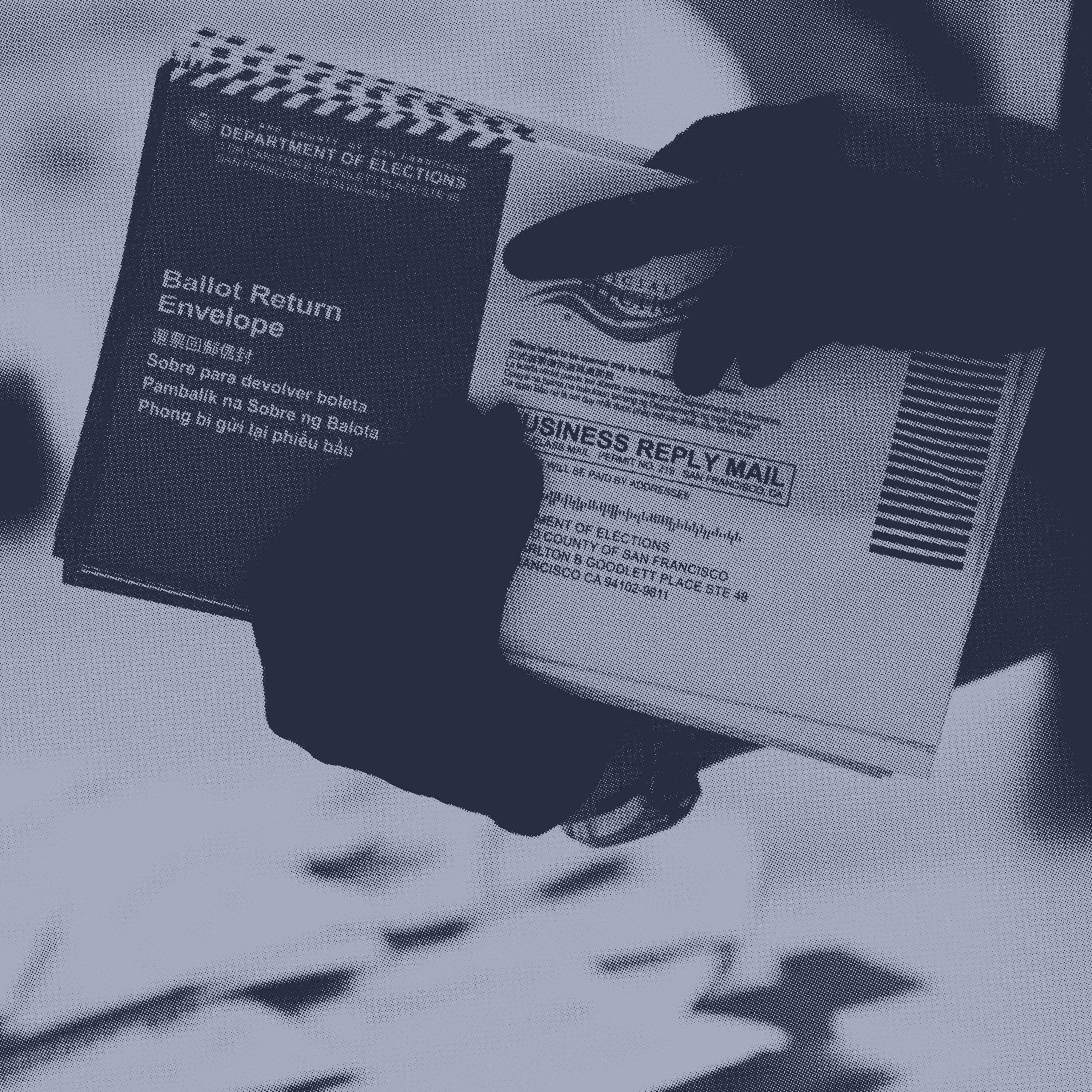
“What President Trump's order basically called for is the Postal Service has to deliver mail-in ballots only to people on lists of mail-in voters that states would have to turn over to USPS.”
Listen at 1:30
Trump’s order would require states to use specified ballot-envelope barcodes.
“And states would also be required to have certain barcodes on their ballot envelopes.”
Listen at 1:43
Tamara Keith says Trump’s descriptions of voting fraud are false.
“As is often the case with his descriptions of voting and fraud. He is saying things that are not true.”
Listen at 2:24
States and Congress, rather than the president, hold constitutional authority over federal election rules.
“Because under the Constitution, states and Congress have the power to set federal election rules, not the president.”
Listen at 3:15
USPS may resume work on Trump’s order, though court rulings could change that soon.
“The Postal Service is no longer blocked from working on Trump's executive order, but that may change because there may be some back and forth in terms of court rulings over the next few days.”
Listen at 3:39
The Supreme Court has not yet decided whether Trump’s order is legal.
“The justices at the Supreme Court have not ruled yet on whether President Trump's order is legal.”
Listen at 4:07
Lower-court rulings on the order are expected to reach the Supreme Court on appeal.
“And those are expected to be appealed all the way to the Supreme Court.”
Listen at 4:26
Trump’s order has not directly changed mail-in voting so far.
“President Trump's order has not directly affected mail-in voting.”
Listen at 4:51
Eligible voters can still vote by mail in their states.
“And right now, voting by mail is still a viable option to all voters who are eligible for it in their states.”
Listen at 4:56
USPS is expected to deliver mail-in ballots as usual.
“And the Postal Service is expected to deliver mail-in ballots as usual.”
Listen at 5:03
Implementing Trump’s order would face major practical hurdles.
“there are still major practical hurdles.”
Listen at 5:20
The Purcell principle advises courts against changing election rules near elections.
“when federal courts are deciding election related cases, they should not make changes to voting rules close to an election to avoid confusing voters and election administrators.”
Listen at 8:39
The Supreme Court has not defined how close to an election is too close for changes.
“The Supreme Court has not given a definitive answer on that.”
Listen at 8:53
The new voter-list process could cause missed or misspelled voter names.
“And there is a high risk, potentially, of names getting missed, names being misspelled.”
Listen at 10:15
The new process could expose eligible voters to mistakes or data-transfer errors.
“there's just a lot of potential ways that eligible voters could get caught up in some type of... mistake or some type of data transfer error”
Listen at 10:23
Last-minute changes to mail voting carry a high risk of causing chaos.
“Just like any other last minute change, there's a high risk of it causing chaos.”
Listen at 11:00
Miles Parks says evidence does not show noncitizens greatly affect American elections.
“there is just no evidence to support that claim about non-citizens, you know, greatly impacting American elections.”
Listen at 11:54
Research and audits find noncitizen voting is minuscule in each election cycle.
“every piece of research and auditing on this fact has found it to be a minuscule number of non-citizen voters in every election cycle.”
Listen at 12:02
About one-third of voters mailed ballots in the 2022 and 2024 federal elections.
“about a third of voters in those elections voted by mail.”
Listen at 12:20
Trump’s order could cause eligible voters to be caught up in processing problems.
“there is a real risk of eligible voters. getting caught up if this order is allowed to be carried out”
Listen at 12:38
Hansi Lo Wang predicts substantial additional court action over the order.
“There's going to be a lot of court action”
Listen at 14:38
Trump’s order has not yet directly affected midterm mail voting.
“at the moment, President Trump's executive order has not directly affected mail-in voting for the midterms.”
Listen at 14:47
Mail voting remains a viable option for eligible midterm voters.
“It is still a viable option”
Listen at 14:52
Statements are attributed to the speaker as said on the episode and reflect their view at the time, not PodLume's. They are not advice.
Weekly email
State of the Pod, every Monday
The week's most-discussed names and stories from podcasts, with the moments behind them. Free, five minutes, unsubscribe in one click.