Nov 16, 2026 · 47 min
Trust now requires proof beyond polished expertise
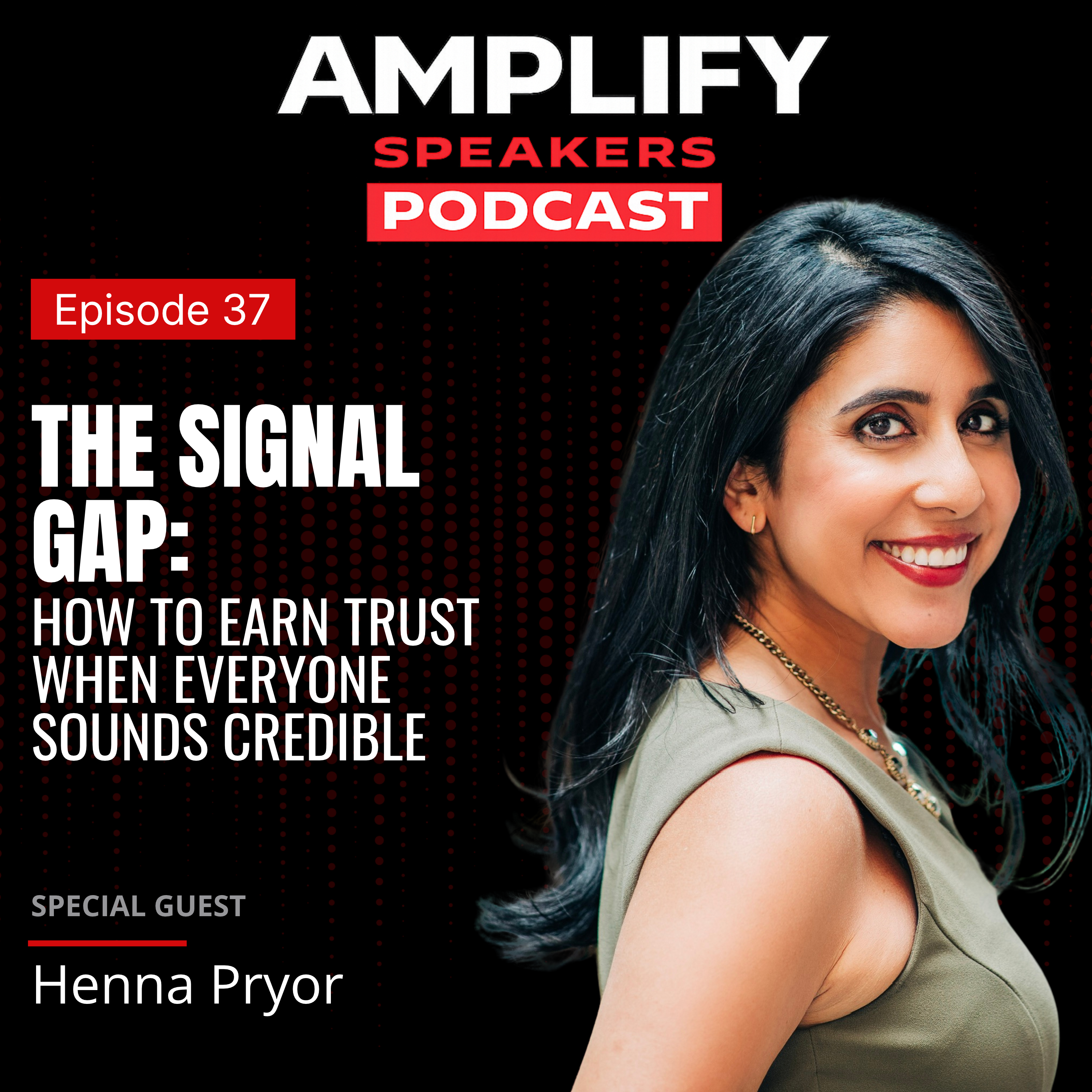
The Signal Gap: How to Earn Trust When Everyone Sounds Credible – Henna Pryor
As AI and abundant information make credible-sounding expertise easier to imitate, speakers must show how their thinking holds up under scrutiny.
- 1Original thinking comes from distinct points of view and unexpected connections, not simply rearranging information with AI.
- 2Preparation, transparency, vulnerability, and visible evidence can lower skepticism before a speaker makes the case.
- 3Long-term credibility depends less on polished promotion than on excellent delivery, honest feedback, and referrals.
Don't miss
Pryor explains how an uncomfortable encounter with polished ideas that could not survive conversation led her to investigate the changing conditions of trust.
The brief
Henna Pryor, author of The Signal Gap, examines why polished expertise no longer guarantees trust—and why original thinking must be visible, explainable, and grounded in experience.
AI can rearrange existing ideas, but it cannot supply a distinctive point of view. Pryor urges creators to make unexpected connections and use technology without outsourcing insight.
The episode’s central tension is a shift from “trust then verify” to “verify then trust,” driven by cheap polish, easy fabrication, and abundant information.
Pryor’s practical answer is to disarm skepticism early: research an audience’s doubts, acknowledge perceived gaps, and build a public proof wall that includes criticism.
The strongest evidence may be unedited speaking footage and visible audience reactions, while websites and speaker reels increasingly serve as verification rather than persuasion.
Pryor closes by arguing that craft beats easy validation: rehearse difficult material, accept honest feedback, and let weak ideas go so better work can emerge.
Weekly email
State of the Pod, every Monday
The week's most-discussed names and stories from podcasts, with the moments behind them. Free, five minutes, unsubscribe in one click.