Oct 29, 2026 · 20 min
Wall Street’s deal boom splits into mega-deals and distress
Why the slowdown in Wall Street deals?
Higher rates and constrained private-equity exits are weakening ordinary dealmaking even as private capital may keep the largest transactions expanding.
- 1Higher borrowing costs, uncertainty and weaker exits are making conventional M&A harder to finance.
- 2Abundant private capital, AI and looser antitrust enforcement could sustain increasingly large corporate combinations.
- 3Private equity, banks and law firms face structural pressure to adapt as technology reshapes dealmaking and professional services.
Don't miss
James Fontanella-Khan’s final day at the Financial Times prompts a candid discussion of how deal reporting and corporate finance have changed.
The brief
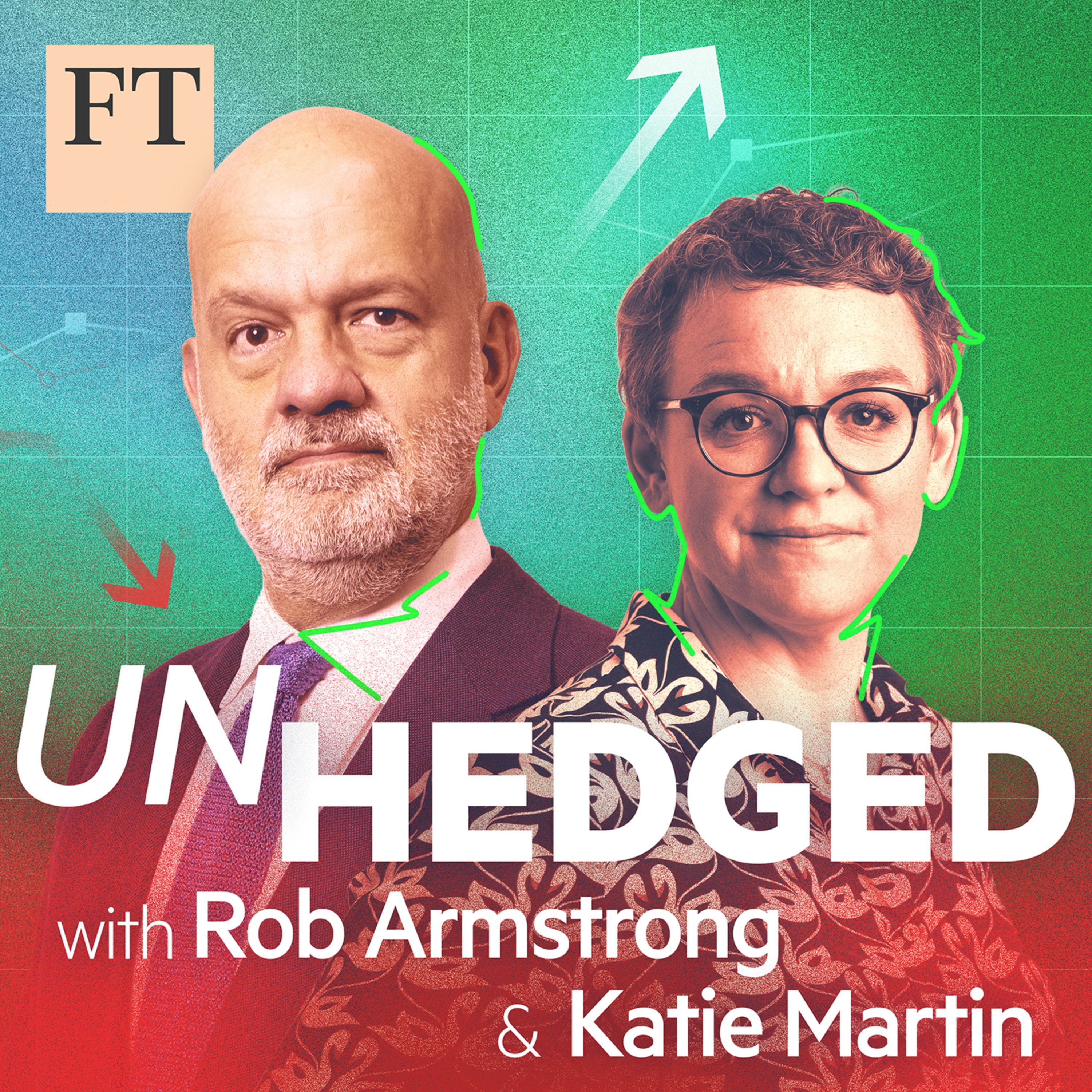
Robert Armstrong, Arash Massoudi and James Fontanella-Khan examine whether Wall Street’s apparent M&A boom is broad-based or concentrated in infrastructure, energy and technology mega-deals.
Higher rates, tariffs, election uncertainty and weaker private-equity exits are making ordinary transactions harder to finance, while continuation funds and private credit offer imperfect workarounds.
The guests argue that abundant private capital and AI could keep enormous deals growing even as the broader economy weakens, creating a widening gap between mega-money and normal conditions.
James Fontanella-Khan’s final day at the Financial Times turns the discussion toward how deal reporting, banks and specialist boutiques have evolved—and whether human judgment survives technological change.
The sharpest tension is over M&A’s future: AI may reduce banking headcount, but talent, capital and corporate ambition could keep dealmaking expanding through the next crisis.
What was said on this episode
26 statements · 11 positive · 12 negative · 1 mixed · 2 neutral
M&A market exuberance has weakened since the beginning of the year.
“The exuberance that we saw at the beginning of the year seems to have dissipated a bit.”
Listen at 2:26
M&A activity commonly slows as elections approach.
“I think it's not uncommon to see a slowdown in an election as we get closer to that election”
Listen at 2:32
Companies are staying private for longer.
“companies is kind of staying private for longer”
Listen at 3:50
- Arash Massoudion Global capital availabilityPositive4:09
The financial system contains exceptionally large pools of capital.
“there's just so much freaking money in the system”
Listen at 4:09
- Arash Massoudion Private capital and public marketsNegative4:21
Abundant private capital reduces companies’ incentive to access public markets.
“they're just like well i've got this endless wall of capital available to me why do i want to go deal with like retail investors or public markets”
Listen at 4:21
OpenAI’s capital needs are effectively unlimited.
“if you're open ai your need for capital is basically infinite”
Listen at 4:47
- Arash Massoudion SpaceX and Tesla combinationPositive5:16
The SpaceX-Tesla combination would be the largest deal ever.
“the largest ever deal in history would be the combination of SpaceX and Tesla”
Listen at 5:16
AI is driving unconventional M&A transactions.
“what we're seeing right now, driven by AI, is unconventional M&A”
Listen at 5:59
- Arash Massoudion U.S. antitrust enforcementNegative6:23
U.S. antitrust enforcement has weakened dramatically over two years.
“you had some semblance of a pretty serious antitrust enforcement regime in the U.S. government to literally nothing”
Listen at 6:23
- Arash Massoudion Political influence of wealthy capital holdersNegative6:45
Wealthy beneficiaries will deploy capital to reinforce their preferred American system.
“that money will be deployed to reinforce the system they want to create in America”
Listen at 6:45
The mega-money dealmaking environment will continue for the foreseeable future.
“there's so much money in the system this is not ending anytime soon”
Listen at 7:20
Very large deal values will continue to be recorded.
“I think we're going to continue seeing gigantic numbers”
Listen at 7:51
Large deal values do not indicate a healthy economy.
“That doesn't translate in this is a healthy economy.”
Listen at 7:55
The traditional private-equity model depended on low interest rates.
“the private equity model as we knew it up until 2020 or 2021, say, depended on low rates”
Listen at 8:59
Private-equity sponsors are stuck holding expensive portfolio companies.
“the private equity sponsors are sort of stuck with them”
Listen at 9:19
Apollo leads the insurer-backed private-capital model.
“Apollo is kind of king of that game”
Listen at 9:55
Apollo’s primary business is now making large corporate loans.
“this year, they've lent hundreds of billions of dollars to companies. And that's their primary bread and butter now.”
Listen at 10:09
Many smaller private-equity firms will disappear.
“we'll see a lot of smaller private equity firms just disappear”
Listen at 10:29
- Arash Massoudion Top corporate lawyersPositive13:04
Top lawyers now hold greater market status than investment bankers.
“The lawyers are the kings of the market. And they surpass the bankers.”
Listen at 13:04
Goldman Sachs remains the leading large investment bank.
“Goldman is still the top of the crop”
Listen at 14:19
- Arash Massoudion Business firmsNegative15:40
Firms that fail to evolve will eventually fail.
“if you don't evolve, you do die”
Listen at 15:40
- Arash Massoudion Investment banking industry employmentNegative16:38
Investment banking employment will decline.
“I think the investment banking industry will shrink by the number of personnel.”
Listen at 16:38
- Arash Massoudion AI and investment-bank staffingNegative16:50
AI will reduce banks’ staffing needs and operating costs.
“the cost structures inside these banks will compress because they just don't need all these people”
Listen at 16:50
Human capital remains highly valuable in banking and law.
“I think human capital in these industries is still very valuable.”
Listen at 17:16
M&A activity will continue growing rapidly over the next decade.
“M&A is going to keep on rocketing over the next decade.”
Listen at 17:23
A crisis may occur during continued M&A growth.
“there won't be a crisis in between”
Listen at 17:41
Statements are attributed to the speaker as said on the episode and reflect their view at the time, not PodLume's. They are not advice.
Weekly email
State of the Pod, every Monday
The week's most-discussed names and stories from podcasts, with the moments behind them. Free, five minutes, unsubscribe in one click.