Jul 28, 2026 · 3h 4m
Wildlife biologist Forrest Galante exposes flaws in academic science and conservation
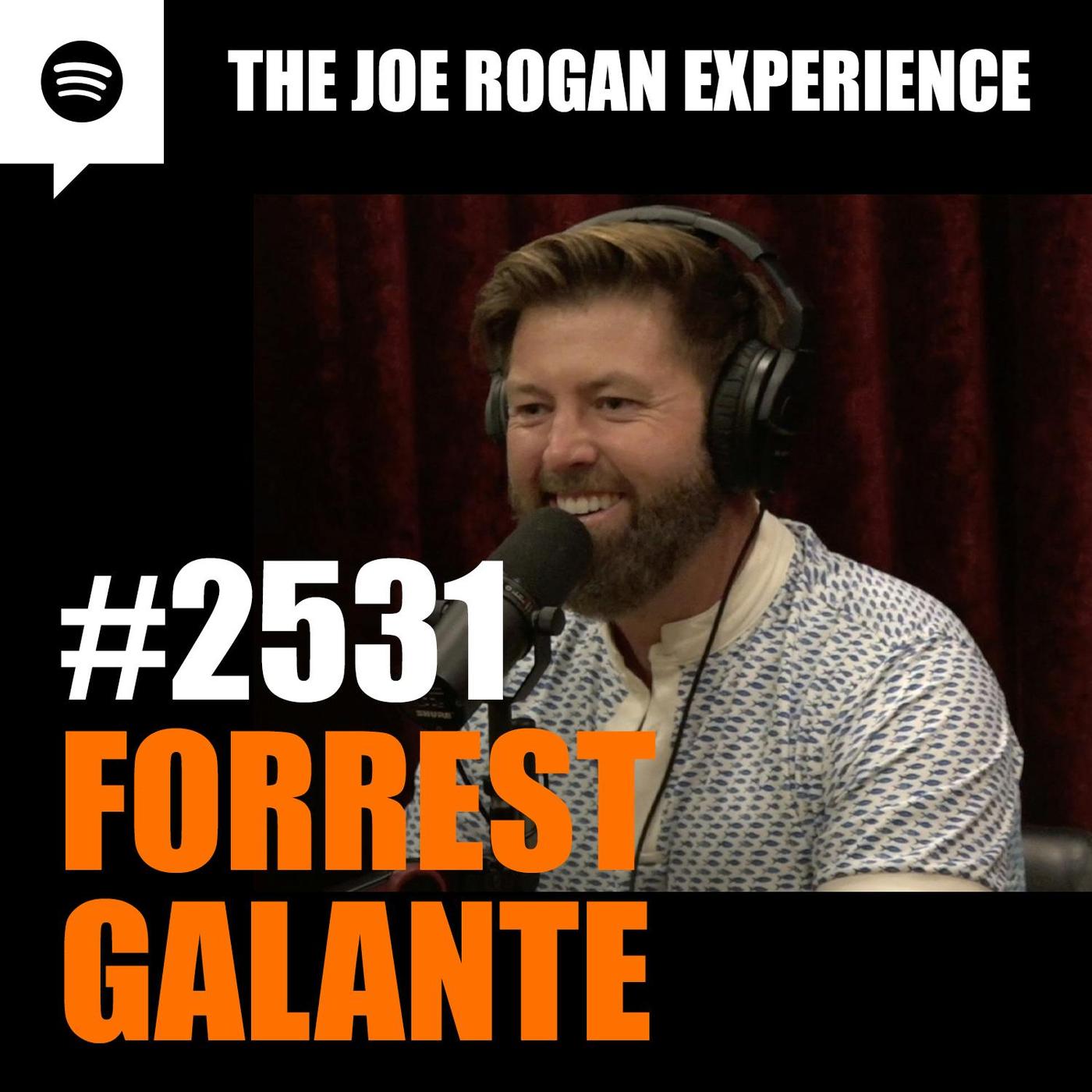
#2531 - Forrest Galante
This conversation challenges the credibility of modern academic biology and reveals the unintended ecological consequences of top-down billionaire philanthropy.
- 1Academic funding structures incentivize researchers to over-complicate species taxonomy rather than focus on practical population recovery.
- 2Billionaire philanthropy can cause unintended ecological disasters, such as mosquito net distribution destroying African freshwater fisheries.
- 3Effective wildlife conservation requires hands-on field biology and direct habitat protection over theoretical classroom modeling.
Don't miss
Forrest Galante explains how the Gates Foundation's mosquito net distribution accidentally devastated African freshwater fisheries.
The brief
Wildlife biologist Forrest Galante joins host Joe Rogan to dissect how the modern academic system is failing conservation, prioritizing peer-reviewed publishing and theoretical models over hands-on field biology and actual species population recovery.
Galante argues that researchers frequently over-complicate animal taxonomy to secure grant funding, while self-proclaimed world experts often publish influential papers on rare species they have never actually observed alive in their natural habitats.
The discussion highlights how billionaire philanthropy can backfire, pointing to how the distribution of mosquito nets in Africa by the Gates Foundation inadvertently devastated local freshwater fisheries when the nets were repurposed for fishing.
Turning to the search for rare and extinct wildlife, Galante details the cold trail of the Tasmanian tiger in Papua New Guinea, the elusive saola in Vietnam, and his hands-on work treating injured elephants at a massive rescue facility in India.
True conservation cannot be measured by academic papers alone; it requires active field intervention, local community engagement, and a fundamental shift away from bureaucratic science toward direct, practical habitat protection.
What was said on this episode
112 statements · 33 positive · 52 negative · 2 mixed · 25 neutral
No melanistic mountain lion has ever been documented.
“There's never been a melanistic mountain lion. Nobody's ever seen one, ever? Never hit one with a car, never born, one. Captivity, nothing.”
Listen at 0:31
Melanistic jaguars and leopards retain visible rosettes beneath black coats.
“all these melanistic cats, like jags and leopards that do get melanistic, they still have those rosettes under the black coat”
Listen at 1:24
Discovering a melanistic mountain lion would be scientifically significant.
“one day if somebody finds one. That'll be, like, a huge thing, scientifically.”
Listen at 1:35
Orcas have recently been documented exploding fish through impact.
“this is a newly documented behavior. Just in the last maybe six months, they've found that orcas will literally explode fish from impact”
Listen at 3:38
APOE4 increases susceptibility to chronic traumatic encephalopathy.
“If you have this one particular gene, it makes you more susceptible to CTE for some reason.”
Listen at 6:40
Impacts to the neck can cause concussions.
“if you get hit in the neck, you can get a concussion also”
Listen at 6:57
Jet-ski riders appear to be another group susceptible to CTE.
“another group of people that seem to get CTE are people who ride jet skis”
Listen at 7:09
Forrest characterizes African Americans as descendants of the strongest immigrants.
“those are the strongest, best guys that came over here”
Listen at 10:59
Colonization selectively concentrates larger and stronger human populations in new areas.
“we just bring the biggest, the best and the strongest into some area”
Listen at 11:28
No other animals transfer learned technological solutions between people.
“Which is no other animals ever figured out how to do that.”
Listen at 12:50
Scrolling social media produces cognitive deterioration.
“we're all susceptible to the brain rot that comes with just scrolling.”
Listen at 14:54
Rapid short-form content leads to poor retention of educational information.
“you barely retain that information because it's such a quick thing until you're onto the next one”
Listen at 15:30
Gigantopithecus may not have been bipedal.
“it seems like Gigantopithecus wasn't bipedal”
Listen at 18:57
An injured elephant can use its trunk as a weight-bearing limb.
“it would walk with three legs and its trunk as its fourth appendage”
Listen at 20:03
Vantara is the world’s largest wildlife rescue and rehabilitation center.
“this place called Ventara which is the world's largest wildlife rescue and rehab center”
Listen at 21:30
Hydrotherapy helps injured elephants by removing weight from their limbs.
“these animals that have terrible arthritis or fucked up feet or bad legs like that, they just spend all day in the water because then there's no weight on their limbs”
Listen at 23:53
Long-term elephant riding can produce deformities, bedsores, and hip problems.
“you can see the deformities, you can see the bed sores, you can see the hip dysplasia or hip issues from caring people”
Listen at 26:06
Pavement walking combined with added weight is especially harmful to elephants.
“the impact of walking on pavement is actually that compounding with added weight, that's what's actually so bad”
Listen at 26:32
Elephants are among the few animals that walk on their toes.
“they're one of the few animals that walk on their toes”
Listen at 26:50
The Explorers Club houses the only known four-tusked elephant specimen.
“they have the only four tusked elephant at the Explorers Club in New York City”
Listen at 27:38
A sable antelope horn grew inward into the animal’s skull.
“he just cut a horn out of a sable. Sable antelope that was growing into its own skull.”
Listen at 29:36
Reports of surviving thylacines appear to be declining across generations.
“it feels like the legends are getting fewer and further between, like, almost over generational time. It's disappearing”
Listen at 32:49
The saola was confirmed as a living species after Western scientists dismissed local reports.
“all of a sudden turns out, here's this giant bovid that still exists”
Listen at 34:25
Searching geographically isolated pockets is the best strategy for finding relic animal populations.
“you have to find geographically isolated areas, you know, because they're little pockets”
Listen at 40:34
Approximately 5,000 tigers remain in the wild.
“I think there's 5,000, something like that.”
Listen at 41:53
The wild tiger population previously fell to approximately 400.
“Used it was down to 400.”
Listen at 41:58
Private Texas collections contain more tigers than exist in the world’s wild population.
“In private collections in Texas, there's more tigers than all of the wild of the world.”
Listen at 42:12
Austin is arguably the world’s leading Jiu Jitsu center.
“Austin is arguably the Jiu Jitsu capital of the world right now.”
Listen at 45:08
Moving to high altitude without acclimatization is associated with low birth weight and premature birth.
“we were reading about low birth weight. Premature birth is a lot of like, really bad things that happen to people, especially if you're not acclimated. So you move to these high altitude areas.”
Listen at 47:30
Children benefit from exposure to a certain amount of danger.
“you don't want to protect them too much. You want to expose them to a certain amount of danger. Because I think it's good for them.”
Listen at 50:38
Traveling outside American conveniences teaches children adaptability.
“Those are important lessons for little kids. To be dynamic and figure out, like, how the rest of the world works”
Listen at 51:39
Humans selectively transformed wolves into domesticated dogs.
“that was at one point in time a wolf. And somehow or another we engineered it down to a dog”
Listen at 58:34
The giant panda may be the only truly herbivorous bear.
“I think it's the only bear that's a true herbivore as well.”
Listen at 58:51
Koalas may eat only eucalyptus.
“it's like koalas. I think they only eat eucalyptus.”
Listen at 59:05
Selective breeding can produce almost any trait given sufficient time.
“you could selectively breed for anything to some degree if you had enough time.”
Listen at 59:49
Giant pandas are exceptionally unintelligent animals.
“they're the dumbest animals in the world.”
Listen at 1:00:08
Giant pandas have unusually poor parental instincts.
“their parental instincts are bonkers. Bonkers. Like, they will drop their baby and go for an apple.”
Listen at 1:00:29
A biologist can identify most animal AI videos but not all of them.
“I'd say 90% I can tell, but there's a 10% where I can't tell if it's AI or real”
Listen at 1:01:08
The polar-bear footage from the abandoned settlement is authentic, not AI-generated.
“this is not AI. This was legit.”
Listen at 1:06:41
Polar bears on the island hunt marine mammals in the surrounding area.
“They'll be hunting all the marine mammals in the area.”
Listen at 1:07:42
Polar bears can swim very long distances.
“And they swim huge distances.”
Listen at 1:07:46
Two or three polar bears may have swum from Greenland to Iceland.
“there's, I think two or three cases of polar bears that have swum from Greenland to Iceland”
Listen at 1:07:52
Receding Arctic ice is reducing polar-bear habitat and threatening survival.
“receding North Pole ice is diminishing their hunting and mating grounds and jeopardizing their survival.”
Listen at 1:09:56
Sloth bears will confront tigers despite their relatively small size.
“they're not a very big bear, but they will take on tigers and everything else.”
Listen at 1:12:13
Past mistreatment helped produce modern wildlife-conservation concern.
“we wouldn't be where we were and care about wildlife and conservation if we hadn't made some of those mistakes.”
Listen at 1:13:26
Ergot fungus produces psychoactive effects similar to LSD.
“ergot is a fungus that has a very similar psychoactive effect as lsd.”
Listen at 1:17:15
Ergot-contaminated wheat can cause fatal poisoning.
“it also kills people. There's been cases of ergot poisoning through wheat.”
Listen at 1:17:29
Early frost conditions may promote ergot contamination of surviving wheat.
“the idea is that if you have an early frost and that some of the wheat survives, but the wheat can have this fungus on it that grows ergot.”
Listen at 1:17:45
The CIA administered LSD to brothel patrons during Operation Midnight Climax.
“the CIA was running brothel and they would give the John's lsd.”
Listen at 1:19:30
The official ergot explanation for Pont-Saint-Esprit may conceal an experiment.
“I call bullshit on this. This seems like something where they test.”
Listen at 1:21:30
A CIA LSD experiment is more likely than the official explanation.
“it sounds way more likely.”
Listen at 1:22:22
Plum Island researchers conducted gain-of-function research on ticks.
“Plum Island. They were absolutely doing gain of function research on ticks.”
Listen at 1:24:29
Untreated early Lyme disease can cause lifelong problems.
“If you don't catch it early, it can fuck with you the rest of your life.”
Listen at 1:26:49
The CIA developed Acoustic Kitty to use cats for espionage.
“Acoustic Kitty was a Central Intelligence Agency project launched by the Directorate of Science and Technology in the late 1960s. In the 1960s, intended to use cats to spy on the Kremlin in Soviet embassies.”
Listen at 1:27:45
Acoustic Kitty involved implanting microphones and transmitters in cats.
“a veterinary surgeon implanted a microphone in the cat's ear canal and a small radio transmitter at the base of its skull”
Listen at 1:28:00
The Pentagon requested cyborg insects for espionage in 2006.
“in 2006, the Pentagon requested the creation of a cyborg. Cyborg Insects for use in espionage.”
Listen at 1:29:36
UC Berkeley created a controllable cyborg beetle in 2009.
“Cal Berkeley responded by creating a controllable cyborg beetle in October of 2009.”
Listen at 1:29:48
Military experiments used incendiary bats to start fires in towns.
“They used to light bats on fire and then they'd send them to roost and then they'd burn down whole towns and things like that.”
Listen at 1:30:39
Military programs allegedly used dolphins to deliver warheads.
“They use dolphins as, like literal distributors of warheads.”
Listen at 1:31:05
Russia trained the beluga whale Hvaldimir for espionage using a spy harness.
“the Russians had been training this whale as a spy and had harnesses and spy equipment on him.”
Listen at 1:33:15
Dolphins cannot produce the human-like vocal sounds researchers want.
“They don't have the ability. Like, you could say, hi, but it can't.”
Listen at 1:37:43
AI may substantially improve communication with dolphins and whales.
“That's one of the things where AI may actually start to make a huge difference.”
Listen at 1:37:51
AI systems can already decipher substantial portions of cetacean language.
“Because they are able to decipher a lot of, like, cetacean, like, dolphin and whale language now.”
Listen at 1:37:56
Larger cetacean-language databases will enable mapping signals to meanings.
“And with enough of a database, they'll start to be able to say, like, this means this. This means this.”
Listen at 1:38:01
Captive orcas in the closed French facility are effectively imprisoned.
“it's basically prison”
Listen at 1:39:42
Future societies will judge historical marine-animal captivity like slavery.
“I think someday in the future, we're going to look back at that the way people today look back at slavery.”
Listen at 1:41:05
Dolphins’ cerebral cortex is approximately 40% larger than humans’.
“just dolphins, their cerebral cortex is 40% larger than a human being's”
Listen at 1:41:16
Elephants experience emotional trauma far more intensely than humans can comprehend.
“The trauma that they feel from losing a loved one or from being abused or whatever it happens to be is like 10x what humans can even emotionally comprehend.”
Listen at 1:41:45
Orcas are nomadic animals.
“They're orcas and they're nomad.”
Listen at 1:43:26
Forrest Galante rejects the broad anti-zoo movement.
“There's this huge anti zoo movement that I just don't agree with though”
Listen at 1:43:55
Captive animals have contributed to species conservation and children’s connection with nature.
“there's so much good that animals in captivity have done, saving species, keeping things alive, connecting kids to nature”
Listen at 1:44:08
Releasing wolf-dog hybrids can genetically contaminate wild wolf populations.
“You can't just let loose a wolf dog, you know, because then you're muddying jeans.”
Listen at 1:44:50
Black wolves inherited their melanistic trait from domesticated dogs.
“I think black wolves exist because it's a trait that they got from domesticated dogs.”
Listen at 1:44:58
Evidence that short-faced bears prevented human entry into North America no longer holds up.
“The actual evidence kept humans out of North America. Doesn't hold up any longer apparently.”
Listen at 1:53:40
The short-faced-bear scavenging theory is not convincing to Galante.
“But I think it, to me, it doesn't add up.”
Listen at 1:54:54
Hyenas are highly efficient predators, not merely scavengers.
“They've also shown now that hyenas are incredibly efficient predators.”
Listen at 1:55:04
Hyenas have approximately a 30% hunting success rate.
“Now they show they have like a 30% success rate, which is very high.”
Listen at 1:55:12
Carnivores opportunistically kill prey or fight other animals for food.
“If you can kill it, kill it. If you can fight something off for it, fight something off for it. Like it doesn't really matter. That's how carnivores are.”
Listen at 1:55:33
Competition contributed causally to the development of phones.
“Because somebody just competing against other people and they developed a phone.”
Listen at 2:05:45
Competition is essential to human culture.
“I think competition is essential to human culture.”
Listen at 2:05:49
Socialism will never work.
“this is why socialism is never going to work.”
Listen at 2:05:55
Insufficient rewards prevent people from producing exceptional work.
“If they're not rewarded, they're not going to work hard enough to do anything really spectacular.”
Listen at 2:05:59
Major technologies require someone to profit substantially from developing them.
“You would have never had high speed Internet. Somebody has to profit wildly.”
Listen at 2:06:05
The documentary Game Changers pursued an agenda.
“But that had an agenda.”
Listen at 2:07:40
Mosquito nets used for fishing indiscriminately catch juvenile fish in Caborabasa.
“These mosquito nets now indiscriminately catch tiny baby fish in areas like Caborabasa”
Listen at 2:10:02
Fishing with mosquito nets prevents juvenile fish from becoming future food sources.
“Because these people just take the nets and fish all the baby fish out so that those fish don't grow up to make substantial protein sources.”
Listen at 2:10:40
Mosquito-net distribution destroyed an ecosystem, reduced fish populations, and caused widespread hunger.
“have destroyed an ecosystem, crashed a fish population, and created widespread hunger for people that otherwise had plenty of resources”
Listen at 2:10:51
Recipients routinely use donated mosquito nets for fishing instead of malaria prevention.
“And you literally watch these guys line up, take a mosquito net, and it never goes in their house. It goes straight to catching fish”
Listen at 2:11:24
Mosquito-net distribution crashed the local ecosystem and created widespread hunger.
“It completely crashed it. And it created widespread hunger in a place that had no hunger.”
Listen at 2:12:38
The Bondo ape likely consists of an isolated, larger group of otherwise typical chimpanzees.
“The Bondo ape is real in the sense of. There is probably an isolated larger group of chimps that just act like chimps”
Listen at 2:26:58
Stronger jaw muscles produce a cranial ridge for muscle attachment.
“Things with stronger jaw muscles have a cranial ridge.”
Listen at 2:27:11
Chimpanzees and gorillas repeatedly conflict at a particular Congo river location.
“the chimps and the gorillas go into conflict with each other over this one river spot”
Listen at 2:28:54
A shortage of females split a chimpanzee clan into two warring groups.
“there was a lack of enough females. And so all of a sudden this, this clan divided into two clans, and now they're at constant war with each other”
Listen at 2:30:07
Chimpanzees imitate gorillas’ chest-beating behavior.
“they're imitating, mimicking each other”
Listen at 2:31:17
Cape buffalo-eating lions have become unusually large and robust.
“the lions are just getting bigger and beefier and they're all fat”
Listen at 2:31:41
Island environments produce both dwarfism and gigantism across animal species.
“you have that. Basically insular dwarfism and insular gigantism throughout animals.”
Listen at 2:32:24
Predator-free islands with abundant resources drive tortoises toward larger body sizes.
“No predators. Unlimited resources. Yeah. So all of a sudden, you know, you're a little tortoise that's this big, and every time you get to this big, something spots you from the air and eats you or whatever it happens to be. But now you're stuck on an island with all the grass and fruit you could ever eat and nobody wants to eat you. So you just get bigger and bigger”
Listen at 2:32:40
Waldron’s red colobus has several museum specimens but no confirmed living specimens.
“it's a colobus monkey that there's like three or four museum specimens and no live specimens”
Listen at 2:34:39
The purported dinosaur in the Congo is not real.
“the dinosaur in the Congo thing that people always talk about. It's silly. It's not real.”
Listen at 2:35:56
Unsearched cryptid reports cannot be definitively ruled out without further investigation.
“if you give up and don't look, we never really know”
Listen at 2:36:28
A 2027 solar eclipse will produce roughly six minutes of totality in Egypt.
“in 2027, I want to say April, there'll be a six minute total blackout in Egypt”
Listen at 2:38:38
The Moon stabilizes Earth’s orbit enough to sustain life.
“I mean, it does do that.”
Listen at 2:41:10
The Moon controls Earth’s oceans through its gravitational influence.
“Controls all of our oceans”
Listen at 2:41:28
Funding incentives encourage scientists to split organisms into additional species.
“they're now like, okay, I need funding, so I'm going to speciate a bunch of stuff”
Listen at 2:48:16
Excessive taxonomic splitting can reduce conservation attention for the original species.
“it sort of lessens the conservation for that frog in general”
Listen at 2:49:07
Conservation success can be measured by increasing a population from 1,000 to 2,000 frogs.
“if you had 1000 frogs and then you worked on the project, now you have 2000 frogs, you're doing conservation”
Listen at 2:51:57
Building enough frog shelters to combat chytrid fungus will increase frog populations.
“if we build enough frog hotels, then there's gonna be more frogs”
Listen at 2:52:44
Authorities on animals should possess both field observations and scientific data.
“if you're going to be considered an authority on that thing, you have to have observational data as well as scientific data”
Listen at 2:55:43
Crocodiles remain dangerous despite prolonged human observation and habituation.
“it doesn't matter how many years you spend sitting watching a crocodile, it'll still eat you at the first chance it gets”
Listen at 2:57:10
Spending time alone in nature reduces psychological noise and increases present-mindedness.
“if you spend a lot of time outside and in nature, and especially by yourself, the noise goes away”
Listen at 3:00:10
Mental illness results from excessive preoccupation with one’s own problems.
“mental illness comes from when you're wrapped up in your own being”
Listen at 3:00:30
Forrest should not repeat the flimsy crocodile-cage stunt.
“Don't do that again.”
Listen at 3:02:30
Statements are attributed to the speaker as said on the episode and reflect their view at the time, not PodLume's. They are not advice.
Books & mentions
Extinct or Alive
Watch Forrest Galante search for animals feared to be extinct in the wild