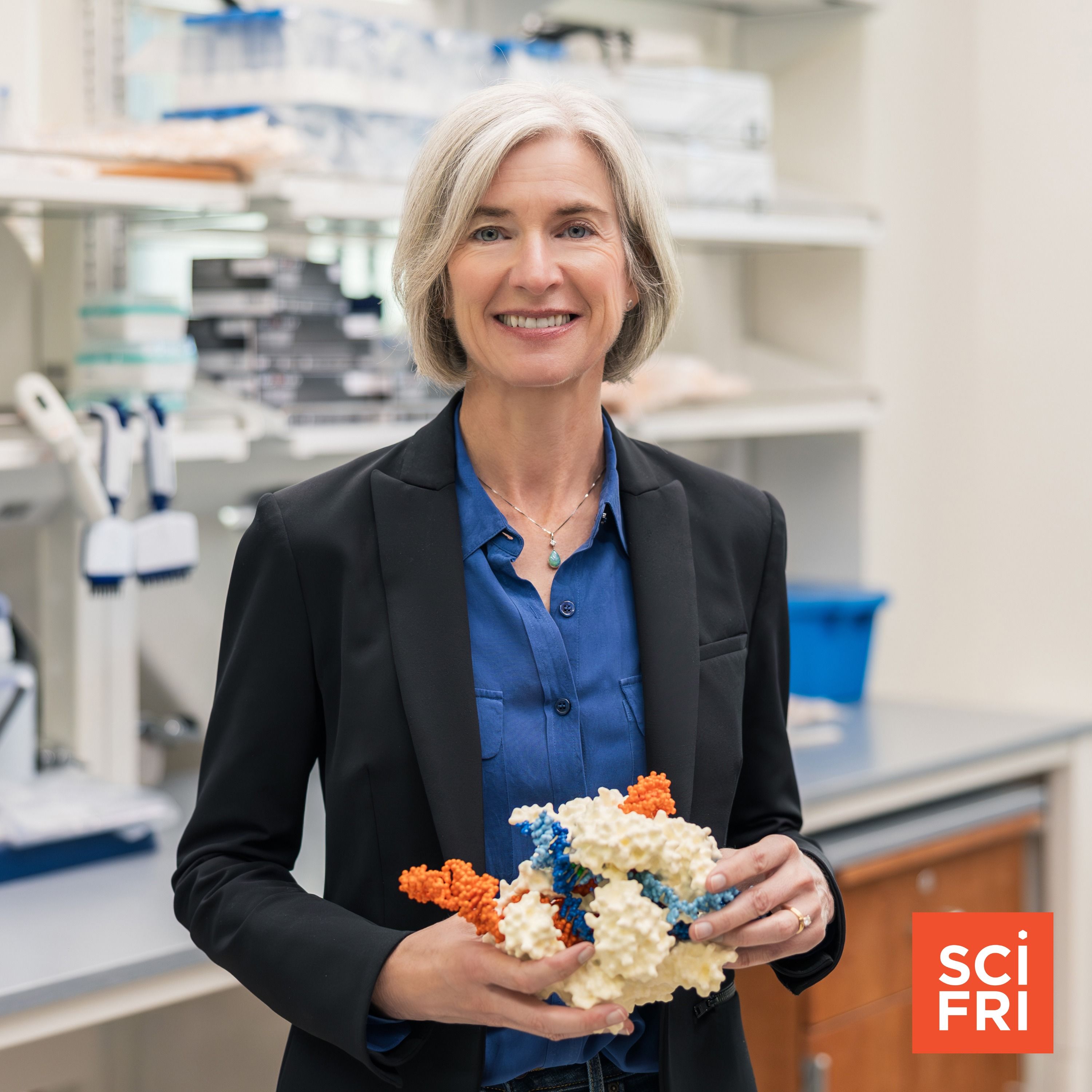
Oct 21, 2026 · 30 min
Doudna links scientific character to CRISPR’s consequences
Jennifer Doudna on what it takes to be a good scientist
The conversation connects the habits that enable discovery with the ethical, medical, and public responsibilities that follow from genome editing.
- 1Persistence matters, but good scientists also recognize when failure signals the need for a new direction.
- 2CRISPR’s medical progress has accelerated faster than society’s consensus on germline and environmental applications.
- 3AI may expand genome editing, yet current systems still struggle to produce genuinely novel biological insight.
Don't miss
Doudna explains why CRISPR’s rapid movement toward medical therapies makes questions about germline and environmental editing urgent.
The brief
Jennifer Doudna traces her path from early encouragement and laboratory experience to research on life’s origins, which eventually led indirectly toward CRISPR.
Her account of good science rejects a lone-genius model: persistence and independence matter, but so do collaboration, openness, failure, and knowing when to change course.
The conversation’s central tension is CRISPR’s speed: the technology has moved toward approved medical therapies while ethical questions around germline and environmental editing remain unsettled.
Doudna sees AI as a promising addition to genome editing, but says current systems mainly analyze existing data rather than generate genuinely new biological insight.
She closes by arguing that basic research needs sustained support and that scientists must communicate with the public, because publicly funded discovery carries public responsibilities.
Weekly email
State of the Pod, every Monday
The week's most-discussed names and stories from podcasts, with the moments behind them. Free, five minutes, unsubscribe in one click.