Aug 24, 2026 · 56 min
Former White House CTO defends Trump science record and critiques funding bureaucracy
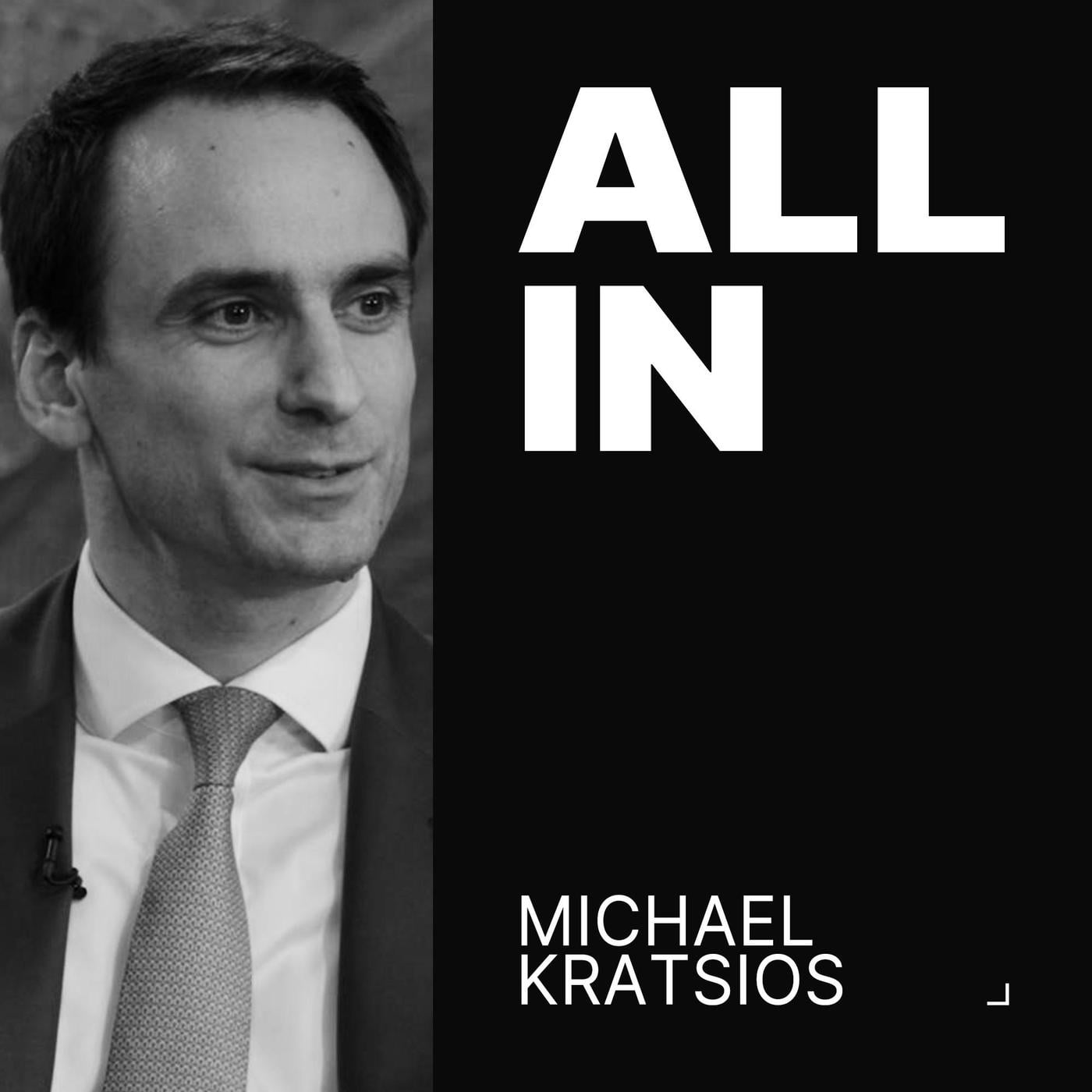
Michael Kratsios: Trump's Science Agenda, Anti-Science Claims, Fauci's Damage, DEI & China
The debate over how federal billions are allocated to scientific research directly impacts America's technological edge and its global competition with China.
- 1Federal research funding needs structural reform to prioritize individual scientists over bureaucratic academic institutions.
- 2The United States must modernize its post-WWII science policy to maintain its competitive edge against China in STEM fields.
- 3Overcoming scientific stagnation requires lowering the median age of federally funded researchers to empower younger minds.
Don't miss
Michael Kratsios highlights the alarming median age of NIH-funded researchers and calls for immediate policy changes to empower younger scientists.
The brief
Former White House Chief Technology Officer Michael Kratsios joins the show to address accusations that the Trump administration was anti-science, arguing instead that the scientific establishment has strayed from rigorous inquiry.
Kratsios critiques the current federal scientific funding system, pointing to misallocated resources at agencies like the National Science Foundation and advocating for funding individual researchers rather than institutional ideas.
The discussion highlights the strategic technology race with China, warning that America is losing its competitive edge due to bureaucratic stagnation, declining domestic STEM enrollment, and flawed immigration policies.
To reverse scientific stagnation, Kratsios calls for modernizing post-WWII science policies and lowering the median age of NIH-funded researchers to empower a younger, more ambitious generation of American scientists.
What was said on this episode
33 statements · 19 positive · 11 negative · 3 neutral
The administration aims to double United States scientific output.
“We want to essentially double the scientific output of the United States.”
Listen at 0:02
The Trump administration is not anti-science.
“It is not anti science.”
Listen at 1:59
The administration wants the United States to lead future scientific discoveries.
“We really want the US to be the home for the next great scientific discoveries.”
Listen at 2:15
Kratsios says American science has become deeply politicized over two decades.
“I think over the last 15 or 20 years, I think science has been deeply and deeply politicized”
Listen at 3:26
Increasing spending on unsuitable science activities is bad policy.
“spending more money on the wrong types of things is not the right policy action.”
Listen at 6:37
About 25% of Biden-era NSF grants funded DEI-related science.
“roughly 1/4, or 25% of grants at NSF during that time period went towards DEI related science.”
Listen at 7:35
Kratsios says DEI-related NSF initiatives are not legitimate science.
“And that isn't science and that shouldn't be.”
Listen at 7:55
Available data does not support describing climate change as an emergency.
“The thing that is not true and what the data does not support is that it is a climate emergency.”
Listen at 9:09
The administration has set a 2035 target for fusion energy.
“We set a target for 2035, for example, for that.”
Listen at 10:59
Clean fossil fuels could substantially improve poor households’ quality of life.
“clean fossil fuel could make a huge difference in their quality of life”
Listen at 12:05
Extreme climate-policy responses would hurt Americans most without solving climate change.
“any of these sort of extreme policy reactions to this sort of perceived problem would inevitably hurt Americans the most and not actually solve the problem”
Listen at 13:02
Kratsios assesses that scientific progress in America has stagnated.
“our argument it has.”
Listen at 14:34
American science agencies have not innovated their research methods.
“we have not been innovative in any way on the way that we actually conduct the science.”
Listen at 15:15
NSF and NIH will test funding methods and redirect money based on results.
“we're actually going to start running experiments. Maybe there are different ways that we should be doing funding and then we can analyze those and then course correct”
Listen at 16:42
NSF golden tickets would incentivize scientists to submit more interesting grants.
“So you incentivize folks to have more interesting grants.”
Listen at 18:06
The administration proposes offering research grants with varied durations.
“we proposed in new golden age was this idea of different durations of grants”
Listen at 19:44
The administration predicts American astronauts will return to the Moon by 2028.
“we're going to have American boots back on the moon in 28.”
Listen at 23:31
The administration aims to create a scientifically relevant quantum computer by 2028.
“create a scientifically relevant Quantum computer by 2028”
Listen at 23:53
The administration aims to achieve fusion energy by 2035.
“we really want to get to fusion by 2035.”
Listen at 24:04
AI will be the largest accelerator of scientific discovery ever.
“We fundamentally believe that AI is going to be the biggest unlock to scientific discovery in the history of the world.”
Listen at 24:27
Government research funding should prioritize basic, early-stage, precompetitive research.
“we have to return the primary focus of government funded research on basic early stage, pre competitive R and D, this discovery science.”
Listen at 25:49
Private firms lack incentives for basic research, which only government can provide.
“That is an area where the private sector is not incentivized to participate in and only the government can do that.”
Listen at 25:59
Competition among American science organizations is a major systemic advantage.
“one of the most special features about our system is we do have people competing.”
Listen at 28:05
The postwar model of government science funding is no longer sufficiently relevant.
“our answer is it's not. And we need a refresh.”
Listen at 31:40
Scientists should receive funding wherever they conduct meritorious research.
“If they're at a university, we should fund them. If they're at a focused research organization, we should fund them. If they're on their own in the garage doing incredible work and can pass a merit based review panel, we should fund them in their garage.”
Listen at 33:33
Scientific and technological leadership is foundational to economic and national security.
“technological and scientific leadership is the most important foundational block to economic and national security.”
Listen at 35:12
China uses copying and dumping to drive American technology businesses out of business.
“The playbook that they have used for a long time is essentially copying rip, creating cheaper alternatives of that particular technology, dumping them in the United States, getting our businesses to go out of business and then, and then squeezing us.”
Listen at 37:16
A STEM-literate workforce is a crucial national advantage for the United States.
“having a STEM literate workforce is one of the most important superpowers we could have as a country.”
Listen at 39:20
Foreign STEM graduates who want to remain should have legal pathways to stay.
“for those who do want to stay, allow them to sort of pursue legal pathways to stay here.”
Listen at 40:59
Seven in ten US STEM PhD candidates are reportedly non-American.
“The idea that 7 out of 10 STEM related PhD candidates in the United States are not American.”
Listen at 41:31
US policy should reward talented Americans pursuing science and technology.
“we should be rewarding the greatest and most talented Americans and giving them opportunities to pursue all their great science and tech sort of dreams and endeavors.”
Listen at 43:16
Kratsios says Fauci severely damaged public trust through COVID masking advocacy.
“I think he did more disservice to some than anyone in modern history when he is advocating for positions like students need to be masked in schools.”
Listen at 45:47
The median NIH intramural researcher is 71 years old.
“the median age of an intramural researcher at NIH is 71 years old.”
Listen at 49:43
Statements are attributed to the speaker as said on the episode and reflect their view at the time, not PodLume's. They are not advice.