Sep 17, 2026 · 18 min
Gerstner argues AI spending can outrun the bubble narrative
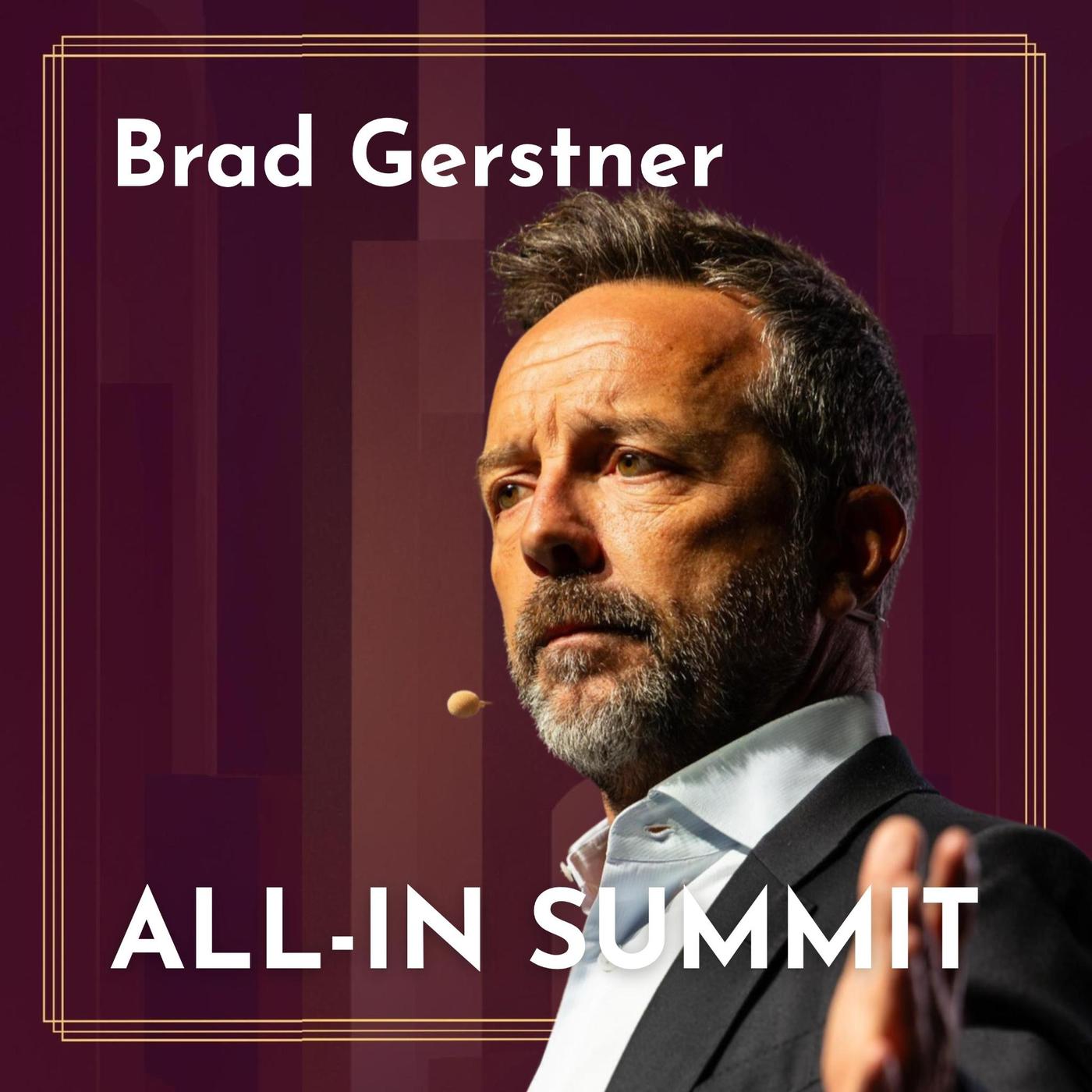
Brad Gerstner: No AI Bubble, Semis Eat the Nasdaq & AI's Take Off Problem
The episode tests whether AI-generated revenue can justify unprecedented spending on chips, data centers, and power while rates and regulation remain risks.
- 1AI’s investment case depends on revenue eventually supporting enormous capital expenditures across computing infrastructure.
- 2Semiconductor demand is reshaping market growth, with data centers and power becoming central constraints on expansion.
- 3Gerstner pairs his market argument with a proposal for investment accounts for every child in America.
Don't miss
Gerstner’s core argument is that the AI buildout should be judged by whether future revenue can support its vast capital requirements, not simply by bubble comparisons.
The brief
Brad Gerstner, founder of Altimeter and a five-time entrepreneur, joins the show to discuss whether AI’s economic promise can support the buildout now underway.
The central tension is simple but consequential: AI-generated revenue must eventually justify enormous capital spending on chips, data centers, and power.
The conversation frames semiconductor demand as a major driver of market growth, while expanding infrastructure needs create new limits on AI’s pace of expansion.
Gerstner also addresses the risks that could disrupt the thesis, including regulation and interest rates, before advancing investment accounts for every child in America.
What was said on this episode
25 statements · 16 positive · 6 negative · 3 neutral
CAC heart scans offer the highest return on investment in healthcare.
“This is the highest ROI thing you can do in healthcare.”
Listen at 1:51
CAC heart scans could save 50,000 lives annually if widely adopted.
“Every cardiologist I talk to does this for themselves, their family, and their friends. It's $100, 15 minutes. Get it done. If we turn this into the mammogram for the heart, we'll save 50,000 lives a year in this country.”
Listen at 1:55
Widespread heart CAT screening could save 50,000 lives annually.
“If we turn this into the mammogram for the heart, we'll save 50,000 lives a year in this country.”
Listen at 2:03
The current market expansion is driven by earnings rather than multiple expansion.
“This is not about multiple expansion. This is an earnings driven market expansion.”
Listen at 3:13
Current AI-related market conditions do not constitute a 2000-style bubble.
“This is no bubble like it was in 2000.”
Listen at 3:36
AI infrastructure is driving technology’s largest capital-expenditure supercycle.
“This is a market that is being driven by the largest CapEx buildout, the largest supercycle in the history of technology.”
Listen at 4:02
Semiconductors account for 70% of the Nasdaq’s return.
“Semiconductors are 70% of the Nasdaq's return.”
Listen at 4:11
Anthropic, OpenAI, and SpaceX need $180 billion collective run-rate revenue by year-end.
“I think they need to collectively get to at least $180 billion by the end of the year”
Listen at 7:12
AI offtake revenue must rise from $200 billion toward $1 trillion to sustain planned CapEx.
“I think you have to go from $200 to $450 to $800 or $1 trillion just to keep up.”
Listen at 8:28
Knowledge work is arguably the world’s largest total addressable market.
“I would argue it's the largest TAM in the history of the world.”
Listen at 10:25
“The answer is obviously yes.”
Listen at 11:50
Consumer agents can now book hotels.
“I think we've just gotten that with Muse and with Instinct.”
Listen at 12:21
AI regulation should use pragmatic solutions rather than an extreme approach.
“The answer is not going to be on one end or the other. We're gonna have to have common sense, pragmatic solutions”
Listen at 12:53
Dylan Patel’s 43-gigawatt compute-addition forecast is too aggressive.
“I would suggest Dylan's forecast of 43 gigawatts next year is too aggressive.”
Listen at 14:19
The United States will add approximately 25 gigawatts of compute capacity.
“I think the total amount we're actually going to stand up is somewhere closer to 25 gigawatts.”
Listen at 14:26
Anthropic and OpenAI will receive roughly half of next year’s new compute capacity.
“I think of that 25 gigawatts, half of it will be for Anthropic and OpenAI.”
Listen at 14:31
Interest-rate hikes are likely to occur imminently.
“I think rate hikes are coming.”
Listen at 15:07
Interest rates will be raised tomorrow with over 90% probability.
“I think rate hikes are coming. I think it's now over 90% chance that we're gonna have rate hikes tomorrow.”
Listen at 15:07
Monthly AI-lab revenue near $8 billion would trigger market takeoff.
“If the monthly AI lab revenues are closer to that $8 billion number, I think it's takeoff.”
Listen at 16:05
An AI-lab IPO will occur this year.
“I think we are going to see an IPO this year.”
Listen at 16:11
A 5.5% ten-year yield would significantly burden the equity market.
“If rates were to go to 5.5% on the 10-year, that's going to be a big burden on the equity market.”
Listen at 16:36
The Anthropic IPO will not be halted or postponed.
“I don't think that's going to happen.”
Listen at 16:53
Investors should avoid extreme leverage in the AI market.
“Don't YOLO, okay? Don't go 4x”
Listen at 17:35
Four-times leverage is very dangerous in the current market.
“Forex levered in this market, you know, very dangerous.”
Listen at 17:44
Higher AI-lab revenue and lower oil prices would justify increasing exposure.
“If we see those revenues come in big for these next few months and we see oil prices retreat, we're going to put more chips on the table.”
Listen at 17:53
Statements are attributed to the speaker as said on the episode and reflect their view at the time, not PodLume's. They are not advice.
Weekly email
State of the Pod, every Monday
The week's most-discussed names and stories from podcasts, with the moments behind them. Free, five minutes, unsubscribe in one click.