Nov 12, 2026 · 20 min
Southern Democrats turn surprise wins into a realignment test
How Democrats overperformed in the South
The results challenge assumptions about the South’s political map while revealing how turnout, candidate quality and voting-rights backlash shaped Democratic gains.
- 1Black voter turnout reached near-presidential levels and directly powered Democratic victories across the South.
- 2Republican turnout problems and stronger Democratic candidates helped produce unexpected breakthroughs, especially in North Carolina and Texas.
- 3The episode weighs whether these victories mark a lasting Sun Belt shift or a temporary reaction to current political conditions.
Don't miss
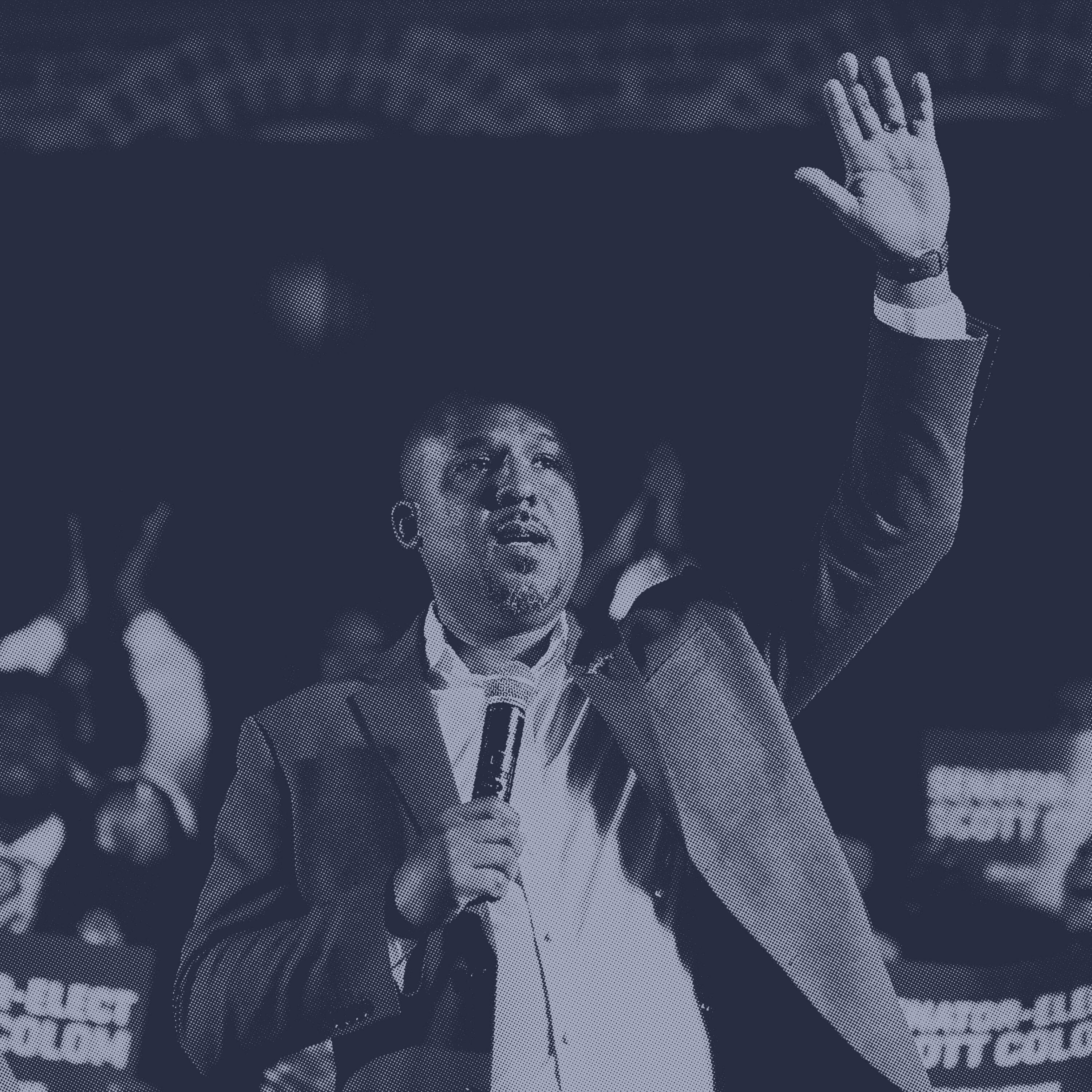
Scott Colom’s narrow victory over Cindy Hyde-Smith gives Mississippi its first Black senator since Reconstruction.
The brief
Scott Colom’s narrow Mississippi victory over Cindy Hyde-Smith becomes the episode’s defining symbol: the state elected its first Black senator since Reconstruction.
Stephen Fowler and the hosts trace Democratic gains across Mississippi, North Carolina, South Carolina, Texas, Georgia and Alabama, where candidate quality and voter enthusiasm met Republican turnout problems.
The strongest explanation is unusually high Black turnout, which approached presidential-election levels in parts of the South and directly shaped the results.
The discussion links that participation to opposition against voting restrictions and a Supreme Court decision weakening the Voting Rights Act, which energized organizers and voters.
The closing question is whether Georgia’s transformation and wider Sun Belt growth signal a durable shift—or only a temporary reaction to an unpopular president.
What was said on this episode
22 statements · 16 positive · 5 negative · 1 mixed
Scott Colom was a strong candidate in a surprisingly close race.
“I said, he's a really good candidate. I would have a really hard time believing that he's going to win. I think it's going to be a lot closer than people think it's going to be.”
Listen at 0:58
Democrats delivered one of their strongest recent Southern performances.
“it is one of the best Democratic performances. especially in the South, in recent history.”
Listen at 3:50
Six Southern states shifted left by an average of 22 points.
“they swung to the left by 22 points on average. The rest of the country was only a mere 15 points.”
Listen at 4:11
Democratic victory required high Black turnout and declining Republican turnout.
“Democrats would need presidential level turnout, particularly among black voters, and Republicans would need to really see declines in the number of Republican voters. Both things happened.”
Listen at 4:34
Republican turnout collapsed in North Carolina.
“Republicans stayed home in large, large, large droves.”
Listen at 6:02
North Carolina’s congressional map shifted from expected Republican to Democratic dominance.
“a map that in theory should have elected 11 Republicans and three Democrats is on track to elect 11 Democrats and three Republicans.”
Listen at 6:22
James Tallarico defeated Ken Paxton by more than one million votes.
“he won by more than a million votes over Ken Paxton”
Listen at 7:20
James Tallarico won by exceeding turnout or support benchmarks among key voter groups.
“how you win if you're a Democrat is hitting and going above marks with black voters and with Latinos and with white suburban voters, which is what James Tallarico did.”
Listen at 8:16
Democratic control of Mississippi and South Carolina may be temporary.
“Mississippi, South Carolina, even though these places might be temporary holds for Democrats”
Listen at 8:57
Black Southern voters showed strong interest in voting for Democrats.
“there were signs that Black voters in the South were very keen on showing up to vote and to vote for Democratic candidates.”
Listen at 10:12
Majority-Black Southern counties had turnout closer to presidential levels.
“you had much higher turnout, much closer to presidential turnout than majority white counties.”
Listen at 11:11
Black voter enthusiasm measurably affected many Southern races.
“what you had was extreme enthusiasm that made measurable impact in a lot of races”
Listen at 11:33
Presidential-level Black turnout enabled Scott Colom’s strong performance.
“You needed black turnout to be at presidential levels for Scott Cologne to do well there. And he did.”
Listen at 12:05
Southern Republican-led redistricting usually diluted Black voting power.
“in almost all of those cases, ended up diluting Black voting power.”
Listen at 13:51
Restrictive voting policies can backfire against those in power.
“when you put in place these kinds of things and groups feel particularly targeted, that has the possibility and has happened before to backfire on the people in power.”
Listen at 15:22
John Ossoff won reelection by 18 points in Georgia.
“now you've got Senator John Ossoff winning an 18 point reelection.”
Listen at 16:40
The South is likely to shape the future of American politics.
“The South is arguably in the driver's seat of the future of American politics.”
Listen at 17:14
Arizona and Georgia have become politically competitive purple states.
“they've now put them on the map as purple states”
Listen at 17:46
Mississippi is unlikely to become truly competitive in presidential elections.
“I don't know that a place like Mississippi is going to be a place that is truly competitive in a presidential election”
Listen at 17:55
Texas is becoming a major potentially competitive state.
“I think Texas is the next sort of big. state that a lot of people are going to be looking at as a potential place that could go one way or the other.”
Listen at 18:09
Democratic competitiveness in Southern states requires sustained investment.
“you don't get there unless you put time and money into these places.”
Listen at 18:40
Investing resources could make Mississippi politically competitive.
“If you actually come and put resources, put time and energy, is it possible?”
Listen at 18:51
Statements are attributed to the speaker as said on the episode and reflect their view at the time, not PodLume's. They are not advice.
Weekly email
State of the Pod, every Monday
The week's most-discussed names and stories from podcasts, with the moments behind them. Free, five minutes, unsubscribe in one click.