Oct 21, 2026 · 44 min
Tenex turns AI engineering into a measurable operating system
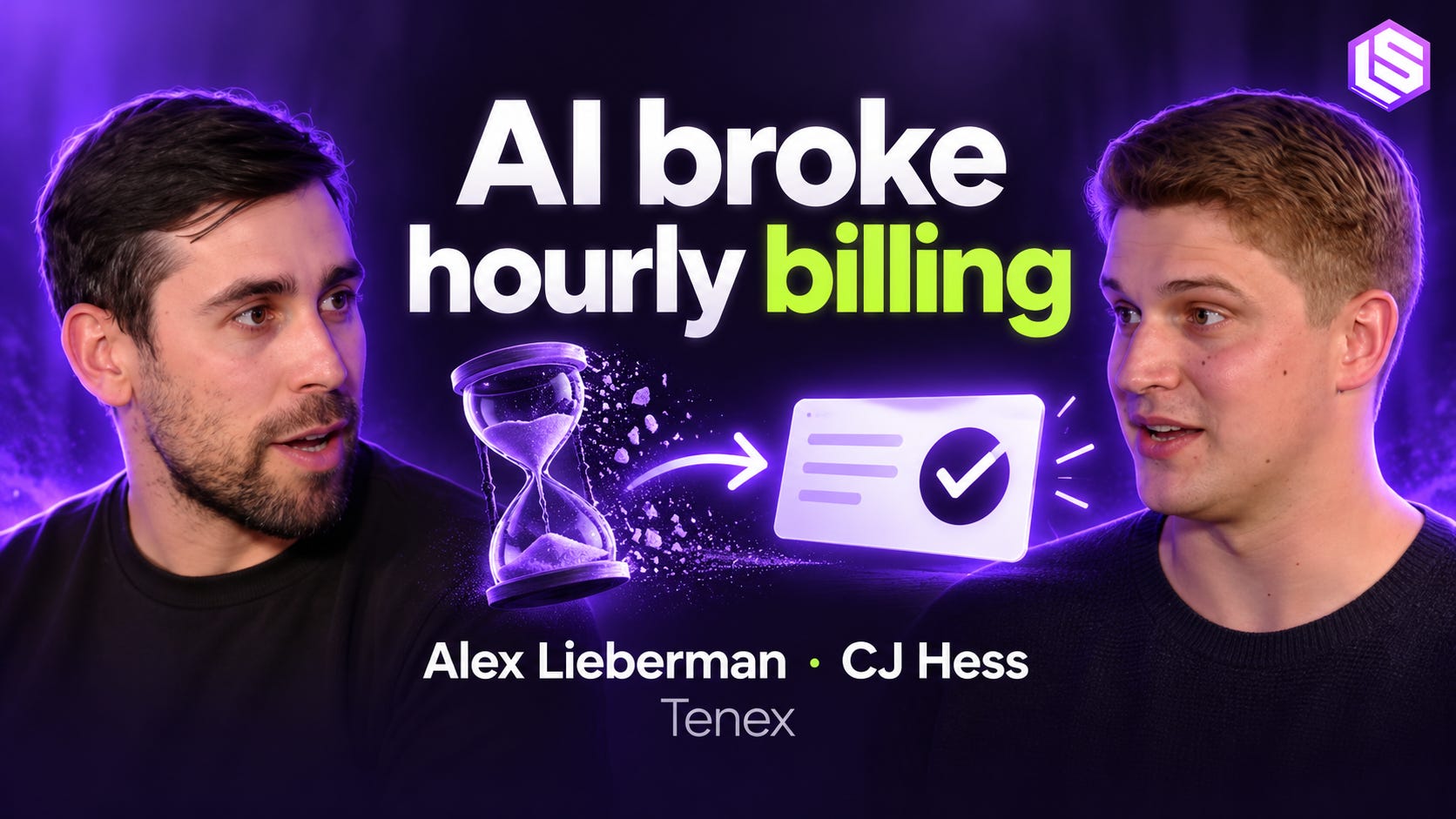
AI for the Fortune 2000: How Tenex Builds an AI-Native SDLC — Alex Lieberman & CJ Hess
The episode shows why enterprise AI adoption depends less on model access than on standardized workflows, governance, and incentives.
- 1Tenex ties engineering compensation to story points while recalibrating for architecture, client work, and AI-assisted output.
- 2Long-running agents require structured documentation, tooling, and repeatable processes before enterprises can automate reliably.
- 3Falling token costs intensify debates over frontier models, vertical AI defensibility, software displacement, and reskilling.
Don't miss
CJ Hess explains how Tenex’s meta-harness and structured workflows let engineers direct AI systems through long-running development tasks.
The brief
CJ Hess describes how AI has shifted his work from writing code toward gathering customer context and directing long-running systems, while Tenex ties compensation to measurable output.
Tenex’s meta-harness combines documentation, CLI tooling, and structured workflows to keep agents on complex tasks; the company recalibrates story-point standards as models improve.
The economics are changing quickly: token prices are falling, model capabilities are rising, and the cost advantage of AI depends on whether premium frontier systems remain necessary.
For enterprises, basic model access is only the beginning. Governance, permissions, readable data, and standardized human processes determine whether agents can move beyond experiments.
The conversation ends with a harder question than productivity: which jobs and software systems will change first, and how much responsibility do employers have to support reskilling?
Weekly email
State of the Pod, every Monday
The week's most-discussed names and stories from podcasts, with the moments behind them. Free, five minutes, unsubscribe in one click.